Address
Sector 14, Road no. 18, Uttara, 1230
Dhaka, Bangladesh

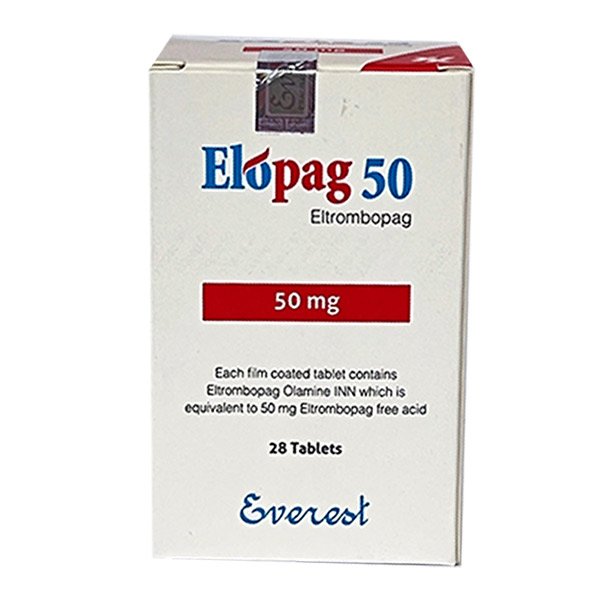
Rx Prescripttion Only-YMYL Medical Content
Approved for adults and children with chronic immune thrombocytopenia (ITP) with insufficient response to other treatments, severe aplastic anemia (often combined with immunosuppressive therapy), and thrombocytopenia associated with chronic hepatitis C to enable interferon-based treatment.
$10.00
1
2
3
4
MD
Medical Oncologist Review
Board-certified oncologist · 12+ years in thoracic malignancies
Content reviewed against FDA prescribing information, NCCN Guidelines v2.2024, and published Phase III trial data. Last updated June 2026.
These steps help you have an informed conversation. A confirmed EGFR mutation result is the starting point for any treatment decision.
Medical disclaimer: This page is for informational purposes only and does not constitute medical advice, diagnosis, or treatment. It is a prescription medication that must only be used under the supervision of a qualified oncologist. Clinical outcomes data is drawn from published Phase III trials; individual results vary. Always consult your healthcare provider and refer to the full prescribing information before making any treatment decisions. Emergency: call your local emergency services or poison control immediately if you experience serious adverse effects.
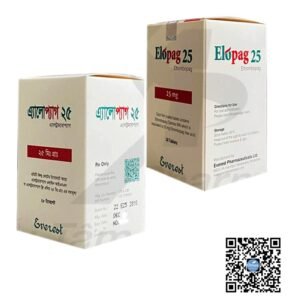
Here are key questions to bring to your hematologist about starting eltrombopag — the liver monitoring and timing/dietary rules are the two areas that deserve the most attention.
Before confirming eltrombopag as your treatment
About the boxed warning — liver injury
About blood clot risk
About the dosing and dietary rules — this is the part that trips people up
About monitoring overall
About my specific situation
About the longer road
A practical tip: Because the timing rules are unusually strict for this medication compared to most oral drugs, it’s worth asking your hematologist or pharmacist to help you build a literal daily schedule — including a buffer window around your dose — rather than trying to remember the rules in the abstract.
Eltrombopag and romiplostim are both thrombopoietin receptor agonists (TPO-RAs) approved for chronic ITP after first-line treatments haven’t worked well enough — and unlike some of our earlier comparisons, they’re considered broadly comparable in efficacy, with the decision often coming down to administration route and individual risk factors rather than one being clearly superior.
How they’re given — the biggest practical difference
| Eltrombopag (Promacta/Revolade) | Romiplostim (Nplate) | |
|---|---|---|
| Form | Oral tablet | Subcutaneous injection |
| Frequency | Once daily | Once weekly |
| Where administered | At home, self-administered | Typically in clinic initially; some patients learn self-injection |
| Drug type | Small molecule (non-peptide) | Peptibody (peptide fused to antibody fragment) |
| Binding site | Different site on TPO receptor than natural TPO | Mimics natural thrombopoietin directly |
This is often the deciding factor for many patients: a daily pill with strict dietary timing rules versus a weekly injection that requires more clinic visits, at least initially.
Efficacy
Both drugs have shown response rates in the range of roughly 70–80% of patients achieving and maintaining platelet counts above target thresholds in their respective pivotal trials. Head-to-head comparisons haven’t shown one to be consistently superior to the other for raising platelet counts or reducing bleeding episodes — efficacy is generally considered similar between the two.
Safety profile differences
| Eltrombopag | Romiplostim | |
|---|---|---|
| Boxed warning | Hepatotoxicity (liver injury) | None — but carries warnings for bone marrow fibrosis and thrombotic risk |
| Liver monitoring | Required, regularly | Not a primary focus |
| Bone marrow reticulin fiber increase | Possible | Possible — a shared class concern |
| Blood clot risk | Increased | Increased |
| Rebound thrombocytopenia after stopping | Yes | Yes |
| Dietary/medication interactions | Significant (calcium, antacids, dairy) | None — injection bypasses GI absorption entirely |
The dietary interaction issue essentially disappears with romiplostim, since it’s injected rather than absorbed through the gut — this can be a meaningful advantage for patients who take a lot of other medications or have dietary patterns that conflict with eltrombopag’s timing rules.
Practical considerations that often guide the choice
A third option worth knowing about
Avatrombopag (Doptelet) is a newer oral TPO-RA, also approved for chronic ITP, that does not have the same dietary restrictions as eltrombopag — it can be taken with food. If the timing rules are a major concern with eltrombopag, this may be worth asking about as well.
Bottom line
Both drugs work through the same general mechanism with broadly similar effectiveness — the choice tends to hinge on whether a daily pill with dietary timing constraints (eltrombopag) or a weekly injection without those constraints (romiplostim) fits better with your lifestyle, other medications, and any liver health considerations. This is very much a “which trade-offs work for you” conversation rather than one drug being medically preferable to the other in most cases
Polyvalent cations (positively charged metal ions with multiple charges, like calcium, iron, magnesium, and aluminum) physically bind to eltrombopag in your gut before it can be absorbed — and this binding can reduce the amount that gets into your bloodstream by roughly 50% or more.
Here’s the mechanism in more detail:
Chelation — the core issue
Eltrombopag has a chemical structure that readily forms tight complexes with metal ions through a process called chelation — essentially, the drug molecule “grabs onto” these ions and forms a larger, poorly absorbed complex. Once chelated, the eltrombopag-mineral complex is too large and too insoluble to cross into the bloodstream effectively, so it passes through the digestive system largely unused.
This isn’t a side effect or toxicity concern — it’s purely a bioavailability problem. The drug becomes much less effective at the dose you’re taking, not unsafe.
What specifically interferes
Why “empty stomach” matters separately
Beyond the mineral-binding issue, food in general — even food without these specific minerals — can reduce eltrombopag absorption. This is why the standard guidance is to take it at least 2 hours before or 4 hours after any of these substances, and ideally on an empty stomach or with a meal low in calcium.
What this looks like practically
A common approach is:
If you take a multivitamin or calcium supplement, that needs to be scheduled at a clearly separated time — for example, eltrombopag at bedtime and supplements at breakfast, with several hours of separation.
The bigger picture
This is a good example of why the “strict timing rules” aren’t arbitrary — they’re rooted in basic pharmacology (chelation chemistry), and getting them wrong doesn’t cause harm directly, but it can mean your platelet counts don’t respond as expected, which might lead your doctor to think the dose needs increasing when really the issue is absorption timing.
If you’re someone who relies on dairy in your diet, takes a daily multivitamin, or uses antacids regularly (for reflux, for example), this is worth flagging early with your hematologist or pharmacist so you can build a schedule that actually works — rather than discovering after a few weeks that your platelet counts aren’t responding as hoped.
Conatact US