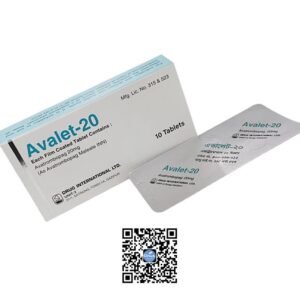
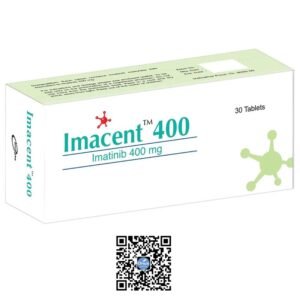
Address
Sector 14, Road no. 18, Uttara, 1230
Dhaka, Bangladesh


Rx Prescripttion Only-YMYL Medical Content
Approved for adults with chronic myeloid leukemia (CML) harboring the T315I mutation, or CML/Philadelphia chromosome-positive ALL resistant or intolerant to prior tyrosine kinase inhibitors (TKIs).
1
2
3
4
MD
Medical Oncologist Review
Board-certified oncologist · 12+ years in thoracic malignancies
Content reviewed against FDA prescribing information, NCCN Guidelines v2.2024, and published Phase III trial data. Last updated June 2026.
These steps help you have an informed conversation. A confirmed EGFR mutation result is the starting point for any treatment decision.
Medical disclaimer: This page is for informational purposes only and does not constitute medical advice, diagnosis, or treatment. It is a prescription medication that must only be used under the supervision of a qualified oncologist. Clinical outcomes data is drawn from published Phase III trials; individual results vary. Always consult your healthcare provider and refer to the full prescribing information before making any treatment decisions. Emergency: call your local emergency services or poison control immediately if you experience serious adverse effects.
Before confirming ponatinib as your treatment
About the boxed warnings — this is the most important section
About dosing strategy
About what to expect day-to-day
About my specific situation
About the longer road
A practical tip: Given the cardiovascular boxed warnings, it’s worth asking specifically whether your care team will coordinate with a cardiologist as part of ongoing monitoring — not just at baseline.
Generation and positioning
| Imatinib (Gleevec) | Dasatinib (Sprycel) | Nilotinib (Tasigna) | Ponatinib (Iclusig) | |
|---|---|---|---|---|
| Generation | 1st | 2nd | 2nd | 3rd |
| Approved | 2001 | 2006 | 2007 | 2012 |
| Pivotal trial | IRIS | DASISION | ENESTnd | PACE |
| Typical role | First-line option | First-line or after imatinib failure | First-line or after imatinib failure | After ≥2 prior TKIs, or T315I+ |
| T315I mutation coverage | No | No | No | Yes — only one that works |
Efficacy in newly diagnosed chronic-phase CML
Imatinib set the original benchmark, with roughly 80–90% achieving complete cytogenetic response over time and transforming CML from a fatal disease into a manageable chronic condition.
Dasatinib and nilotinib both showed faster and deeper molecular responses than imatinib in head-to-head trials (DASISION and ENESTnd), which is why they’re often preferred first-line today, though long-term overall survival differences versus imatinib have been less dramatic than the early response data suggested.
Ponatinib isn’t typically compared head-to-head for first-line use — its trial (PACE) enrolled patients who had already failed or couldn’t tolerate other TKIs, including many with T315I. In that resistant population, it achieved a 56% major cytogenetic response rate, and notably 70% in T315I-positive patients specifically — a population with essentially no other targeted option.
Side effect and monitoring profile — this is where they diverge most
| Imatinib | Dasatinib | Nilotinib | Ponatinib | |
|---|---|---|---|---|
| Most distinctive risk | Edema, muscle cramps, GI upset | Pleural effusion, bleeding risk | QTc prolongation, hyperglycemia, pancreatitis | Arterial occlusion (heart/brain/limb) |
| Cardiovascular risk | Lowest | Moderate (pulmonary hypertension) | Elevated (peripheral artery disease) | Highest of all approved TKIs |
| Boxed warnings | None | None | QTc prolongation, sudden death | Arterial occlusion, VTE, heart failure, hepatotoxicity |
| Generic availability | Yes — widely available | Limited | Limited | No |
This is the central trade-off: imatinib is the gentlest and cheapest but the least potent against resistant disease; ponatinib is the most potent against resistant/T315I disease but carries by far the most serious cardiovascular risk profile of the group.
Why ponatinib occupies a different category
The other three drugs are reasonable alternatives to each other for many patients — the choice often comes down to side-effect tolerance, cost/access (imatinib is generic), and comorbidities (avoiding nilotinib in patients with cardiovascular risk factors or diabetes, avoiding dasatinib in patients with lung disease).
Ponatinib isn’t really an “alternative” in that sense — it’s typically reserved for when the others have failed or when T315I is detected, because no amount of switching between imatinib, dasatinib, and nilotinib will overcome that specific resistance mutation.
Bottom line
If you’re newly diagnosed, the conversation usually centers on imatinib vs dasatinib vs nilotinib, weighing your cardiovascular and pulmonary risk factors, cost, and how aggressive your disease appears. Ponatinib enters the conversation specifically when prior TKIs haven’t worked, when intolerance has been severe, or when T315I is confirmed — at which point its cardiovascular risks need to be weighed against having effectively no other targeted option.
Your BCR-ABL mutation testing results, prior treatment history, and cardiovascular risk profile will all shape this — definitely a conversation to have with your hematology team using your own test results.
BCR-ABL testing actually happens in two distinct phases of CML care — diagnosis/monitoring versus resistance investigation — and T315I specifically only becomes relevant in the second phase.
Phase 1: Diagnosis — confirming the BCR-ABL fusion gene
CML is defined by the Philadelphia chromosome, a translocation between chromosomes 9 and 22 that creates the BCR-ABL1 fusion gene. This fusion gene produces an abnormal protein that drives uncontrolled white blood cell growth — and it’s the target that all BCR-ABL TKIs (imatinib, dasatinib, nilotinib, ponatinib) are designed to block.
At diagnosis, this is typically confirmed using:
Phase 2: Ongoing monitoring — tracking treatment response
Once on a TKI, quantitative RT-PCR becomes the routine monitoring tool, typically done every 3 months initially. Results are reported on the International Scale (IS), expressed as a percentage — for example, “BCR-ABL ≤0.1% IS” represents a major molecular response (MMR), a key treatment milestone.
This monitoring is what triggers the next phase of testing — if BCR-ABL levels rise unexpectedly or fail to drop as expected, that’s the signal to look for a resistance mutation.
Phase 3: Resistance testing — looking for T315I and other mutations
When response is inadequate or disease progresses on a TKI, mutation analysis (often called “kinase domain mutation testing”) is performed:
T315I specifically is a single point mutation in the BCR-ABL kinase domain that physically blocks imatinib, dasatinib, and nilotinib from binding — which is why none of those drugs work once it’s present, regardless of dose or switching between them.
Sample source
Like FLT3 testing in AML, this is done on peripheral blood (most common for monitoring) or bone marrow aspirate, since CML cells circulate freely — no tissue biopsy is needed.
Timeline
Initial diagnostic testing (karyotype/FISH/PCR) typically takes 1–2 weeks. Routine quantitative PCR monitoring usually returns in about 1 week. Mutation analysis for T315I, when triggered by loss of response, can take 2–3 weeks depending on whether Sanger sequencing or NGS is used.
What the result means for treatment
| Result | What it typically means |
|---|---|
| BCR-ABL detected at diagnosis | Confirms CML; baseline level set for future monitoring |
| BCR-ABL ≤0.1% IS (MMR) on treatment | Good response; continue current TKI |
| Rising BCR-ABL levels | Triggers mutation testing for resistance |
| T315I mutation detected | Imatinib, dasatinib, nilotinib will not work — ponatinib (or other T315I-active agents/trials) considered |
| Other kinase domain mutations | May guide switch to a different 2nd-gen TKI depending on which mutation |
One thing worth understanding for your own monitoring: the trend in your BCR-ABL numbers over successive tests often matters more than any single result. A gradual rise across two or three consecutive tests is a stronger signal than one slightly elevated reading.
Conatact US