Address
Sector 14, Road no. 18, Uttara, 1230
Dhaka, Bangladesh

Rx Prescripttion Only-YMYL Medical Content
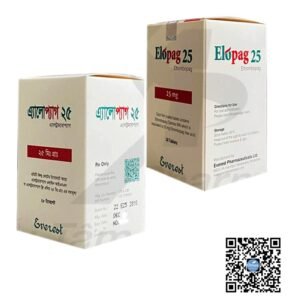
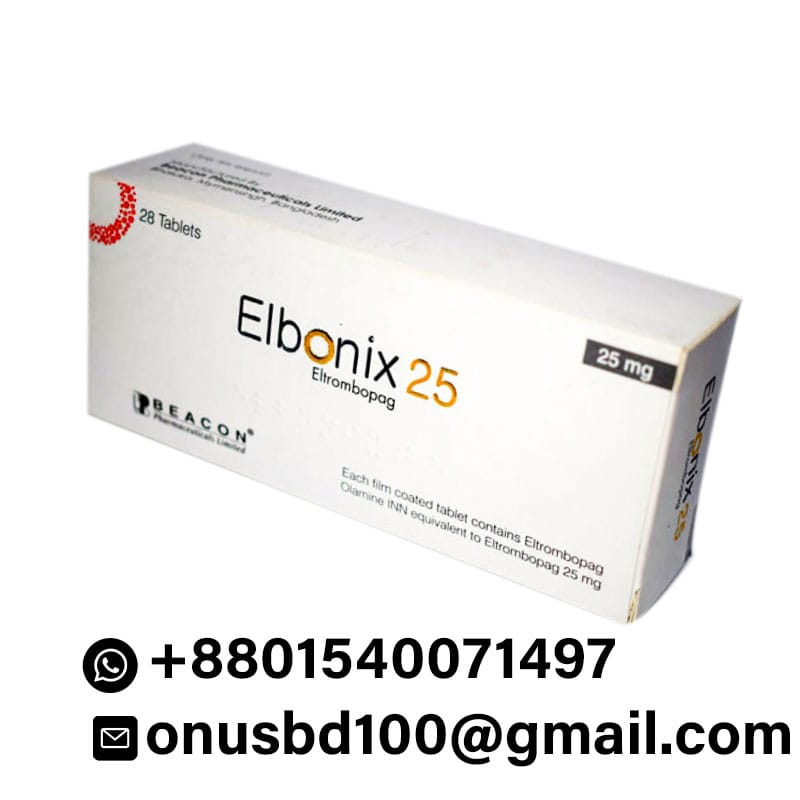
The 25mg dose is specifically used for: chronic hepatitis C virus (HCV)-associated thrombocytopenia to enable interferon-based therapy (standard starting dose); ITP patients of East or Southeast Asian ancestry (reduced starting dose due to known pharmacokinetic differences); and patients with any degree of hepatic impairment requiring a reduced starting dose regardless of ancestry or indication.
1
2
3
4
MD
Medical Oncologist Review
Board-certified oncologist · 12+ years in thoracic malignancies
Content reviewed against FDA prescribing information, NCCN Guidelines v2.2024, and published Phase III trial data. Last updated June 2026.
These steps help you have an informed conversation. A confirmed EGFR mutation result is the starting point for any treatment decision.
Medical disclaimer: This page is for informational purposes only and does not constitute medical advice, diagnosis, or treatment. It is a prescription medication that must only be used under the supervision of a qualified oncologist. Clinical outcomes data is drawn from published Phase III trials; individual results vary. Always consult your healthcare provider and refer to the full prescribing information before making any treatment decisions. Emergency: call your local emergency services or poison control immediately if you experience serious adverse effects.
Here are key questions to bring to your doctor — since this specific use of eltrombopag exists to support your hepatitis C treatment rather than as a standalone, indefinite therapy, understanding exactly how the two treatments are coordinated together is the most important groundwork.
Before confirming this treatment
About how the two treatments work together
About liver monitoring — especially important given the underlying condition
About blood clot risk — particularly relevant here
About platelet count monitoring
About administration timing
About managing common side effects
About drug interactions
About the bigger picture of my hepatitis C treatment
A practical tip: Because this use of eltrombopag is specifically tied to enabling your hepatitis C treatment rather than being an independent, long-term therapy, it’s worth asking your doctor to walk through the full timeline together — when eltrombopag starts, how its dose might change, and when (or whether) it’s expected to stop relative to your hepatitis C treatment course — so you have a clear picture of how these two parts of your care plan fit together rather than treating them as separate, unrelated medications.
The dosing difference here isn’t arbitrary — it reflects two genuinely different clinical goals, two different starting points for how low platelet counts typically run in each condition, and an important interaction between eltrombopag and the interferon-based therapy that HCV patients are often also taking.
The core distinction — different therapeutic goals entirely
This is the most fundamental difference, and everything else follows from it. In ITP, eltrombopag is typically the primary, standalone treatment for chronic thrombocytopenia — the goal is sustained, adequate platelet counts to prevent bleeding over the long term, often indefinitely or until remission. In HCV-associated thrombocytopenia, eltrombopag isn’t treating the underlying cause of low platelets at all — hepatitis C itself, combined with liver disease and often spleen enlargement, is what’s driving the low platelet count, and eltrombopag is being used as a supportive, enabling therapy specifically to allow interferon-based antiviral treatment to proceed or continue at its intended dose.
This difference in purpose — primary, long-term disease treatment versus short-term, treatment-enabling support — is the conceptual foundation for why the dosing approaches differ.
Why HCV patients typically start lower — interferon’s own platelet-lowering effect
This is a critical piece of the puzzle that’s specific to the HCV use case: interferon-based therapy, the backbone of older hepatitis C treatment regimens, is itself known to suppress bone marrow function, including platelet production, as a side effect. This creates a particular clinical challenge: a patient may already have thrombocytopenia from their underlying liver disease, and starting interferon would push platelet counts down even further, often forcing doctors to either reduce the interferon dose (potentially compromising antiviral effectiveness) or stop treatment altogether.
Eltrombopag’s role here is specifically calibrated to offset this anticipated drop, allowing interferon to be given at its full, intended dose rather than being reduced because of treatment-induced thrombocytopenia. The dose in this setting is specifically adjusted to avoid a dose reduction of peginterferon — meaning the eltrombopag dosing strategy is built around supporting a specific, separate treatment’s effectiveness, not simply raising platelet counts as high as possible. everestpharmabd
Why a standardized starting dose makes sense for this indication, while ITP dosing is more individualized
In chronic ITP, the dosing approach tends to be more individualized and gradually titrated upward over a longer treatment course, since the goal is finding the lowest dose that sustains adequate platelet counts over potentially years of treatment, often starting at 50mg and adjusting from there based on response. In HCV-associated thrombocytopenia, the timeline is more defined and shorter — generally tied to the duration of antiviral treatment — and starting at a lower, standardized 25mg dose reflects a more cautious initial approach appropriate for a population that, by definition, already has underlying liver disease and may be more sensitive to the drug’s effects from the outset.
Why the liver disease itself changes how the drug behaves in this population
This connects directly to a broader pharmacological principle we discussed with kidney function and baricitinib: the liver plays a meaningful role in how many drugs are processed and cleared from the body. HCV-associated thrombocytopenia patients, by definition, have hepatitis C affecting their liver — and depending on the degree of liver impairment present, eltrombopag exposure can be higher than expected at a given dose, since impaired liver function may reduce how efficiently the drug is metabolized and cleared.
This is precisely why hepatic impairment is one of the specific scenarios calling for the lower 25mg starting dose regardless of which indication is being treated — but it’s a consideration that applies almost universally to the HCV population specifically, since liver involvement is inherent to having hepatitis C in the first place, whereas it’s just one possible complicating factor among many in the broader ITP population.
Why the underlying disease biology of low platelets differs
It’s worth understanding that the mechanism behind low platelets differs somewhat between these two conditions, even though eltrombopag addresses both through the same TPO-receptor activation pathway. In ITP, the dominant problem is immune-mediated platelet destruction, as we discussed previously — the bone marrow may actually be working reasonably well, but platelets are being destroyed faster than they can be replaced. In HCV-associated thrombocytopenia, the mechanism is more complex and multifactorial — it can involve reduced thrombopoietin production by a damaged liver (since the liver is the primary site of natural TPO production), splenic sequestration of platelets due to enlarged spleen from liver disease, and sometimes a component of bone marrow suppression from the virus or interferon treatment itself.
Because eltrombopag works downstream of all these different contributing mechanisms — directly activating the TPO receptor regardless of why platelet counts are low — it can be effective in both settings, but the differing severity and multifactorial nature of HCV-associated thrombocytopenia is part of why a more cautious, standardized starting approach makes clinical sense.
Why ancestry-based dosing applies primarily to the ITP population in practical terms
This is a related but distinct dosing consideration we touched on for the 50mg page: the lower starting dose for patients of East or Southeast Asian ancestry reflects known pharmacokinetic differences in how the drug is processed, generally discussed in the context of ITP dosing guidance specifically. In the HCV setting, the 25mg starting dose already serves as the universal starting point regardless of ancestry, since the liver-disease-related caution already calls for this more conservative approach — though your physician would still want to know your ancestry as one of potentially several factors influencing how your dose might be adjusted from that starting point.
The bigger picture
The dosing difference between hepatitis C-associated thrombocytopenia and ITP isn’t really about eltrombopag working differently in each condition — the underlying TPO-receptor mechanism is identical. It reflects three converging clinical realities: a different and more specific therapeutic goal (enabling interferon therapy versus treating chronic thrombocytopenia directly), the near-universal presence of liver impairment in the HCV population affecting how the drug is processed, and the predictable, treatment-induced platelet drop that interferon itself causes. Together, these factors make a standardized, more cautious starting dose the appropriate approach for HCV-associated thrombocytopenia, while ITP dosing allows for more individualized titration over a longer, often open-ended treatment course.
This is a genuinely important question because it gets at something counterintuitive — you might assume raising platelet counts in a patient with low platelets is straightforwardly protective, but in the specific context of liver disease, this same beneficial effect can tip the balance toward a clotting problem rather than just fixing a bleeding risk.
The baseline biology — why liver disease changes the blood clotting equation in the first place
This requires understanding something that’s easy to overlook: liver disease doesn’t simply cause bleeding risk through low platelets — it actually creates a far more complex, precariously balanced clotting system. The liver produces most of the body’s clotting factors (proteins essential for forming blood clots) alongside several natural anticoagulant proteins that prevent excessive clotting. In liver disease, production of both pro-clotting and anti-clotting factors tends to decline together, which is why patients with cirrhosis or significant liver disease are often said to have “rebalanced” rather than simply impaired clotting — they can be at risk for both excessive bleeding and excessive clotting simultaneously, depending on the specific circumstances.
Low platelet counts in liver disease are part of this same picture — partly from reduced thrombopoietin production by the damaged liver, and partly from splenic sequestration we discussed previously, where an enlarged spleen (common in liver disease due to increased pressure in the portal venous system) traps and holds onto platelets rather than letting them circulate freely.
The portal vein — a uniquely vulnerable site in liver disease
The portal vein is the major blood vessel carrying blood from the digestive organs to the liver for processing. In liver disease, particularly cirrhosis, blood flow through this vessel and the liver itself becomes increasingly sluggish and turbulent due to scarring and architectural distortion of liver tissue — a condition called portal hypertension. Sluggish, turbulent blood flow is itself a recognized risk factor for clot formation, completely independent of platelet count, since blood that isn’t moving smoothly and efficiently has more opportunity for clotting factors to interact and form an unwanted clot.
This means the portal vein in a patient with significant liver disease is already a site primed for clot formation before eltrombopag enters the picture at all — it’s a vessel under unusual hemodynamic stress.
How raising platelet counts adds to this existing vulnerability
This is where eltrombopag’s intended therapeutic effect becomes a double-edged consideration specifically in this population. By stimulating the TPO receptor and driving increased platelet production, exactly as designed, eltrombopag raises platelet counts — generally a beneficial effect for reducing bleeding risk. But in a blood vessel that’s already prone to sluggish flow and clot formation due to portal hypertension, adding more platelets into circulation can meaningfully increase the raw material available for clot formation at precisely the site where conditions already favor it.
In simpler terms: eltrombopag doesn’t directly cause clots through some separate, unrelated mechanism — it’s specifically the drug doing its intended job (raising platelet counts) in a vascular environment (the portal vein in liver disease) that’s unusually susceptible to clot formation when platelet counts increase.
Why this risk is much less relevant outside of liver disease
This explains why portal vein thrombosis isn’t highlighted as a defining risk in ITP patients without liver involvement, even though they’re taking the same medication with the same platelet-raising mechanism — without portal hypertension and the associated sluggish, turbulent blood flow through the portal vein, there isn’t the same underlying vascular vulnerability for raised platelet counts to interact with. The risk is specifically a product of the intersection between eltrombopag’s mechanism and the unique vascular changes that occur with liver disease, not something inherent to platelet-raising therapy in general.
Why this directly explains the cautious dosing approach we discussed for the 25mg HCV dose
This connects precisely to why hepatic impairment specifically calls for a lower starting dose, and why the risk-benefit balance should be carefully considered before starting eltrombopag in any patient at thromboembolic risk, with eltrombopag specifically recommended only when the expected benefit clearly outweighs the risk of portal venous thrombosis in patients with hepatic impairment. A lower starting dose means a more gradual, controlled rise in platelet count, giving the clinical team more opportunity to monitor the response and identify any concerning trend before platelet counts climb to a level that meaningfully compounds the existing portal vein vulnerability.
Why monitoring platelet counts closely matters so much here specifically
This also explains why “use the lowest dose needed to achieve and maintain an adequate platelet count” — a principle we’ve emphasized throughout this conversation — carries extra weight in the liver disease population specifically. Overshooting the target platelet count doesn’t just risk generic thrombosis the way it might in any patient; in someone with portal hypertension, it specifically risks clot formation at a site that’s already structurally and functionally compromised, potentially worsening liver blood flow further and complicating the underlying liver disease itself.
Why avatrombopag’s different profile is relevant context here
This connects back to something we touched on in the romiplostim comparison: avatrombopag, another TPO-receptor agonist licensed specifically for thrombocytopenia associated with liver disease, has shown preliminary observations suggesting it may confer a particularly low thrombotic risk compared to eltrombopag or romiplostim, due to differences in its metabolites — inducing portal vein clotting to a lesser extent. This is a useful, practical data point if portal vein thrombosis risk is a significant concern in your specific situation — it suggests this isn’t necessarily an unavoidable feature of all TPO-receptor agonists used in liver disease, but may relate to specific molecular characteristics that differ between agents in this drug class.
The bigger picture
Portal vein thrombosis risk with eltrombopag in liver disease isn’t a separate, unrelated side effect — it emerges directly from the intersection of the drug doing exactly what it’s designed to do (raising platelet counts) within a vascular environment that liver disease has already made unusually vulnerable to clot formation (sluggish, turbulent portal blood flow from portal hypertension). This is precisely why hepatic impairment specifically — rather than thrombocytopenia in general — calls for extra caution, a lower starting dose, and close monitoring when using this medication, and why a newer alternative agent with a potentially more favorable risk profile in this specific population is an active area of clinical interest.
Conatact US