Address
Sector 14, Road no. 18, Uttara, 1230
Dhaka, Bangladesh

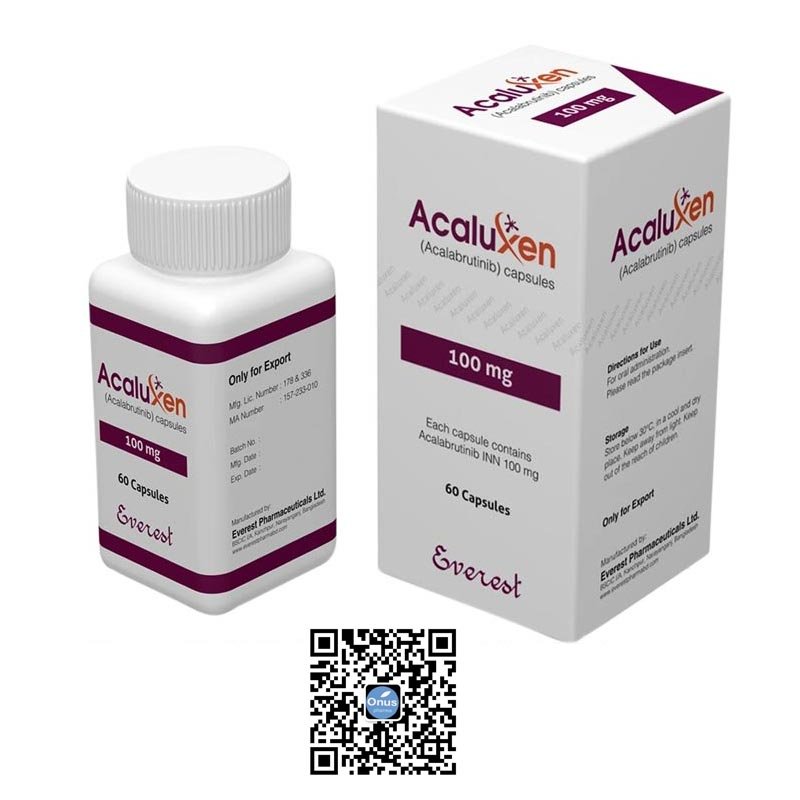
Rx Prescripttion Only-YMYL Medical Content
Approved for adults with chronic lymphocytic leukemia (CLL) or small lymphocytic lymphoma (SLL), and for mantle cell lymphoma (MCL) in patients who have received at least one prior treatment.
1
2
3
4
MD
Medical Oncologist Review
Board-certified oncologist · 12+ years in thoracic malignancies
Content reviewed against FDA prescribing information, NCCN Guidelines v2.2024, and published Phase III trial data. Last updated June 2026.
These steps help you have an informed conversation. A confirmed EGFR mutation result is the starting point for any treatment decision.
Medical disclaimer: This page is for informational purposes only and does not constitute medical advice, diagnosis, or treatment. It is a prescription medication that must only be used under the supervision of a qualified oncologist. Clinical outcomes data is drawn from published Phase III trials; individual results vary. Always consult your healthcare provider and refer to the full prescribing information before making any treatment decisions. Emergency: call your local emergency services or poison control immediately if you experience serious adverse effects.
Here are key questions to bring to your hematologist — given that acalabrutinib was specifically designed to improve on cardiac tolerability compared to earlier BTK inhibitors, confirming your baseline cardiac status and understanding what monitoring looks like going forward are good places to start, alongside the bleeding risk that’s shared across this entire drug class.
Before confirming acalabrutinib as your treatment
About cardiac monitoring
About bleeding risk — a shared concern across this drug class
About infection risk
About drug interactions
About dosing and administration
About managing common side effects
About monitoring response
About the longer road
A practical tip: Because acalabrutinib was specifically developed to improve on the cardiac side-effect profile of earlier BTK inhibitors, it’s worth asking your hematologist directly how confident they are that this benefit will hold for someone with your specific cardiac history — and whether any additional baseline testing makes sense for you personally, rather than assuming the trial-level safety advantage automatically applies to every individual patient regardless of their starting risk factors.
This comparison is unusually well-supported by direct evidence — unlike many of the drug comparisons we’ve covered in this conversation, this one comes from an actual head-to-head randomized trial rather than cross-trial extrapolation, making it one of the more confident comparisons in our entire series.
Both are BTK inhibitors, but from different drug generations
| Acalabrutinib (Calquence) | Ibrutinib (Imbruvica) | |
|---|---|---|
| Generation | Next-generation, more selective BTK inhibitor | First-generation BTK inhibitor |
| FDA approval | 2017 | 2014 — first BTK inhibitor approved, revolutionized CLL treatment |
| Dosing | 100mg twice daily | Once daily |
| Manufacturer | AstraZeneca | AbbVie/Janssen |
Efficacy — a genuine head-to-head trial found them equally effective
The ELEVATE-RR trial directly compared acalabrutinib to ibrutinib in previously treated, high-risk CLL patients, and acalabrutinib met the study’s primary endpoint of demonstrating non-inferior progression-free survival. At a median follow-up of 40.9 months, median PFS was 38.4 months in both arms, with a hazard ratio of 1.0 — about as close to “identical efficacy” as a clinical trial result can show.
There was also a descriptive trend toward numerically favorable overall survival with acalabrutinib, though this wasn’t the trial’s primary focus and shouldn’t be over-interpreted as a definitive survival advantage.
Safety — this is where the meaningful difference actually lives
| Acalabrutinib | Ibrutinib | |
|---|---|---|
| All-grade atrial fibrillation | 9.4% | 16.0% |
| Hypertension | 9.4% | 23.2% |
| Bleeding events | 38.0% | 51.3% |
| Treatment discontinuation due to AEs | 14.7% | 21.3% |
Across every one of these major toxicity categories, acalabrutinib showed a consistently lower burden than ibrutinib. In patients without prior atrial fibrillation specifically, the incidence of new-onset atrial fibrillation was more than twice as high with ibrutinib as with acalabrutinib (14.9% vs 6.2%), and the time to developing atrial fibrillation was notably longer with acalabrutinib (28.8 months vs 16 months) — meaning not only was it less common, it also tended to occur later when it did happen.
Treatment discontinuation specifically attributed to atrial fibrillation occurred in no patients on acalabrutinib, compared to 16.7% of patients on ibrutinib — a striking, clinically meaningful difference, since stopping an effective cancer therapy because of a treatment-related side effect is a genuinely significant event in a patient’s care.
A more rigorous safety analysis confirms this isn’t just a simple “fewer side effects” story
A secondary analysis of ELEVATE-RR went beyond simply counting adverse events, using an event-based methodology that accounted for the duration, recurrence, and severity of toxicities over time — not just whether an event happened at all. This more detailed analysis confirmed that acalabrutinib showed lower overall and exposure-adjusted incidence rates and lower cumulative toxicity burden scores for atrial fibrillation/flutter, hypertension, and bleeding compared with ibrutinib — reinforcing that this isn’t simply about which drug happens to cause fewer isolated incidents, but that acalabrutinib produces a genuinely lighter overall toxicity burden over the full course of treatment.
Real-world data outside the controlled trial setting backs this up
A large population-level real-world study found acalabrutinib was associated with a 41% reduced risk of atrial fibrillation or flutter and a 35% reduced risk of hypertension compared with ibrutinib, confirming the ELEVATE-RR findings outside the controlled trial setting. This matters because real-world results don’t always mirror tightly controlled clinical trial populations — the fact that this pattern held up in routine practice strengthens confidence in the trial’s findings.
Sustained benefit in the front-line setting too
Separately, updated four-year follow-up results from the ELEVATE-TN trial — evaluating acalabrutinib in the front-line, previously untreated setting, either alone or combined with obinutuzumab versus chlorambucil-based therapy — continued to show a strong progression-free survival benefit and favorable tolerability, suggesting acalabrutinib’s favorable profile isn’t limited to the relapsed/refractory setting where the direct ibrutinib comparison was conducted.
Why this favorable cardiac profile makes biological sense
This connects to acalabrutinib’s underlying design rationale: as a more selective BTK inhibitor, it was specifically engineered to reduce off-target kinase inhibition compared to ibrutinib — and several of ibrutinib’s most troublesome side effects, including atrial fibrillation and bleeding, are thought to relate partly to its broader, less selective kinase inhibition profile hitting targets beyond BTK itself. Acalabrutinib’s improved selectivity is a plausible mechanistic explanation for why its real-world and trial-based safety data consistently favor it across multiple toxicity categories.
Bottom line
This is one of the more decisively favorable comparisons in our entire series: ELEVATE-RR demonstrated that acalabrutinib achieves equivalent disease control to ibrutinib in CLL, with consistently and substantially better cardiovascular and bleeding safety across multiple independent measures — both in the controlled trial and in subsequent real-world data. This is precisely why acalabrutinib has increasingly become a preferred first-choice BTK inhibitor over ibrutinib for many patients, particularly those with any cardiac risk factors. That said, ibrutinib still has a longer track record overall, once-daily dosing (a convenience advantage worth weighing), and remains a reasonable option for patients already established and doing well on it. This is worth discussing directly with your hematologist, especially in light of your own cardiac history, since that’s precisely the patient population where this trial’s findings are most clinically actionable.
BTK inhibition is a great example of how understanding a cancer’s specific survival dependency — rather than just attacking cells indiscriminately — can lead to a remarkably effective and comparatively well-tolerated targeted therapy. The story here involves a single enzyme that sits at a critical junction in B-cell survival signaling, and two generations of drugs that block it with very different degrees of precision.
The basic biology — what BTK does in normal B cells
BTK (Bruton’s tyrosine kinase) is a signaling molecule of the B-cell antigen receptor (BCR) and cytokine receptor pathways. In healthy B cells (the white blood cells responsible for producing antibodies), the B-cell receptor sits on the cell surface and, when activated by an antigen, triggers a cascade of internal signaling that determines whether that B cell survives, proliferates, and matures. In B cells, BTK signaling results in activation of pathways necessary for B-cell proliferation, trafficking, chemotaxis, and adhesion.
This is a completely normal, essential part of a healthy immune system — BTK signaling helps the body generate and maintain the B cells needed to fight infection.
Why CLL cells become dependent on this same pathway
In chronic lymphocytic leukemia, the malignant B cells don’t abandon this normal signaling pathway — instead, they become heavily, almost addictively, dependent on continuous BCR/BTK signaling for their own survival and proliferation. The very same pathway that helps a healthy B cell respond appropriately to an immune challenge gets hijacked and over-relied upon by the leukemic cell to keep itself alive and multiplying, even though there’s no genuine immune signal driving this activity.
This dependency is what makes BTK such an attractive drug target: block this one signaling node, and you specifically undermine a pathway the cancer cells have become unusually reliant on, while normal cells throughout the body that don’t share this same degree of dependency are comparatively less affected.
How acalabrutinib blocks BTK — covalent, irreversible binding
Acalabrutinib and its active metabolite form a covalent bond with a cysteine residue in the BTK active site, leading to inhibition of BTK enzymatic activity. This is mechanistically similar in concept to what we discussed with osimertinib’s irreversible EGFR binding — rather than competing reversibly for the enzyme’s active site, acalabrutinib chemically bonds to a specific amino acid (cysteine) within that site, permanently disabling that particular BTK molecule. The leukemic cell loses its survival signal through this pathway, ultimately triggering cell death or at least removing the proliferative and survival advantage the cancer cell had been exploiting.
Why acalabrutinib is described as “more selective” than ibrutinib
This is where the two drugs genuinely diverge, even though both are technically BTK inhibitors working through a similar covalent-binding strategy. Both drugs were designed to bind the same cysteine residue within BTK’s active site, but ibrutinib — being the first-generation drug in this class — was found to also bind, with meaningful affinity, to several other kinases beyond BTK that happen to have a structurally similar binding pocket. These “off-target” kinases include things like EGFR, ITK (a kinase important in T-cell function), and TEC family kinases involved in platelet function.
Acalabrutinib was specifically engineered with a refined chemical structure to bind BTK’s active site more precisely, with substantially reduced affinity for these other off-target kinases compared to ibrutinib. This is the structural basis for calling it a “more selective” or “next-generation” BTK inhibitor — it was deliberately optimized to hit its intended target while minimizing collateral interaction with structurally similar but functionally unrelated enzymes.
Why this selectivity explains the cardiac and bleeding safety differences
This connects directly to the comparison we just discussed: ibrutinib’s broader off-target activity is thought to be mechanistically linked to several of its more troublesome side effects. Its activity against TEC family kinases, which play a role in normal platelet function, is believed to contribute to ibrutinib’s higher bleeding risk. Similarly, off-target effects on other cardiac-relevant kinases have been proposed as part of the explanation for ibrutinib’s higher rate of atrial fibrillation compared to acalabrutinib.
In other words, the lower atrial fibrillation, hypertension, and bleeding rates we discussed in the ELEVATE-RR trial aren’t simply a random, unexplained difference between two similar drugs — they have a plausible, structurally grounded mechanistic explanation rooted in exactly how selectively each drug binds its intended target versus other kinases it happens to structurally resemble.
Why BTK inhibitors changed CLL treatment so fundamentally
BTK inhibitors, approved beginning in 2014, have revolutionized the treatment of chronic lymphocytic leukemia — this class of drug represented a genuine shift away from older chemoimmunotherapy approaches toward a continuous, oral, targeted therapy that exploits CLL cells’ specific signaling dependency rather than broadly killing dividing cells. This is conceptually similar to several of the other targeted therapies we’ve discussed throughout this conversation — identifying a cancer’s specific molecular Achilles’ heel rather than relying on the blunter instrument of traditional chemotherapy.
Why selectivity matters even though both drugs hit the “right” target
This is worth being explicit about as a broader principle: even when two drugs are both designed around the same correct, validated cancer target, the precision of how selectively they bind that target — and avoid unrelated targets — can meaningfully shape the resulting side-effect profile, sometimes as much as or more than the core anticancer mechanism itself. Acalabrutinib’s story illustrates that “second-generation” drug improvements within an already-successful drug class often aren’t about discovering an entirely new target, but about refining the chemistry to hit the same validated target more precisely.
The bigger picture
BTK inhibition works by cutting off a signaling pathway that CLL cells have become dependent on for survival, exploiting a vulnerability that exists because the leukemia hijacked a normally beneficial immune signaling system rather than abandoning it. Acalabrutinib’s improved selectivity for BTK over structurally similar off-target kinases represents a refinement of this already-successful strategy — not a fundamentally different approach, but a more precisely engineered version of it, which is exactly why its clinical trial and real-world data show equivalent cancer control alongside a meaningfully better cardiovascular and bleeding safety profile compared to the first-generation drug that pioneered this entire treatment class.




Conatact US