Address
Sector 14, Road no. 18, Uttara, 1230
Dhaka, Bangladesh

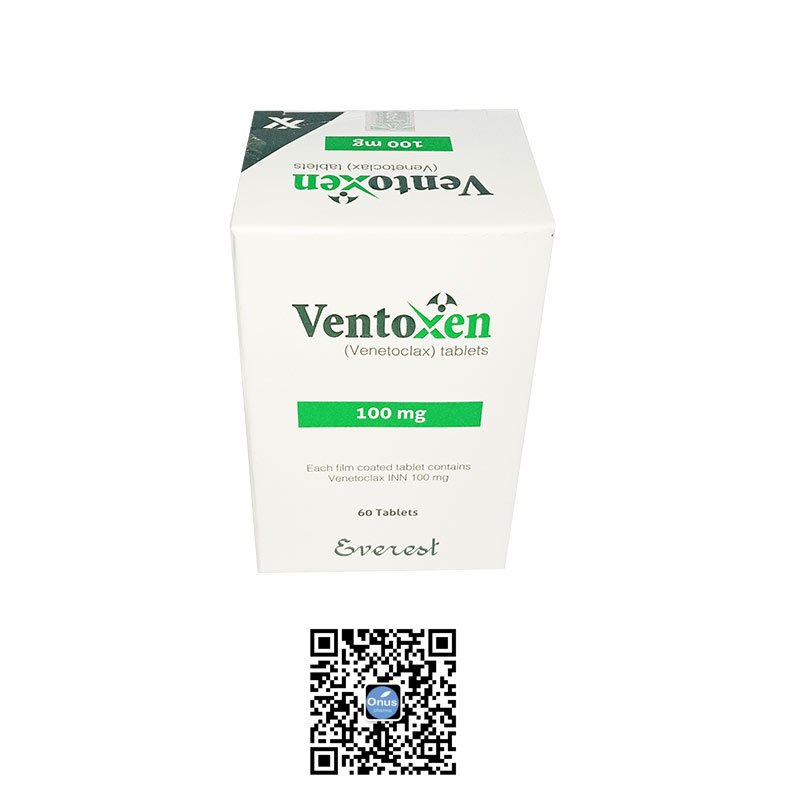

Rx Prescripttion Only-YMYL Medical Content
Approved for: CLL/SLL — in combination with obinutuzumab (first-line, fixed 12-month duration), or with rituximab (after at least one prior therapy), or as monotherapy in specific high-risk or heavily pretreated settings; and AML — in combination with azacitidine or decitabine or low-dose cytarabine, in adults aged ≥75 years or with comorbidities precluding intensive induction chemotherapy.
1
2
3
4
MD
Medical Oncologist Review
Board-certified oncologist · 12+ years in thoracic malignancies
Content reviewed against FDA prescribing information, NCCN Guidelines v2.2024, and published Phase III trial data. Last updated June 2026.
These steps help you have an informed conversation. A confirmed EGFR mutation result is the starting point for any treatment decision.
Medical disclaimer: This page is for informational purposes only and does not constitute medical advice, diagnosis, or treatment. It is a prescription medication that must only be used under the supervision of a qualified oncologist. Clinical outcomes data is drawn from published Phase III trials; individual results vary. Always consult your healthcare provider and refer to the full prescribing information before making any treatment decisions. Emergency: call your local emergency services or poison control immediately if you experience serious adverse effects.
Here are key questions to bring to your oncologist — given that venetoclax has a Boxed Warning for tumour lysis syndrome that can occur within 6-8 hours of the very first 20mg dose, the pre-treatment TLS risk assessment, hydration plan, and monitoring schedule must all be arranged and confirmed before you take a single tablet.
Before confirming venetoclax as your treatment
About the mandatory 5-week ramp-up — the most important practical conversation
About tumour lysis syndrome — the Boxed Warning
About the CYP3A4 drug interaction — critical during ramp-up
About neutropenia and infection risk
About the combination partner — specific questions for each
About fixed-duration treatment — if applicable
About hepatic impairment
About dosing and administration
About contraception
About monitoring response
About the longer road
A practical tip: The single most important pre-treatment action with venetoclax is arranging the complete TLS prophylaxis and monitoring plan before your first tablet — not on the day you pick up the prescription. This means having the allopurinol prescription filled and started in advance, the hydration instructions written down and begun two days before the first dose, the blood test appointments booked for before and after the first dose and each subsequent dose increase, and a clear written plan for what to do and where to go if TLS symptoms develop within the first 24 hours. Ask your oncologist for this written plan as a physical document before you leave the appointment — not as a verbal summary you may not fully recall when you’re anxious on day one.
Tumour lysis syndrome is one of the most important oncological emergencies — and venetoclax’s relationship to it is mechanistically direct and unusually intimate, because the drug causes TLS not as an unpredictable side effect but as a consequence of working exactly as intended, only faster and more completely than the body can safely manage.
What tumour lysis syndrome is
Tumour lysis syndrome occurs when large numbers of cancer cells die rapidly and simultaneously, releasing their internal contents into the bloodstream faster than the kidneys can clear them. Every cell contains substantial quantities of potassium, phosphate, and nucleic acids (DNA and RNA). When cells die normally — one or a few at a time in the ordinary course of cell turnover — these contents are cleared gradually and efficiently. When thousands or millions of cancer cells die within hours of each other, the sudden flood of intracellular contents overwhelms the kidneys’ clearance capacity, producing a cascade of dangerous metabolic abnormalities.
The four defining metabolic derangements of TLS are hyperuricaemia (elevated uric acid, from nucleic acid breakdown), hyperkalaemia (elevated potassium), hyperphosphataemia (elevated phosphate), and hypocalcaemia (low calcium, which falls secondary to phosphate binding it). Each of these individually can cause serious organ damage; together they create a life-threatening multi-system emergency.
Why each metabolic derangement is dangerous
Hyperuricaemia — uric acid, produced when nucleic acids from dead cells are broken down, precipitates in kidney tubules at the concentrations produced by massive cell death, causing acute kidney injury that further reduces the kidneys’ ability to clear the other toxic products.
Hyperkalaemia — potassium is the primary intracellular cation; dying cells release it in bulk. Elevated serum potassium disrupts cardiac electrical conduction, causing potentially fatal arrhythmias including ventricular fibrillation.
Hyperphosphataemia — phosphate released from dead cells binds calcium in the bloodstream, driving serum calcium down. Both the elevated phosphate and the resulting hypocalcaemia can cause acute kidney injury through calcium phosphate precipitation in kidney tubules.
Hypocalcaemia — low calcium causes neuromuscular hyperexcitability, producing muscle cramps, tetany, seizures, and cardiac arrhythmias.
Why venetoclax specifically causes TLS — the BCL-2 mechanism
This is the mechanistically important part. As we discussed when building the Ventoxen page, venetoclax works by selectively inhibiting BCL-2 — an anti-apoptotic protein that cancer cells overexpress specifically to protect themselves from programmed cell death. BCL-2 acts as a molecular brake on apoptosis, allowing cancer cells to accumulate and persist by continuously preventing the cell death signals that would normally eliminate them.
When venetoclax binds BCL-2 and neutralises its protective function, the cancer cells that have been accumulating — sometimes for years, with apoptosis continuously suppressed — suddenly lose their primary survival signal simultaneously. The result is rapid, synchronised apoptosis of large numbers of cancer cells within hours of the first dose. This is not venetoclax killing cells through cytotoxic damage the way chemotherapy does — it is venetoclax removing the molecular brake that was preventing cells from dying of their own accord, causing a wave of simultaneous programmed death.
The speed and synchrony of this cell death is what creates the TLS risk. Venetoclax doesn’t gradually accumulate in the body and kill cells over days or weeks — it achieves meaningful BCL-2 inhibition within hours of the first dose, and in a patient with a large burden of BCL-2-overexpressing cancer cells, this can produce a dramatic wave of simultaneous cell death before the kidneys can manage the metabolic consequences.
Why TLS can occur at the very first 20mg dose
This surprises many patients and even some clinicians encountering venetoclax for the first time — the drug starts with a 20mg dose specifically to reduce TLS risk, yet TLS including fatal cases has been reported after a single 20mg dose, with metabolic changes occurring as early as 6-8 hours after the first tablet.
The explanation is that even 20mg of venetoclax achieves enough BCL-2 inhibition in a patient with high tumour burden to trigger substantial synchronous cell death. The degree of TLS risk depends not on the dose alone but on the interaction between the dose of drug and the number and sensitivity of BCL-2-dependent cancer cells present. A patient with very high circulating lymphocyte counts or large lymph nodes contains enormous numbers of cells held in suspension by BCL-2 suppression of apoptosis — even partial BCL-2 inhibition at 20mg can release enough of this pent-up apoptotic pressure to overwhelm renal clearance capacity.
Why the 5-week ramp-up works — the pharmacological logic
The ramp-up schedule — 20mg, 50mg, 100mg, 200mg, 400mg in weekly steps — is designed to reduce the tumour burden incrementally before each dose increase, so that by the time the full 400mg therapeutic dose is reached, the total number of BCL-2-dependent cancer cells available to die simultaneously has been substantially reduced by the previous weeks of lower-dose treatment.
At 20mg, a relatively small proportion of BCL-2 molecules are inhibited, causing a modest wave of cell death. The resulting metabolic release is manageable with good hydration and uric acid-lowering therapy. After a week at 20mg, the most vulnerable cancer cells — those most dependent on BCL-2 — have already died. When the dose increases to 50mg, the next wave of cell death affects a smaller remaining tumour burden. Each subsequent weekly increase occurs against a progressively reduced cancer cell population, meaning each new wave of cell death is smaller and more manageable than if the full 400mg dose had been given immediately.
Post-marketing data confirms that the 5-week ramp-up effectively mitigates TLS risk in the vast majority of outpatients when hydration protocols are strictly followed. The rate of TLS in CLL/SLL patients following the current 5-week ramp-up and TLS prophylaxis measures was 2% in venetoclax monotherapy trials.
Why hydration and allopurinol are specifically required
Adequate hydration — 1.8 litres per day starting two days before the first dose — serves two purposes: it maximises renal blood flow and glomerular filtration to help clear the flood of metabolic products, and it dilutes urinary uric acid to reduce the risk of crystallisation in kidney tubules. Allopurinol works upstream by inhibiting xanthine oxidase, the enzyme that converts the nucleic acid breakdown products hypoxanthine and xanthine into uric acid — reducing the total uric acid load produced before it reaches the kidney rather than trying to clear it after it has already formed.
Why high-risk patients may require hospitalisation for the first doses
TLS risk stratification before venetoclax initiation classifies patients based on tumour burden and renal function into low, medium, and high risk categories. High-risk patients — typically those with very elevated lymphocyte counts, large lymph nodes, or impaired kidney function — may require in-hospital monitoring for the first dose increase at each ramp-up step, since the speed of metabolic derangement (6-8 hours after the first dose) means that outpatient monitoring with delayed blood tests could miss the critical window for intervention.
Why the interaction with CYP3A4 inhibitors specifically worsens TLS risk at ramp-up
Venetoclax is metabolised by CYP3A4. When a strong CYP3A4 inhibitor is co-administered, venetoclax blood levels can increase dramatically — effectively delivering a much higher functional dose than intended for a given tablet dose. This means a patient prescribed 20mg at ramp-up but also taking a strong CYP3A4 inhibitor might experience an effective exposure equivalent to a much higher dose, triggering a larger and potentially fatal wave of simultaneous cell death. This is why strong CYP3A4 inhibitors including ketoconazole, itraconazole, clarithromycin, and ritonavir are specifically contraindicated during initiation and ramp-up — the combination could convert a carefully calibrated low-risk first dose into a dangerously high effective exposure.
The bigger picture
Venetoclax’s TLS risk is unique among all drugs in this conversation because it is a direct, mechanistically inevitable consequence of the drug working as intended — removing BCL-2’s suppression of apoptosis causes precisely the rapid, synchronised cancer cell death that the body’s metabolic clearance systems cannot safely manage at full dose. Every protective measure — the 5-week ramp-up, mandatory hydration, allopurinol prophylaxis, blood chemistry monitoring, and the CYP3A4 inhibitor contraindication — exists to make the metabolic consequences of this intended, beneficial cell death safe to navigate rather than to prevent the drug from working.
We covered the BCL-2 inhibition mechanism in detail on the Ventoxen product page and in the TLS explanation just completed — here are the key points pulled forward concisely with the full mechanistic picture assembled in one place.
What BCL-2 is and why it matters in cancer
BCL-2 (B-cell lymphoma 2) is a protein that sits on the outer membrane of mitochondria and acts as a fundamental regulator of apoptosis — programmed cell death. In healthy cells, BCL-2 and its pro-apoptotic counterparts maintain a carefully balanced equilibrium that determines whether a cell lives or dies in response to internal and external signals. BCL-2 itself is anti-apoptotic — it suppresses cell death by binding and neutralising pro-apoptotic proteins (particularly BAX and BAK) that would otherwise punch holes in the mitochondrial membrane and trigger the death cascade.
In normal cell biology this balance is essential — it prevents healthy cells from dying inappropriately while allowing damaged, infected, or senescent cells to be eliminated through programmed death.
How cancer cells exploit BCL-2 overexpression
Many B-cell cancers — CLL being the paradigmatic example — overexpress BCL-2 to an extraordinary degree. A chromosomal translocation t(14;18) that places the BCL-2 gene under the control of an immunoglobulin heavy chain promoter was one of the first oncogenic mechanisms ever characterised, identified in the 1980s in follicular lymphoma. In CLL, BCL-2 overexpression occurs through a different mechanism but produces the same functional result: cancer cells are flooded with BCL-2 protein, which continuously suppresses all apoptotic signals and allows malignant cells to accumulate indefinitely without dying as normal cells would.
This BCL-2-mediated evasion of apoptosis is why CLL cells accumulate over years rather than dying after their normal lifespan — the disease is less about uncontrolled proliferation and more about failure of cell death. The cancer cells aren’t necessarily dividing faster than normal; they simply aren’t dying as they should.
How venetoclax specifically targets BCL-2
Venetoclax is a selective and orally bioavailable small-molecule inhibitor of BCL-2. It was specifically designed using structure-based drug design to fit precisely into the hydrophobic groove on BCL-2’s surface — the same groove through which BCL-2 normally captures and neutralises pro-apoptotic proteins like BAX and BAK.
By occupying this groove with very high affinity and specificity, venetoclax acts as a BH3 mimetic — it mimics the BH3 domain of pro-apoptotic proteins, competing with them for BCL-2 binding. When venetoclax occupies BCL-2’s binding groove, the pro-apoptotic proteins BAX and BAK are displaced and liberated. Without BCL-2 holding them in check, BAX and BAK are free to oligomerise (cluster together) on the mitochondrial outer membrane, punching holes in it and releasing cytochrome c into the cytoplasm. Cytochrome c then activates the caspase cascade — the molecular execution machinery of apoptosis — and the cell undergoes programmed death.
Why venetoclax restores rather than forces cell death
This is the conceptually important distinction from chemotherapy and most other targeted therapies in this conversation. Venetoclax doesn’t damage DNA, block a growth signal, or poison the cell — it removes the specific molecular brake that was preventing cancer cells from dying of their own accord. The cancer cells already contain all the machinery necessary for apoptosis; BCL-2 overexpression was simply holding it hostage. Venetoclax releases it.
This is why the mechanism is described as restoring programmed cell death rather than inducing it — the cell death that follows venetoclax treatment is the completion of an apoptotic process that was already primed and waiting, held in suspension by BCL-2’s protective function.
Why BCL-2 selectivity matters — sparing other BCL-2 family members
The BCL-2 protein family contains multiple members with overlapping anti-apoptotic functions — BCL-2 itself, BCL-XL, BCL-W, MCL-1, and others. Earlier BH3 mimetic compounds inhibited multiple family members simultaneously, producing unacceptable thrombocytopaenia because platelets are particularly dependent on BCL-XL for survival. Venetoclax’s high selectivity for BCL-2 over BCL-XL and other family members was a critical design achievement — it achieves the therapeutic BCL-2 inhibition needed to kill BCL-2-dependent cancer cells while largely sparing the BCL-XL-dependent platelet survival mechanism, making a manageable clinical safety profile achievable.
Why CLL is specifically vulnerable — and why AML responds differently
CLL cells are particularly BCL-2 dependent — they have often been held in apoptotic suspension for years or even decades by BCL-2 overexpression, making them exquisitely sensitive to venetoclax. When BCL-2 is inhibited, there is a large reservoir of cells primed for apoptosis that die rapidly and synchronously — which is mechanistically the same explanation for TLS we covered in detail.
AML is more complex. While some AML subtypes overexpress BCL-2 meaningfully, AML cells often also express MCL-1 — another anti-apoptotic BCL-2 family member that venetoclax doesn’t strongly inhibit. This MCL-1 expression provides an alternative survival mechanism that reduces venetoclax’s single-agent activity in AML. This explains why venetoclax works well as monotherapy in CLL but requires combination with a hypomethylating agent (azacitidine or decitabine) in AML — the hypomethylating agent downregulates MCL-1 expression, removing the secondary survival mechanism that would otherwise allow AML cells to resist BCL-2 inhibition alone.
Why fixed-duration treatment is possible — the MRD rationale
This connects to a unique feature of venetoclax therapy we noted on the product page. Because venetoclax kills BCL-2-dependent cells so completely in CLL — particularly in combination with obinutuzumab — many patients achieve minimal residual disease negativity (MRD negativity), meaning CLL cells become undetectable at the level of one cell per 10,000 leucocytes. This depth of response, not achieved by continuous BTK inhibitor therapy, provides the biological rationale for fixed-duration treatment — if the cancer cell burden has been reduced below a measurable threshold, continuing drug exposure indefinitely may not add benefit and a defined treatment completion point becomes clinically defensible.
The bigger picture
Venetoclax works by exploiting the specific vulnerability that makes BCL-2-overexpressing cancers dangerous in the first place — it directly occupies the molecular safety mechanism that allows these cancers to evade their own death machinery, releasing the pent-up apoptotic pressure that has been accumulating for years. The result is rapid, synchronised, apoptotic death of cancer cells — therapeutic precisely because it is so complete, and dangerous for the same reason, which is why every protective measure in the venetoclax ramp-up protocol exists to make that intended, powerful cell death safe to navigate rather than to limit how well the drug works.
Conatact US