Address
Sector 14, Road no. 18, Uttara, 1230
Dhaka, Bangladesh

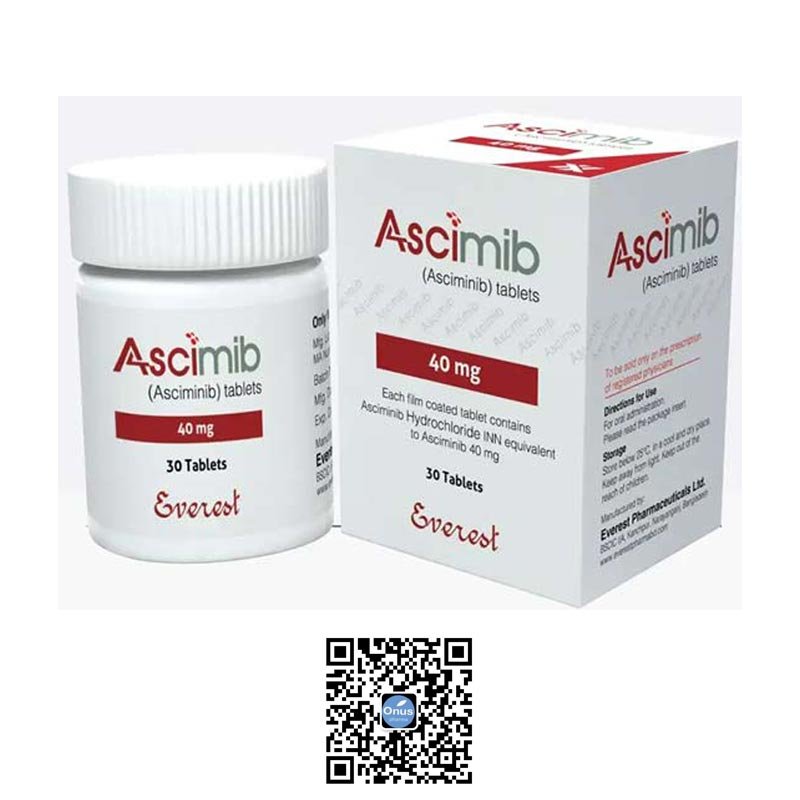
Rx Prescripttion Only-YMYL Medical Content
Approved for adults with Philadelphia chromosome-positive chronic myeloid leukemia in chronic phase (Ph+ CML-CP) — both newly diagnosed patients and those previously treated with two or more tyrosine kinase inhibitors — and specifically for Ph+ CML-CP with the T315I mutation, the resistance mutation that defeats imatinib, dasatinib, nilotinib, and bosutinib.
1
2
3
4
MD
Medical Oncologist Review
Board-certified oncologist · 12+ years in thoracic malignancies
Content reviewed against FDA prescribing information, NCCN Guidelines v2.2024, and published Phase III trial data. Last updated June 2026.
These steps help you have an informed conversation. A confirmed EGFR mutation result is the starting point for any treatment decision.
Medical disclaimer: This page is for informational purposes only and does not constitute medical advice, diagnosis, or treatment. It is a prescription medication that must only be used under the supervision of a qualified oncologist. Clinical outcomes data is drawn from published Phase III trials; individual results vary. Always consult your healthcare provider and refer to the full prescribing information before making any treatment decisions. Emergency: call your local emergency services or poison control immediately if you experience serious adverse effects.
Here are key questions to bring to your hematologist — given asciminib’s distinctive mechanism and the significant dose difference depending on your specific situation, confirming exactly which regimen applies to you is the natural starting point.
Before confirming Ascimib(asciminib) as your treatment
About the pancreatitis risk — a distinctive monitoring requirement
About cardiovascular monitoring
About blood count monitoring
About drug interactions
About dosing and administration
About monitoring response
About my specific situation
About the longer road
A practical tip: Because pancreatitis can sometimes show up first as an asymptomatic lab abnormality before any physical symptoms develop, it’s worth specifically confirming the monitoring schedule for amylase and lipase in writing, along with what specific result would prompt a call versus a scheduled follow-up — this is one of the less intuitive monitoring requirements compared to more familiar things like blood counts or blood pressure.
This is one of the most evidence-rich and actively debated comparisons in current CML treatment — and unlike most comparisons we’ve covered, this one involves genuinely conflicting findings depending on which study you look at, which is worth being transparent about.
Both are approved specifically for T315I — a small, exclusive category
Ponatinib and asciminib are the only two drugs approved in the United States for patients with the T315I mutation. In Europe, only ponatinib is approved for this mutation. This regulatory difference between the US and Europe is itself worth knowing if you’re navigating treatment outside the US.
Mechanism — fundamentally different approaches to the same target
| Ponatinib (Iclusig) | Asciminib (Ascimib) | |
|---|---|---|
| Binding site | ATP-competitive (active site) | Allosteric — specifically targets the ABL myristoyl pocket (STAMP), locking BCR::ABL1 in an inactive conformation |
| T315I dose | 45mg, 30mg, or 15mg once daily (OPTIC trial doses) | 200mg twice daily — a notably higher dose than asciminib’s standard regimen, since 4- to 13-fold higher concentration is needed to inhibit the T315I-mutated form |
Efficacy — the picture is genuinely contested
This is where I want to be careful not to oversimplify, because different analyses point in different directions:
In the asciminib phase 1 trial with up to 6 years’ follow-up, durable MMR was achieved in 53% of patients with T315I-mutated disease, and a separate 2-year follow-up analysis (X2101) supported an MMR rate of 49% by 96 weeks.
In ponatinib’s OPTIC trial, 51.6% of patients on the 45mg starting dose achieved BCR::ABL1 ≤1% by 12 months — a different endpoint than MMR, making direct comparison tricky.
A more rigorous attempt to compare them directly — a matching-adjusted indirect comparison (MAIC) using individual patient-level data — found that in patients with the T315I mutation specifically, ponatinib showed a statistically significant advantage over asciminib: a 43.54% higher rate of achieving BCR::ABL1 ≤1%, and a 47.37% higher MMR rate by 12 months.
An independent commentary specifically flagged that this remains a cross-trial comparison limitation: given MMR rates of 24% to 45% in the PACE and OPTIC ponatinib trials, it remains unclear whether asciminib would actually out-perform ponatinib in a true head-to-head trial — which doesn’t yet exist.
The honest summary: the best available adjusted analysis currently favors ponatinib for raw efficacy in T315I-mutated disease specifically, but this is based on indirect statistical matching rather than a direct randomized comparison, and real-world retrospective data is still being gathered to clarify this.
Safety — this is where asciminib’s advantage is more consistent
Ponatinib’s cardiovascular risk includes arterial occlusive events in 14% to 31% of patients with CML-CP, though rates can be reduced by approximately 60% using response-based dose-reduction strategies.
In the long-term asciminib T315I follow-up, 2 of the patients with baseline cardiovascular risk factors experienced arterial occlusive events (12.5%) — one with acute coronary syndrome who continued asciminib, and one with a fatal stroke and heart attack after discontinuation. A separate analysis found the frequency of arterial occlusive events was 5.1% with asciminib compared to 1.3% with bosutinib — meaning asciminib’s cardiovascular signal, while lower than ponatinib’s, is not zero.
A clinical discussion among CML specialists summarized this trade-off clearly: ponatinib generally carries more cardiovascular concerns but offers broader mutation coverage, while asciminib offers more favorable tolerability but more specific targeting of BCR::ABL1.
Real-world retrospective data — a useful third data point
A retrospective study comparing 99 patients with T315I-mutated CML across 9 countries found that resistance was the primary cause of treatment failure in 59% of the asciminib group versus 90% of the ponatinib group — though this study also noted the asciminib group was notably older (median age 62 vs 50) than the ponatinib group, an important confounding factor that makes interpretation difficult without further adjustment.
Prior ponatinib treatment doesn’t rule out asciminib
Asciminib remains an effective treatment option for patients with T315I-mutated CML-CP, including those who had prior ponatinib treatment — meaning sequencing from one to the other (rather than choosing permanently between them) is a clinically supported strategy when needed.
How the choice tends to play out in practice
Favor ponatinib when:
Favor asciminib when:
Bottom line
This is one of the genuinely unresolved questions in current CML care — the best available indirect evidence suggests ponatinib may have an efficacy edge in T315I-mutated disease specifically, while asciminib offers a more favorable (though not risk-free) cardiovascular and overall tolerability profile. No head-to-head randomized trial exists yet to settle this definitively, so the decision in your specific case will depend heavily on your cardiovascular risk profile, how you’ve tolerated prior TKIs, and your hematologist’s read of the evolving real-world and retrospective data. This is exactly the kind of nuanced, evidence-still-emerging decision worth discussing in depth with a CML specialist, ideally one who manages T315I-mutated cases regularly given how rare and specialized this scenario is.
STAMP stands for Specifically Targeting the ABL Myristoyl Pocket — and understanding it requires stepping back to look at how every other BCR-ABL inhibitor in our CML series (imatinib, dasatinib, nilotinib, bosutinib, ponatinib) actually works, because asciminib does something genuinely different at the molecular level.
How traditional TKIs work — the ATP-binding site
BCR-ABL1 is a kinase — an enzyme that adds phosphate groups to other proteins using ATP as the phosphate source. This phosphate-transfer activity happens at a specific location on the protein called the ATP-binding site (or active site).
Imatinib, dasatinib, nilotinib, bosutinib, and ponatinib are all ATP-competitive inhibitors — they work by physically occupying the ATP-binding site, blocking ATP from getting in and preventing the kinase from doing its job. Think of it like jamming a key into a lock so the real key can’t be inserted.
This approach has a structural vulnerability: the ATP-binding site is also the location where most resistance mutations occur, including T315I. The “I” in T315I refers to isoleucine replacing threonine at a specific position right at this binding site — and that substitution creates a steric (physical space) obstruction that prevents most ATP-competitive drugs from fitting properly, the molecular equivalent of changing the shape of the lock so the jammed key no longer fits.
How asciminib works — a completely different binding location
Asciminib works by specifically targeting the ABL myristoyl pocket, inhibiting BCR::ABL1 kinase activity by locking it in an inactive conformation via allosteric binding.
The myristoyl pocket is a separate site on the ABL protein, located away from the ATP-binding site entirely. In normal, healthy ABL protein (before the BCR-ABL fusion forms), a fatty molecule called myristate naturally sits in this pocket and helps keep the protein folded into an inactive, “off” shape — a built-in safety switch. When the Philadelphia chromosome creates the BCR-ABL fusion protein, part of this natural self-regulation is disrupted, contributing to the protein being stuck in an “always on” growth-signaling state.
Asciminib essentially restores this natural inactive switch by occupying that same myristoyl pocket, allosterically forcing the kinase back into its closed, inactive conformation — shutting down its activity from a completely different angle than every other approved TKI.
Why this matters for resistance mutations
Because T315I and most other kinase-domain resistance mutations occur at or near the ATP-binding site, they don’t interfere with asciminib’s binding location at all — the myristoyl pocket is structurally untouched by these mutations. This is why asciminib remains effective against BCR::ABL1 kinase domain mutations, including T315I — it’s not that asciminib is simply “stronger,” it’s that it’s attacking from a location the mutation never evolved to defend.
That said, T315I does still reduce asciminib’s potency somewhat — preclinical data showed 4- to 13-fold higher asciminib concentration is needed to adequately inhibit T315I-mutated BCR::ABL1 compared to non-mutated BCR::ABL1, which is precisely why the T315I-specific dose (200mg twice daily) is so much higher than the standard dose (80mg once daily or 40mg twice daily) — the drug still works, but needs a higher concentration to overcome the mutation’s partial interference even from a different binding site.
Why “allosteric” matters as a concept
“Allosteric” describes any mechanism where a molecule binds somewhere other than a protein’s main active site but still changes that protein’s shape or function — essentially influencing behavior through structural change rather than direct blockade. This is a meaningfully different drug design philosophy from the ATP-competitive approach, and asciminib represents the first approved BCR::ABL1 inhibitor to work this way.
The practical clinical consequence — off-target effects
ATP-binding sites are structurally similar across many different kinases in the body, which is part of why ATP-competitive TKIs often have broader “off-target” activity — hitting other kinases like PDGFR, KIT, or VEGFR (as we saw with sorafenib and pazopanib) in addition to BCR-ABL. This off-target activity contributes to many of the side effects associated with those drugs.
The myristoyl pocket asciminib targets is far more structurally unique to ABL kinases specifically, which is part of why asciminib tends to have a narrower side-effect profile focused more specifically on BCR-ABL-related effects, with less of the broad multi-kinase toxicity pattern seen with drugs like ponatinib, sorafenib, or pazopanib.
A nuance worth understanding: this doesn’t mean zero off-target risk
It’s worth being precise here — asciminib isn’t free of cardiovascular signal entirely. The frequency of arterial occlusive events was found to be 5.1% with asciminib compared to 1.3% with bosutinib in longer-term ASCEMBL follow-up, so the more targeted mechanism doesn’t fully eliminate cardiovascular risk — it appears meaningfully reduced compared to ponatinib, but not absent.
Why this represents a genuine innovation, not just marketing language
The STAMP mechanism isn’t simply a more refined version of existing TKI chemistry — it’s a structurally distinct approach to inhibiting the same disease-driving protein. This is conceptually similar to how, in a lock-and-key analogy, instead of making increasingly specialized keys for an increasingly modified lock (the approach with imatinib → dasatinib/nilotinib → ponatinib, each generation handling more resistance mutations at the same general binding location), asciminib instead found an entirely different door into the same building.
This is also why ongoing combination research is exploring whether asciminib plus an ATP-competitive TKI together might work even better than either alone — since they bind different locations, simultaneously occupying both the ATP site and the myristoyl pocket could, in theory, make it much harder for the cancer to develop resistance through either single mutation pathway alone.


Conatact US