Address
Sector 14, Road no. 18, Uttara, 1230
Dhaka, Bangladesh

Rx Prescripttion Only-YMYL Medical Content
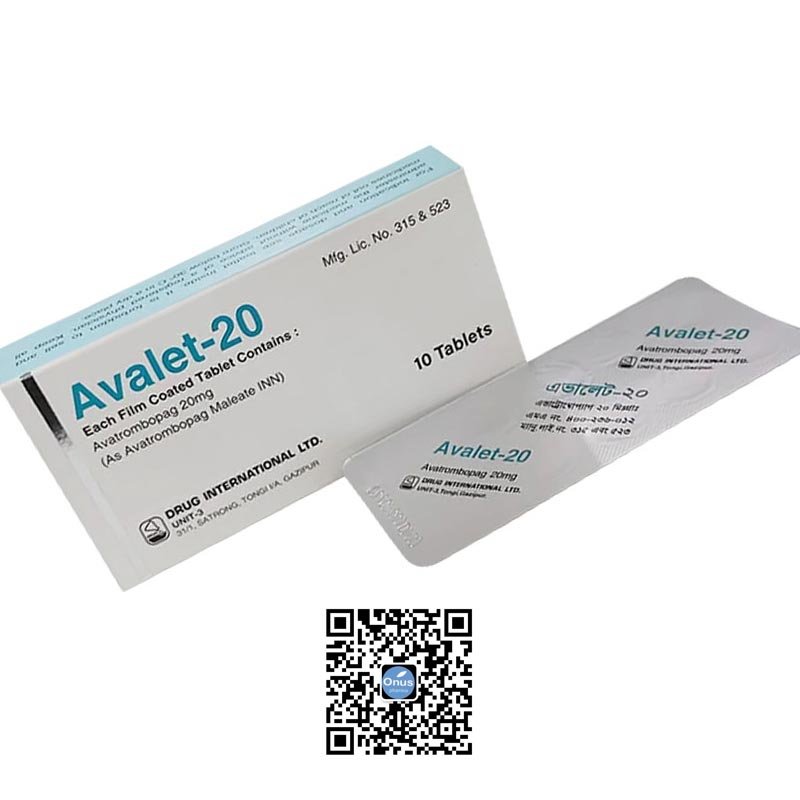
Approved for: thrombocytopenia in adults and children ≥12 years with chronic immune thrombocytopenia (ITP) who have had an insufficient response to a previous treatment; and thrombocytopenia in adults with chronic liver disease (CLD) who are scheduled to undergo a medical or dental procedure.
$100.00
1
2
3
4
MD
Medical Oncologist Review
Board-certified oncologist · 12+ years in thoracic malignancies
Content reviewed against FDA prescribing information, NCCN Guidelines v2.2024, and published Phase III trial data. Last updated June 2026.
These steps help you have an informed conversation. A confirmed EGFR mutation result is the starting point for any treatment decision.
Medical disclaimer: This page is for informational purposes only and does not constitute medical advice, diagnosis, or treatment. It is a prescription medication that must only be used under the supervision of a qualified oncologist. Clinical outcomes data is drawn from published Phase III trials; individual results vary. Always consult your healthcare provider and refer to the full prescribing information before making any treatment decisions. Emergency: call your local emergency services or poison control immediately if you experience serious adverse effects.
Here are key questions to bring to your doctor — given that avatrombopag has two completely different dosing regimens for its two indications that cannot be interchanged, and that the thromboembolism risk profile differs meaningfully between the ITP and liver disease populations, confirming exactly which indication applies and its specific dosing plan is the most critical starting point.
Before confirming avatrombopag as your treatment
About the dosing regimen — confirm this explicitly before starting
About thromboembolism risk — differs meaningfully between the two indications
About platelet count monitoring
About the comparison with eltrombopag — a relevant question for liver disease patients
About liver function — particularly for CLD patients
About drug interactions
About contraception
About the ITP longer road — if applicable
About the CLD procedure — specific practical questions
A practical tip: The two completely different dosing regimens — a daily titrated ongoing regimen for ITP versus a fixed 5-day pre-procedure course for liver disease — are easy to confuse, particularly if a patient has both conditions or changes treatment setting. Before starting, confirm explicitly with your pharmacist which indication is on your prescription, what the dose is, how many days it continues, and whether it’s intended as ongoing maintenance or a one-time procedural preparation — since these are different enough that a mistake in one direction could result in significantly incorrect treatment.
This comparison has a genuinely important historical dimension — the reason avatrombopag exists specifically for chronic liver disease is directly related to eltrombopag’s failure in that exact indication, making this one of the most clinically meaningful “why was this drug developed” stories in our entire conversation.
The historical context — why this comparison matters
A prior randomized controlled trial of eltrombopag for periprocedural thrombocytopenia in CLD patients found an increased incidence of portal vein thrombosis in the eltrombopag arm, leading to the trial being stopped prematurely. This wasn’t a marginal safety signal — it was a trial termination. Eltrombopag was subsequently not pursued for the CLD pre-procedure indication, and avatrombopag was specifically developed and studied as an alternative that might avoid this problem.
Understanding this history is essential to understanding why these two drugs occupy completely different positions in the CLD platelet management landscape today.
Different approvals for the same clinical problem
| Eltrombopag (Promacta/Elbonix) | Avatrombopag (Doptelet/Avalet) | |
|---|---|---|
| CLD pre-procedure indication | Not FDA-approved — trial stopped for portal vein thrombosis | FDA-approved May 2018 — ADAPT-1 and ADAPT-2 |
| ITP indication | FDA-approved 2008 | FDA-approved June 2019 |
| Portal vein thrombosis in CLD trials | Trial stopped prematurely — excessive events | One event in 430 patients (0.4%) |
| Food restriction | Yes — 2-4 hours before or after calcium-containing foods and minerals | No — take with food, no timing restrictions |
| Hepatotoxicity in ITP | Reported — liver monitoring required | Not associated with hepatotoxicity in ITP patients |
Why avatrombopag has a lower portal vein thrombosis signal — the mechanistic explanation
The thromboembolic events in the eltrombopag liver disease study were attributed to the high (greater than 200×10⁹/L) and sustained increase in platelet counts in eltrombopag-treated patients. The problem wasn’t simply that eltrombopag raises platelet counts — it’s that it raised them too high and too persistently in liver disease patients, whose portal circulation was already vulnerable to clot formation as we discussed in detail on the eltrombopag pages earlier.
Avatrombopag’s pharmacokinetic profile and dosing design produce a more controlled, time-limited platelet rise. In ADAPT-1 and ADAPT-2 trials, there was one portal vein thrombosis in a patient on avatrombopag who had a peak platelet count below 100×10⁹/L. This more modest, controlled platelet rise — peaking below the levels that caused problems with eltrombopag — is thought to be the key difference in the portal vein thrombosis risk profile between the two drugs.
The food restriction difference — a genuine practical advantage
Unlike eltrombopag, avatrombopag does not require a 4-hour food-restricted window around its use. Eltrombopag’s calcium and mineral supplement timing restriction — which we discussed extensively on the Elbonix and Elbonix 25mg pages — requires patients to take it 2 hours before or 4 hours after eating foods containing calcium, dairy products, fortified cereals, or mineral supplements. This makes eltrombopag considerably more complex to take correctly, particularly for patients who take calcium supplements or multivitamins regularly.
Avatrombopag must be taken with food but has no calcium or mineral timing restriction — a meaningfully simpler administration requirement that reduces the risk of inadvertent reduced absorption through dietary interactions.
The dosing structure difference — time-limited versus ongoing
Avatrombopag’s CLD indication is specifically designed as a short, fixed pre-procedure course: 5 days of dosing at a dose determined by baseline platelet count, completed approximately 10-13 days before the procedure. This time-limited approach inherently limits the duration of platelet elevation and therefore the window of portal vein thrombosis risk.
Eltrombopag, even if it were used off-label in CLD, is designed for ongoing daily therapy — producing sustained platelet elevation that creates a prolonged thrombotic risk window in a population whose portal circulation is structurally vulnerable, which is mechanistically consistent with why its CLD trial produced the portal vein thrombosis signal that led to early termination.
Where eltrombopag remains the established option — chronic ITP
In chronic ITP outside of liver disease, eltrombopag has a substantially longer track record — approved since 2008 versus avatrombopag’s 2019 ITP approval. Both are appropriate for ITP, and neither has demonstrated clearly superior efficacy in the head-to-head ITP comparison. The practical choice in ITP between eltrombopag and avatrombopag comes down primarily to the food timing restriction burden (eltrombopag is more complex), hepatotoxicity monitoring requirements (eltrombopag requires regular liver function testing; avatrombopag has not been associated with hepatotoxicity in ITP), and individual patient preference and response.
The no cross-resistance principle — relevant to both drugs
As we discussed on the eltrombopag pages, there is no cross-resistance between TPO receptor agonists because eltrombopag and avatrombopag bind the TPO receptor at different sites. This means patients who fail to respond adequately to one can meaningfully respond to the other — switching between them is a clinically rational option in both directions.
Bottom line
In chronic liver disease pre-procedure thrombocytopenia specifically, avatrombopag is the appropriate choice and eltrombopag is not FDA-approved for this indication — the historical reason being eltrombopag’s liver disease trial termination for portal vein thrombosis, a signal avatrombopag’s ADAPT trials did not reproduce, likely because avatrombopag’s time-limited dosing and more modest platelet rise avoid the sustained platelet elevation that created the portal vein risk with eltrombopag. In chronic ITP, both drugs are appropriate options with broadly comparable efficacy — avatrombopag’s simpler food administration and absence of hepatotoxicity signal offer practical advantages over eltrombopag’s stricter food timing requirements and liver monitoring burden. The no cross-resistance principle means neither drug should be abandoned simply because of insufficient response to the other.
We covered this mechanism in detail earlier in our conversation for the Elbonix (eltrombopag) pages — here are the key points pulled forward with avatrombopag-specific context added rather than repeating the full research.
The normal platelet production system — how the body regulates platelet counts
The body controls platelet production through a natural hormone called thrombopoietin (TPO), produced mainly by the liver. TPO circulates in the bloodstream and binds to TPO receptors on megakaryocytes and their precursor cells in the bone marrow, triggering signaling pathways that drive megakaryocyte proliferation, maturation, and ultimately platelet release into the bloodstream. In a healthy person, TPO levels and platelet counts maintain a natural feedback balance.
Why simply replacing natural TPO didn’t work — the historical lesson
As we covered on the Elbonix page: early attempts to use recombinant human TPO directly as a drug caused some patients’ immune systems to develop antibodies that cross-reacted with their own natural TPO — neutralizing the body’s endogenous hormone and making thrombocytopenia worse. This led to development of TPO receptor agonists — molecules that activate the same receptor through a different molecular approach, avoiding the autoantibody cross-reactivity problem.
How TPO receptor agonists work — the shared mechanism
All three approved TPO receptor agonists — romiplostim, eltrombopag, and avatrombopag — activate the TPO receptor to drive megakaryocyte proliferation and platelet production, but through different binding approaches. Avatrombopag is an orally bioavailable, small-molecule TPO receptor agonist that stimulates the proliferation and differentiation of megakaryocytes from bone marrow progenitor cells, resulting in an increased production of platelets.
By binding and activating the TPO receptor, avatrombopag triggers the same downstream JAK2-STAT5 signaling cascade that natural TPO activates — driving bone marrow precursor cells to proliferate, differentiate into megakaryocytes, and ultimately fragment into platelets.
How avatrombopag specifically differs from eltrombopag mechanistically
This is where the comparison becomes clinically important. Eltrombopag binds to the transmembrane domain of the TPO receptor — a different binding site from where natural TPO itself attaches. Avatrombopag also activates the TPO receptor as a small non-peptide molecule, but through a somewhat different molecular interaction profile that produces a different pharmacokinetic footprint — specifically a more controlled and time-limited platelet rise compared to eltrombopag’s more sustained elevation.
Unlike eltrombopag, avatrombopag does not require a 4-hour food-restricted window around its use and has not been associated with hepatotoxicity in ITP patients or portal vein thrombosis in patients with chronic liver disease. These practical differences reflect the underlying pharmacological distinctions between the two molecules even though both ultimately activate the same receptor pathway.
Why the magnitude and duration of platelet rise matters in liver disease
This mechanistic point connects directly to the portal vein thrombosis story. The thromboembolic events in the eltrombopag liver disease study were attributed to the high (greater than 200×10⁹/L) and sustained increase in platelet counts in eltrombopag-treated patients. Avatrombopag’s more controlled platelet rise — peaking at more modest levels in ADAPT-1 and ADAPT-2 — reflects a pharmacokinetic profile better suited to the CLD population’s vulnerability to portal vein thrombosis when platelet counts exceed normal ranges substantially.
Why the no cross-resistance principle holds across all three TPO receptor agonists
As we discussed on the eltrombopag pages: romiplostim, eltrombopag, and avatrombopag all activate the TPO receptor but bind at different sites on the receptor. Because they engage different molecular “doorways” to the same receptor, failure to respond to one — through reduced receptor expression, receptor downregulation, or other resistance mechanisms — doesn’t predict failure to respond to another that binds differently. This is why switching between TPO receptor agonists when one is insufficient or causes unacceptable side effects remains a clinically rational and often successful strategy.
The bigger picture
Avatrombopag works through the same fundamental principle as eltrombopag and romiplostim — activating the TPO receptor to drive megakaryocyte proliferation and platelet production from bone marrow precursors. What distinguishes it clinically is not a different mechanism but a different pharmacokinetic profile producing a more controlled platelet rise, an absence of the calcium/mineral food interaction that complicates eltrombopag dosing, and a safety profile in chronic liver disease that avoided the portal vein thrombosis signal that terminated eltrombopag’s development for that specific indication. All three drugs are solving the same biological problem through the same receptor — the differences that matter clinically are in how each molecule’s specific pharmacology translates into practical safety and convenience advantages in particular patient populations.




Conatact US