Address
Sector 14, Road no. 18, Uttara, 1230
Dhaka, Bangladesh

Rx Prescripttion Only-YMYL Medical Content
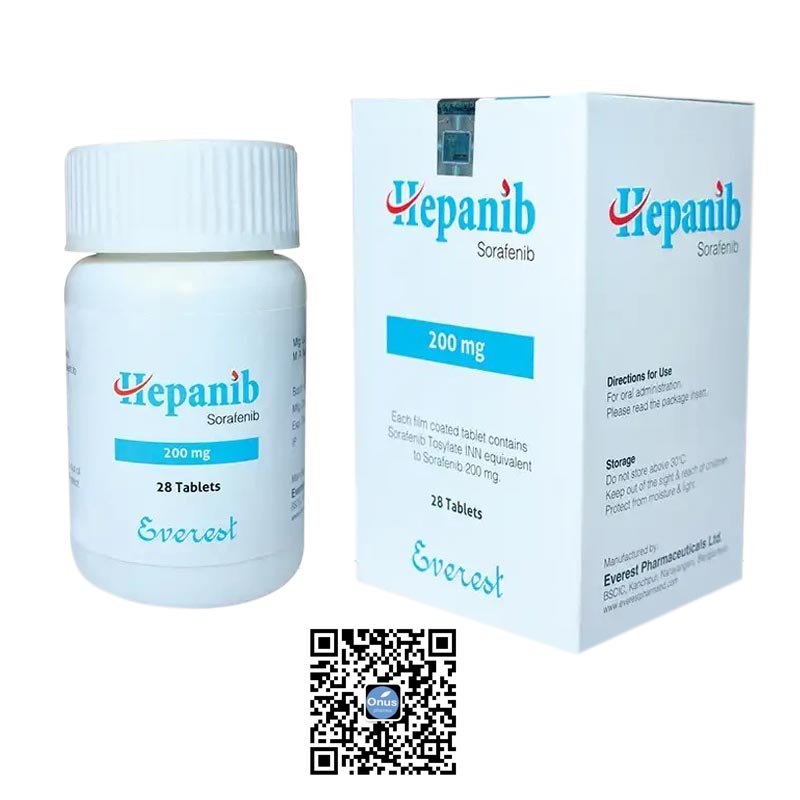
Approved for adults with unresectable hepatocellular carcinoma (liver cancer / HCC), advanced renal cell carcinoma (kidney cancer / RCC), and locally recurrent or metastatic differentiated thyroid carcinoma (DTC) refractory to radioactive iodine treatment.
1
2
3
4
MD
Medical Oncologist Review
Board-certified oncologist · 12+ years in thoracic malignancies
Content reviewed against FDA prescribing information, NCCN Guidelines v2.2024, and published Phase III trial data. Last updated June 2026.
These steps help you have an informed conversation. A confirmed EGFR mutation result is the starting point for any treatment decision.
Medical disclaimer: This page is for informational purposes only and does not constitute medical advice, diagnosis, or treatment. It is a prescription medication that must only be used under the supervision of a qualified oncologist. Clinical outcomes data is drawn from published Phase III trials; individual results vary. Always consult your healthcare provider and refer to the full prescribing information before making any treatment decisions. Emergency: call your local emergency services or poison control immediately if you experience serious adverse effects.
Here are key questions to bring to your oncologist — because sorafenib spans three different cancer types with different clinical contexts, some questions will be more or less relevant depending on whether you’re being treated for liver, kidney, or thyroid cancer. The blood pressure and bleeding risk questions apply across all three.
Before confirming Hepanib(sorafenib) as your treatment
About cardiovascular and bleeding risks — applies to all three indications
About the dosing and food restriction
About hand-foot skin reaction — the most common disruptive side effect
About blood pressure management
About liver function monitoring (HCC patients)
About thyroid function (thyroid cancer patients)
About other medications and interactions
About day-to-day side effect management
About monitoring and response
About the longer road
A practical tip: Because blood pressure needs to be monitored weekly for the first six weeks, ask specifically whether your primary care doctor or cardiologist needs to be looped in — especially if you already have a cardiovascular history. Having a clear escalation plan (which reading triggers a call, and to which doctor) before you start is more useful than figuring it out reactively when a reading comes back elevated.
This is one of the most clinically significant comparisons in liver cancer oncology — because unlike most of our earlier drug-vs-drug discussions, sorafenib and lenvatinib have actually been compared directly head-to-head in a randomized phase III trial (REFLECT), making this a more definitive comparison than many we’ve covered.
What they are and how they work
| Sorafenib | Lenvatinib | |
|---|---|---|
| Drug class | Multi-kinase inhibitor | Multi-kinase inhibitor |
| Key targets | VEGFR1/2/3, PDGFR-β, CRAF, BRAF, KIT, FLT3, RET | VEGFR1/2/3, FGFR1-4, PDGFR-α, KIT, RET |
| Notable difference | Includes RAF kinase inhibition | Includes FGFR1-4 inhibition — broader angiogenesis blockade |
| Approved first-line HCC | Yes — 2007 | Yes — 2018 |
| Manufacturer | Bayer / Amgen | Eisai / Merck |
Both work primarily by blocking angiogenesis — the formation of new blood vessels that feed tumor growth — through VEGFR inhibition. Lenvatinib’s additional FGFR inhibition is thought to provide a broader anti-angiogenic effect, which may partly explain its stronger efficacy signals in the REFLECT trial.
The REFLECT trial — direct head-to-head comparison
REFLECT was a randomized, open-label, phase III non-inferiority trial comparing lenvatinib directly against sorafenib in 954 patients with previously untreated unresectable HCC. This is the most important evidence base for this comparison, and the results were notable:
| Outcome | Lenvatinib | Sorafenib |
|---|---|---|
| Median overall survival | 13.6 months | 12.3 months |
| Median PFS | 7.3 months | 3.6 months |
| Median time to progression | 8.9 months | 3.7 months |
| Objective response rate | 24% | 9% |
Lenvatinib demonstrated non-inferiority to sorafenib for overall survival, and showed statistically significant improvements in PFS, time to progression, and response rate. The OS difference (13.6 vs 12.3 months) was not statistically significant — but the PFS doubling and response rate improvement are clinically meaningful, particularly for patients who might benefit from tumor shrinkage.
Dosing — an important practical difference
| Sorafenib | Lenvatinib | |
|---|---|---|
| Dose | 400mg twice daily | Weight-based: 12mg once daily (≥60kg) or 8mg once daily (<60kg) |
| Food restriction | Must be taken without food (1 hour before or 2 hours after meals) | Can be taken with or without food |
| Frequency | Twice daily | Once daily |
Lenvatinib’s once-daily dosing without food restriction is a meaningful quality-of-life advantage over sorafenib’s twice-daily, empty-stomach requirement — particularly relevant for HCC patients who may already have appetite issues and irregular meal patterns related to liver disease.
Side effect profiles — different emphases
| Sorafenib | Lenvatinib | |
|---|---|---|
| Hand-foot skin reaction | Prominent (~21–34%) | Present but generally less prominent |
| Hypertension | Common (~9–17%) | Very common — often more pronounced (~45%) |
| Diarrhea | Common (~43–55%) | Common (~39%) |
| Fatigue | Common | Common |
| Proteinuria | Less prominent | More prominent — kidney protein monitoring needed |
| Thyroid dysfunction | Present | More common — hypothyroidism frequently develops |
| Appetite loss / weight loss | Common | Common |
| Hepatotoxicity | Present | Present |
The key practical difference: sorafenib’s dominant toxicity concern is hand-foot skin reaction, while lenvatinib’s is hypertension — often more severe than with sorafenib and requiring active antihypertensive management. For a patient with poorly controlled hypertension at baseline, this distinction matters considerably.
Liver function considerations — specific to HCC
Both drugs were studied in Child-Pugh A patients, and both labels primarily support use in this population. Real-world use in Child-Pugh B patients exists for both drugs but with less established evidence and higher risk.
One nuance specific to the REFLECT trial: patients with main portal vein invasion or bile duct invasion were excluded from REFLECT (lenvatinib) but were included in SHARP (sorafenib’s pivotal trial). This means for patients with those specific disease features, sorafenib has a slightly broader evidence base.
Where guidelines currently stand
Both sorafenib and lenvatinib are listed as category 1 first-line options for unresectable HCC in NCCN guidelines — neither is definitively preferred over the other based on survival alone. The choice between them typically comes down to side-effect profile matching the patient’s comorbidities and the dosing convenience consideration.
However, the oncology landscape for HCC has shifted considerably since both were approved — atezolizumab plus bevacizumab (Tecentriq + Avastin) demonstrated superior overall survival over sorafenib in the IMbrave150 trial and is now considered the preferred first-line regimen for eligible patients in most guidelines. Both sorafenib and lenvatinib remain important options for patients who are not candidates for immunotherapy combinations.
Bottom line
If the choice is specifically between sorafenib and lenvatinib as monotherapy for first-line HCC:
Lenvatinib showed a stronger efficacy signal (better PFS, higher response rate, non-inferior OS) with a more convenient dosing schedule — making it a reasonable first choice for many patients. Sorafenib’s longer track record (approved 2007 vs 2018), broader portal vein invasion evidence base, and more predictable hand-foot skin reaction profile (vs lenvatinib’s more pronounced hypertension) mean it remains a valid and appropriate option — particularly when hypertension is a pre-existing concern or when institutional familiarity with managing sorafenib’s toxicity profile is higher.
The broader conversation worth having with your oncologist is whether an immunotherapy-based combination might be appropriate for you first, before either of these options.
Hand-foot skin reaction (HFSR) from sorafenib — also called palmar-plantar erythrodysesthesia — is mechanistically different from the hand-foot syndrome caused by capecitabine that we discussed earlier, and understanding that difference matters for how it’s managed.
Why sorafenib’s HFSR is different from capecitabine’s
Capecitabine causes hand-foot syndrome through direct toxic accumulation of 5-FU in sweat glands and skin cells — it’s a chemotherapy toxicity affecting the skin diffusely.
Sorafenib causes HFSR through a different mechanism: VEGFR and PDGFR inhibition impairs the repair and maintenance of small blood vessels in the skin, particularly in areas subjected to mechanical stress (pressure points, friction zones). The result is localized skin breakdown at pressure points — calluses, blisters, and painful hyperkeratotic (thickened) areas that appear specifically where the skin experiences repeated mechanical force.
This means sorafenib’s HFSR is focal and pressure-related rather than diffuse — it appears at weight-bearing points on the feet (heels, balls of feet, toe joints) and pressure/friction points on the hands (finger pads, palm creases), rather than spread evenly across the palms and soles.
Prevention — starting before symptoms appear
The most important principle, as with capecitabine, is that preventive measures started before the first dose are significantly more effective than reactive treatment after HFSR has developed.
Podiatry review before starting sorafenib is recommended at many specialist centers — a podiatrist can identify and treat pre-existing calluses and hyperkeratotic areas that will become painful focal points once sorafenib is started. Removing thick calluses before treatment begins removes the pressure points most likely to become problematic.
Footwear review is genuinely important — well-cushioned, properly fitting shoes that distribute weight evenly and minimize friction reduce the mechanical stress that triggers focal HFSR. Gel insoles and padded socks are commonly recommended. Shoes that were tolerated before treatment may become painful once sorafenib starts.
Thick emollient creams — particularly urea-based creams (10–40% urea) applied to palms and soles twice daily from day one. The goal is maintaining skin flexibility and reducing the tendency for hyperkeratosis to develop at pressure points.
Avoid heat and friction — hot water exposure, tight footwear, prolonged walking or standing, gripping tools tightly, and vigorous physical activity all increase mechanical stress on vulnerable skin.
Recognizing the early signs
Early HFSR typically presents as:
Catching it at this stage — and reporting it to your oncology team — allows for intervention before it progresses to blistering or painful erosions that make walking or hand use difficult.
Grading and management by severity
Grade 1 (skin changes without pain — mild numbness, tingling, or redness at pressure points): intensive moisturizing, urea-based keratolytic creams to soften thickened areas, footwear optimization, and continued treatment at full dose. Topical salicylic acid preparations can help soften hyperkeratotic plaques.
Grade 2 (skin changes with pain that limit some daily activities — walking, handling objects): topical clobetasol or other potent corticosteroid creams are added for anti-inflammatory effect. Dose reduction (from 400mg twice daily to 400mg once daily, or 200mg twice daily) is typically considered. Topical anesthetics (lidocaine-containing preparations) can provide temporary pain relief for severe focal areas.
Grade 3 (severe skin changes — blistering, ulceration, or pain that limits self-care): sorafenib is interrupted until improvement to Grade 0–1, then restarted at a reduced dose. Wound care for broken skin areas, infection prevention, and pain management become active priorities.
Practical day-to-day measures during treatment
The key difference from capecitabine HFSR management
Because sorafenib’s HFSR is focal and pressure-driven rather than diffuse, the mechanical offloading component — cushioning, callus removal, footwear — is more central to management than it is with capecitabine. Simply moisturizing widely isn’t sufficient if specific pressure points are driving the problem; those points need to be directly addressed, which is why podiatry involvement at baseline is more actively recommended for sorafenib than for many other drugs causing hand-foot reactions.
As with capecitabine, dose reductions based on HFSR severity are a normal and expected part of managing sorafenib — reporting symptoms early gives your oncology team the best opportunity to intervene before a grade 2 or 3 reaction forces a longer treatment pause.
Conatact US