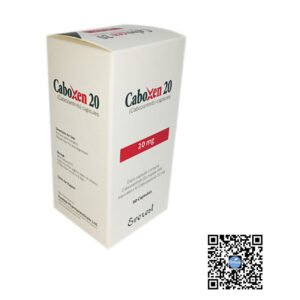
Address
Sector 14, Road no. 18, Uttara, 1230
Dhaka, Bangladesh


Rx Prescripttion Only-YMYL Medical Content
Approved for progressive, metastatic medullary thyroid cancer (MTC) (capsule formulation); advanced renal cell carcinoma (RCC); hepatocellular carcinoma (HCC) previously treated with sorafenib; radioactive-iodine-refractory differentiated thyroid cancer (DTC); and well-differentiated neuroendocrine tumors (tablet formulation for the last four indications).
1
2
3
4
MD
Medical Oncologist Review
Board-certified oncologist · 12+ years in thoracic malignancies
Content reviewed against FDA prescribing information, NCCN Guidelines v2.2024, and published Phase III trial data. Last updated June 2026.
These steps help you have an informed conversation. A confirmed EGFR mutation result is the starting point for any treatment decision.
Medical disclaimer: This page is for informational purposes only and does not constitute medical advice, diagnosis, or treatment. It is a prescription medication that must only be used under the supervision of a qualified oncologist. Clinical outcomes data is drawn from published Phase III trials; individual results vary. Always consult your healthcare provider and refer to the full prescribing information before making any treatment decisions. Emergency: call your local emergency services or poison control immediately if you experience serious adverse effects.
Here are key questions to bring to your oncologist — given that cabozantinib’s boxed warning covers GI perforations, fistulas, and severe hemorrhage rather than the cardiac or pulmonary warnings more common elsewhere in this series, and given the critical formulation distinction between capsules and tablets, confirming both of these before taking a first dose is the most important groundwork.
Before confirming cabozantinib as your treatment
About the GI perforation and fistula risk — the boxed warning
About the hemorrhage risk
About surgical and dental planning — the 28-day stop requirement
About jaw health — osteonecrosis of the jaw
About cardiovascular monitoring
About liver monitoring
About kidney function and proteinuria
About the empty stomach requirement
About hand-foot syndrome
About drug interactions
About contraception
About monitoring response
About the longer road
A practical tip: The 28-day surgical stop requirement is unusually long compared to most drugs in this series, and it applies to dental procedures as well as major surgery — making it worth proactively informing your dentist, GP, and any specialist who might refer you for a procedure that you’re on this medication, before any procedure is scheduled rather than discovering the conflict at the last minute.
This comparison sits in an interesting clinical position — cabozantinib and sorafenib don’t directly compete head-to-head as alternatives in first-line HCC, because cabozantinib’s primary HCC approval is specifically as a second-line option after sorafenib has already been used and failed. Understanding this sequential relationship is actually the most important piece of context.
Different positions in the treatment sequence
| Sorafenib (Nexavar) | Cabozantinib (Cabometyx) | |
|---|---|---|
| HCC line of therapy | First-line (SHARP trial) | Second-line, after sorafenib (CELESTIAL trial) |
| FDA HCC approval | 2007 | January 2019 |
| Pivotal trial | SHARP | CELESTIAL |
| Dosing | 400mg twice daily, empty stomach | 60mg once daily, empty stomach |
| Targets | RAF, VEGFR, PDGFR | VEGFR, MET, AXL, RET (broader) |
The CELESTIAL trial — what established cabozantinib’s role
Cabozantinib was evaluated in the CELESTIAL trial, a double-blind trial in 707 patients with hepatocellular carcinoma previously treated with sorafenib who were randomized 2:1 to cabozantinib 60mg orally once daily or placebo. The trial demonstrated a statistically significant overall survival benefit for cabozantinib versus placebo in this post-sorafenib population — confirming that after sorafenib has failed, cabozantinib provides meaningful additional disease control rather than simply the next treatment option by default.
Why cabozantinib’s broader target profile matters specifically in post-sorafenib HCC
This is where the mechanism comparison becomes clinically meaningful. Sorafenib primarily inhibits VEGFR and RAF kinases. Cabozantinib additionally targets MET and AXL — two kinases that are particularly relevant in the post-sorafenib setting because MET and AXL are tyrosine kinases implicated in the development of resistance to RCC therapy, and by extension to anti-VEGFR therapy more broadly in solid tumors including HCC. When sorafenib stops working, part of the resistance mechanism involves upregulation of these alternative growth pathways — and cabozantinib’s ability to block MET and AXL alongside VEGFR gives it activity that sorafenib itself cannot provide against these resistance-driven escape routes.
This is mechanistically why cabozantinib retains activity in post-sorafenib disease rather than simply being another drug blocked by the same resistance mechanisms that defeated sorafenib.
Hepatotoxicity — an important difference relevant to HCC patients specifically
As compared with patients receiving placebo, patients with hepatocellular carcinoma receiving cabozantinib on the CELESTIAL trial had more hepatotoxicity. Elevated transaminases occurred more commonly in patients with hepatocellular carcinoma receiving cabozantinib as compared to the renal cell carcinoma and medullary thyroid cancer indications — which is not unexpected given the underlying disease. The observed hepatotoxicity was largely controlled via dose modifications.
This is a nuanced but important point: HCC patients inherently have compromised liver function as part of their underlying disease, and cabozantinib adds a hepatotoxicity burden on top of this. The same principle applies to sorafenib, but cabozantinib’s broader kinase inhibition means this needs active, attentive monitoring.
The GI safety comparison — both drugs share serious GI risks
Both sorafenib and cabozantinib carry serious GI risks, but their specific profiles differ somewhat. Sorafenib’s primary GI concern is diarrhea and hand-foot skin reaction. Cabozantinib carries the additional, formally boxed-warned risk of GI perforations and fistulas — a more severe, potentially life-threatening complication. The most common adverse reactions with cabozantinib in the CELESTIAL trial were diarrhea, fatigue, decreased appetite, palmar-plantar erythrodysesthesia, nausea, hypertension, and vomiting. This overlaps substantially with sorafenib’s profile, since both drugs are anti-angiogenic multikinase inhibitors sharing VEGFR inhibition.
Where the current treatment landscape actually sits — both drugs now largely second-tier
It’s worth being direct about something that’s relevant to this comparison: in most contemporary treatment guidelines, first-line HCC treatment for patients eligible for immunotherapy has moved substantially toward combination immunotherapy approaches (such as atezolizumab plus bevacizumab, or durvalumab plus tremelimumab), which have shown superior outcomes compared to sorafenib monotherapy. This means:
Sorafenib is still used first-line when immunotherapy combinations aren’t suitable, but it’s no longer the default first choice at most major treatment centers.
Cabozantinib’s position as a post-sorafenib option remains relevant for patients who have failed sorafenib specifically — but in practice, the sequencing of treatments after first-line immunotherapy-based regimens continues to evolve.
The role of Child-Pugh liver function classification
Both drugs’ eligibility in HCC is substantially influenced by the patient’s baseline liver function. Cabozantinib in CELESTIAL enrolled patients with Child-Pugh A liver function — meaning adequate baseline liver reserve. Patients with more advanced liver dysfunction (Child-Pugh B or C) are generally not good candidates for either drug, since the underlying liver impairment compounds the hepatotoxicity risk both treatments carry.
Bottom line
Cabozantinib and sorafenib are not strict first-line alternatives competing for the same clinical moment in HCC — cabozantinib’s primary, well-established HCC role is specifically after sorafenib has failed, exploiting its additional MET and AXL inhibition to address the resistance mechanisms that develop against sorafenib’s narrower anti-VEGFR/RAF approach. For patients who have progressed on sorafenib with preserved liver function (Child-Pugh A), cabozantinib represents a validated, trial-proven second-line option with a confirmed overall survival benefit over best supportive care. Both drugs carry meaningful GI, cardiovascular, and hepatotoxicity risks that require careful, ongoing monitoring in a population whose underlying liver disease already makes this monitoring more complex. As with sorafenib, the broader first-line treatment landscape in HCC has evolved significantly since cabozantinib’s approval, and where either drug fits best in a modern treatment sequence is a conversation worth having specifically with your oncologist given your current disease status and prior treatment history.
This comparison gets at something genuinely interesting in targeted oncology drug design — both drugs are multikinase inhibitors that block VEGFR, but their differences in target breadth, specific kinase coverage, and the biological problems they were engineered to solve reflect different generations of thinking about what makes anti-angiogenic therapy fail.
The shared foundation — both block VEGFR to cut off tumor blood supply
As we discussed when covering sorafenib earlier in this conversation, the core anti-angiogenic strategy common to both drugs involves blocking VEGFR (vascular endothelial growth factor receptor) on the cells lining tumor blood vessels, preventing the cancer from recruiting the new blood supply it needs to grow beyond a small size. This VEGFR-blocking approach is the foundational mechanism shared across the entire class of anti-angiogenic multikinase inhibitors.
Both drugs also inhibit tumor cell proliferation through additional kinase targets beyond VEGFR — so both are working through a combination of anti-angiogenic starvation and direct anti-proliferative effects simultaneously, rather than relying on a single mechanism.
Sorafenib’s target profile — RAF/VEGFR/PDGFR
As we covered in the Sonib page, sorafenib’s key targets are RAF kinases (including CRAF and BRAF, blocking the RAS-RAF-MEK-ERK growth signaling pathway directly inside cancer cells), VEGFR (anti-angiogenic), and PDGFR (supporting blood vessel maturation). This combination was specifically designed for cancers like HCC and RCC that lack a single dominant, cleanly druggable mutation but depend heavily on this network of growth and vascular signaling.
Cabozantinib’s target profile — broader, with MET and AXL as the defining additions
In vitro biochemical and/or cellular assays have shown that cabozantinib inhibits the tyrosine kinase activity of MET, VEGFR-1, -2 and -3, AXL, RET, ROS1, TYRO3, MER, KIT, TRKB, FLT-3, and TIE-2. This is a substantially broader target list than sorafenib, but the two additions that matter most clinically are MET and AXL — and understanding why requires understanding how cancer cells escape from anti-VEGFR therapy.
Why MET inhibition is the most important distinguishing feature
MET (also called hepatocyte growth factor receptor, or HGFR) is a receptor tyrosine kinase that, when activated by its ligand HGF, triggers cell growth, survival, migration, and invasion. MET is directly relevant to anti-VEGFR resistance because when tumors are treated with VEGFR-blocking drugs like sorafenib, they frequently respond by upregulating MET signaling as an alternative pathway to sustain growth and stimulate new blood vessel formation through a VEGFR-independent route. This MET-driven escape from anti-VEGFR therapy is one of the most well-characterized resistance mechanisms in HCC and RCC specifically.
By simultaneously blocking both VEGFR and MET, cabozantinib cuts off both the primary anti-angiogenic target and this most common escape pathway at the same time — directly addressing the resistance mechanism that sorafenib cannot block and that typically limits sorafenib’s durability of response. This is mechanistically why cabozantinib retains activity in post-sorafenib HCC, as we discussed in the comparison page: it blocks MET-driven growth signals that sorafenib left fully available.
Why AXL inhibition adds a further dimension
AXL (GAS6 receptor) is a tyrosine kinase implicated in the development of resistance to RCC therapy. AXL activation has been associated with resistance to multiple targeted therapies across several cancer types — it promotes cancer cell survival, epithelial-to-mesenchymal transition (a process that makes cancer cells more invasive and prone to metastasis), and immune evasion. By blocking AXL alongside VEGFR and MET, cabozantinib addresses a third resistance-associated escape pathway that neither sorafenib nor most other anti-VEGFR agents touch.
RET inhibition — why this matters for medullary thyroid cancer specifically
RET is a receptor tyrosine kinase whose mutations or rearrangements are the most common driver of medullary thyroid cancer — almost all hereditary medullary thyroid cancers, and a substantial proportion of sporadic cases, are driven by activating RET mutations. Sorafenib has some RET inhibitory activity but it’s not particularly potent against this target. Cabozantinib’s more potent RET inhibition is a central reason why it has meaningful activity specifically in medullary thyroid cancer, providing direct anti-tumor activity against the primary driver mutation rather than relying purely on the anti-angiogenic mechanism.
How the mechanism explains the different clinical niches
This target profile difference directly explains the clinical positioning we discussed in the HCC comparison:
Sorafenib’s RAF/VEGFR/PDGFR coverage was effective enough to establish first-line activity in HCC and RCC, but its lack of MET and AXL coverage means that as tumors develop resistance through these alternative pathways, sorafenib has no further activity.
Cabozantinib’s additional MET and AXL coverage means it can continue to block tumor growth even after sorafenib-resistance mechanisms have been activated — which is precisely why it was developed and positioned as a post-sorafenib option rather than a simple alternative in the same first-line setting.
Why broader isn’t simply “better” — the tolerability trade-off
This is worth being clear about: cabozantinib’s broader kinase inhibition doesn’t make it unconditionally superior to sorafenib. Each additional kinase target that’s blocked is also a normal cellular function being disrupted somewhere in the body. Cabozantinib’s broader target coverage contributes to its distinctive safety profile — the GI perforation and fistula risk (related partly to broader vascular effects), the jaw osteonecrosis risk, and the particularly prominent hepatotoxicity in HCC patients all reflect the broader biological footprint of blocking more kinase pathways simultaneously. Sorafenib’s narrower targeting means its side-effect profile, while certainly significant (hand-foot skin reaction, hypertension, bleeding), is in some respects more predictable and more specifically mechanistically linked to its three primary targets.
The terminal half-life difference — a pharmacokinetic distinction
The predicted terminal half-life of cabozantinib is approximately 99 hours — roughly four days. This is substantially longer than sorafenib’s half-life of approximately 25-48 hours. The practical implication is that cabozantinib accumulates to steady-state more slowly and, importantly, takes longer to clear from the body when stopped. This long half-life is part of why the 28-day surgical stop requirement exists — cabozantinib’s prolonged presence in tissues means its anti-angiogenic effects (which impair wound healing) persist for longer after the last dose than a shorter half-life drug would.
The bigger picture
Cabozantinib represents a deliberate next step in anti-angiogenic kinase inhibitor design — not simply a more potent version of sorafenib’s same mechanism, but a purposeful broadening of target coverage to include the most common and most clinically important resistance pathways (MET and AXL) that limit the durability of first-generation VEGFR-blocking approaches. The result is a drug with genuine activity in settings where sorafenib has already failed, at the cost of a broader and in some respects more complex safety profile reflecting its wider biological footprint. Understanding this difference is exactly why these two drugs are positioned sequentially rather than as interchangeable alternatives — each was designed to address a distinct moment in the disease’s trajectory.
Conatact US