Address
Sector 14, Road no. 18, Uttara, 1230
Dhaka, Bangladesh

Rx Prescripttion Only-YMYL Medical Content
Approved, in combination with prednisone, for adult men with metastatic castration-resistant prostate cancer (mCRPC) — both pre- and post-docetaxel settings — and for metastatic high-risk castration-sensitive prostate cancer (mCSPC), always used alongside androgen deprivation therapy (ADT).
1
2
3
4
MD
Medical Oncologist Review
Board-certified oncologist · 12+ years in thoracic malignancies
Content reviewed against FDA prescribing information, NCCN Guidelines v2.2024, and published Phase III trial data. Last updated June 2026.
These steps help you have an informed conversation. A confirmed EGFR mutation result is the starting point for any treatment decision.
Here are key questions to bring to your oncologist — the prednisone co-prescription, the food interaction, and the mineralocorticoid monitoring plan are the three areas most distinctive to abiraterone and worth establishing clearly before the first dose.
Before confirming abiraterone as your treatment
About the prednisone requirement — the most distinctive feature of this drug
About the food and timing requirement
About mineralocorticoid effects — hypertension, potassium, and fluid retention
About liver monitoring
About dosing and administration
About managing common side effects
About bone health — relevant for long-term ADT
About my specific situation
About PSA and response monitoring
About the longer road
A practical tip: Because abiraterone must always be taken with prednisone and both need to be managed carefully together, it is worth specifically asking whether your oncologist and primary care doctor have a shared plan — particularly for situations like illness (where stress dosing of prednisone may be needed), planned surgery (which requires corticosteroid management), or if you see other doctors who might inadvertently prescribe something that interacts. A written medication card listing the prednisone requirement and the reason for it can be lifesaving if you ever need emergency care from a provider who doesn’t know your full history.
This is one of the most practically important treatment decisions in prostate cancer oncology — and like the pazopanib vs sunitinib comparison, these two drugs have been compared in a direct head-to-head trial (PROTECT — though more limited in scope) alongside a rich body of cross-trial and real-world evidence. They’re the two most widely used oral agents in mCRPC and represent genuinely different mechanisms rather than variations on the same approach.
What they are and how they work
| Abiraterone Acetate (Zytiga) | Enzalutamide (Xtandi) | |
|---|---|---|
| Drug class | CYP17 inhibitor / androgen biosynthesis inhibitor | Androgen receptor (AR) signaling inhibitor |
| Mechanism | Blocks production of androgens at all three sources — testes, adrenal glands, and tumor itself | Blocks androgens from binding to and activating the androgen receptor — even if androgens are present |
| Requires prednisone | Yes — mandatory corticosteroid co-prescription | No — taken as monotherapy |
| Food restriction | Empty stomach required — up to 10-fold exposure increase with food | Can be taken with or without food |
| Approved mCRPC | 2011 (post-docetaxel); 2012 (chemo-naïve) | 2012 (post-docetaxel); 2014 (chemo-naïve) |
| Manufacturer | Janssen / J&J | Pfizer / Astellas |
The mechanistic difference is clinically meaningful: abiraterone reduces the amount of androgen available to drive tumor growth, while enzalutamide blocks the androgen receptor itself — the “lock” rather than the “key.” This distinction has implications for resistance patterns and for which drug might be more useful after the other has stopped working.
Efficacy — no definitive head-to-head superiority
Both drugs have shown nearly identical survival improvements over placebo in their respective pivotal trials across both the post-docetaxel and chemo-naïve mCRPC settings. The PROSPER and ARAMIS trials (testing enzalutamide and darolutamide respectively in non-metastatic CRPC) and the ARCHES trial (enzalutamide in mCSPC) mirror abiraterone’s LATITUDE data — broadly comparable improvements in radiographic progression-free survival and overall survival.
Direct comparison data exists from the HEAT study and a few other retrospective analyses, but no large prospective head-to-head trial has definitively established superiority of either drug over the other for overall survival in mCRPC. Most current treatment guidelines list both as equivalent first-line options in this setting.
The prednisone difference — clinically the most important practical distinction
| Abiraterone | Enzalutamide | |
|---|---|---|
| Corticosteroid required | Yes — prednisone 5mg (bid for mCRPC; once daily for mCSPC) | No |
| Adrenal insufficiency risk if stopped | Yes — abrupt prednisone cessation risks adrenal crisis | Not applicable |
| Stress dosing considerations | Yes — illness, surgery require corticosteroid management | Not applicable |
| Immunosuppression concerns | Present — chronic corticosteroid use has cumulative effects | Absent |
| Diabetes / glucose management | More complex — corticosteroids raise blood sugar | Less of a corticosteroid concern |
For patients with diabetes, poorly controlled blood sugar, a history of steroid-related complications (cataracts, osteoporosis, peptic ulcer), or anyone who travels frequently or has limited access to emergency care, enzalutamide’s corticosteroid-free profile is a meaningful practical advantage. For patients where the anti-inflammatory effect of prednisone might be additionally beneficial (bone pain, for example), abiraterone’s mandatory corticosteroid may be a relative advantage.
Side effect profiles — different emphasis areas
| Side effect | Abiraterone | Enzalutamide |
|---|---|---|
| Hypertension | Common (~37%) | Less prominent |
| Hypokalemia | Common (~20%) | Less common |
| Fluid retention / edema | Common | Less common |
| Fatigue | Common | Common — often cited as more pronounced |
| Seizure risk | Not a concern | Present (~0.5%) — relevant for patients with seizure history |
| Falls and fractures | Present (ADT-related) | More pronounced — dizziness and falls are a notable concern in older patients |
| Cognitive effects / mental fog | Less prominent | More commonly reported — particularly in older patients |
| Hot flushes | Present | Present |
| Hepatotoxicity | Present — monitoring required | Present but less prominent |
| Food interaction | Significant — empty stomach required | None |
Enzalutamide’s seizure risk and cognitive/fall risk profile in older patients is clinically significant — particularly for men over 75 or those with pre-existing neurological conditions, prior seizures, or who live alone. This side-effect difference often tips the decision toward abiraterone in frailer, older patients.
Sequencing — what happens when one stops working
This is where the mechanistic difference matters most. Because abiraterone and enzalutamide both target the androgen signaling axis — just at different points — there is evidence of significant cross-resistance between them. A tumor that has evolved resistance to abiraterone often has resistance mechanisms (AR amplification, AR splice variants like AR-V7) that also confer resistance to enzalutamide, and vice versa.
The practical implication is that switching between abiraterone and enzalutamide sequentially after one has failed tends to yield modest benefit in most patients — response rates to the second drug after the first has failed are considerably lower than first-line response rates. This is why, once one has been used and has stopped working, the conversation typically moves toward chemotherapy (docetaxel or cabazitaxel) or PARP inhibitors (for BRCA-mutated disease) rather than simply switching to the other drug in the pair.
Where each tends to be preferred in practice
Favor abiraterone when:
Favor enzalutamide when:
The broader landscape — where these fit now
Both abiraterone and enzalutamide are increasingly being used earlier — in the castration-sensitive setting alongside ADT (abiraterone via LATITUDE, enzalutamide via ARCHES/ENZAMET) — rather than being reserved for the castration-resistant stage. This means some patients will already have received one of these drugs before reaching the mCRPC decision point, which significantly changes the treatment choice at that stage (since using the same agent again or the cross-resistant partner yields much less benefit than first-line use).
PARP inhibitor combinations and other novel approaches are also changing the landscape for specific molecular subtypes — making genetic testing for BRCA1/2, ATM, and other homologous recombination repair genes a relevant parallel conversation for many patients at this stage.
Bottom line
Abiraterone and enzalutamide are therapeutically equivalent in efficacy for mCRPC — the choice between them is almost entirely driven by side-effect profile, comorbidities, and practical adherence factors. The prednisone requirement distinguishes abiraterone most sharply; the seizure, fall, and cognitive risk distinguishes enzalutamide. Both are appropriate first-line choices, and the selection should be individualized against the patient’s specific health profile — particularly relevant for the large proportion of prostate cancer patients who are older and have multiple comorbidities alongside their cancer.
These are two separate but equally important pharmacological reasons — one about mechanism and one about absorption chemistry. Understanding both helps explain why these rules are genuinely non-negotiable rather than cautious overcaution.
Part 1: Why prednisone is mandatory — the mineralocorticoid excess problem
Abiraterone works by blocking CYP17 — an enzyme required for androgen biosynthesis. CYP17 sits at a critical branch point in the steroid hormone production pathway, and blocking it doesn’t just stop androgen production. It also causes a compensatory upstream buildup of steroid precursors that get shunted into an alternative pathway — specifically the mineralocorticoid pathway.
The result is a secondary surge in mineralocorticoids — particularly aldosterone and its precursors — which act on the kidneys to retain sodium and water while excreting potassium. This produces the clinical triad of:
This isn’t a side effect in the traditional sense — it’s a direct, predictable, mechanistic consequence of blocking CYP17, and it happens in essentially all patients to varying degrees.
Prednisone counters this through two mechanisms simultaneously. First, as a glucocorticoid, it provides negative feedback to the adrenal axis — reducing the compensatory drive that is pushing mineralocorticoid precursors to accumulate. Second, it occupies the glucocorticoid receptor in a way that partially competes with some of the excess mineralocorticoid signaling. The combined effect is that mineralocorticoid excess is substantially suppressed when prednisone is present alongside abiraterone.
Without prednisone, mineralocorticoid excess becomes severe and unmanageable — dangerous hypertension, critically low potassium levels, and significant fluid overload can develop. This is why abiraterone was specifically designed and approved as a combination regimen from the outset, not as a drug that optionally pairs with a corticosteroid.
The adrenal insufficiency risk of stopping prednisone abruptly
There is a second reason the prednisone requirement is non-negotiable beyond managing mineralocorticoid excess. Because abiraterone suppresses the entire adrenal steroid synthesis pathway — including cortisol production — patients on abiraterone have reduced adrenal reserve. Their adrenal glands are partially suppressed and cannot mount a normal cortisol stress response.
The prednisone provides exogenous glucocorticoid replacement to compensate for this suppressed endogenous cortisol production. If prednisone is stopped abruptly — for any reason, including running out of prescription, feeling unwell, or a decision by another doctor who isn’t aware of the full picture — the patient may develop adrenal insufficiency. This is a potentially life-threatening condition characterized by:
This is why the emergency advice on abiraterone always includes: never stop prednisone without medical guidance, and ensure any emergency treating physician knows you are on a corticosteroid that cannot simply be discontinued.
Part 2: Why empty stomach — the absorption amplification problem
Abiraterone is a highly lipophilic (fat-soluble) molecule. Like several other oral targeted therapies we’ve discussed in this conversation, its absorption depends on the stomach environment — but abiraterone’s food interaction is more extreme than almost any other drug in this series.
Studies of abiraterone pharmacokinetics showed that the area under the concentration curve (AUC — a measure of total drug exposure) increases dramatically when taken with food:
This is one of the largest food-drug absorption interactions known in oral oncology. The mechanism involves bile salt release triggered by food consumption, which dramatically improves the solubility and absorption of lipophilic compounds like abiraterone in the small intestine.
Why this creates a problem rather than an advantage
Instinctively, higher drug exposure might seem beneficial — more drug absorbed should mean more efficacy. But the dose of abiraterone (1,000mg) was specifically calibrated and validated for the fasted state. Clinical trials established both the therapeutic effect and the safety profile at that exposure level.
When taken with food — particularly a high-fat meal — the resulting 5–10x increase in exposure produces unpredictably high drug concentrations that fall outside the tested safety range and significantly increase the risk and severity of side effects, particularly:
The problem is compounded by variability — if a patient sometimes takes it fasted and sometimes with food, their drug levels swing unpredictably between normal and toxic ranges, making both dosing optimization and side-effect management extremely difficult.
A newer formulation addresses part of this problem
It’s worth knowing that a newer formulation of abiraterone — abiraterone acetate micronized (Yonsa) — was specifically developed to reduce the food effect. By creating much smaller drug particles with greater surface area, Yonsa achieves adequate exposure at a lower dose (500mg rather than 1,000mg) and can be taken with food. Where available, this formulation simplifies the administration requirements considerably.
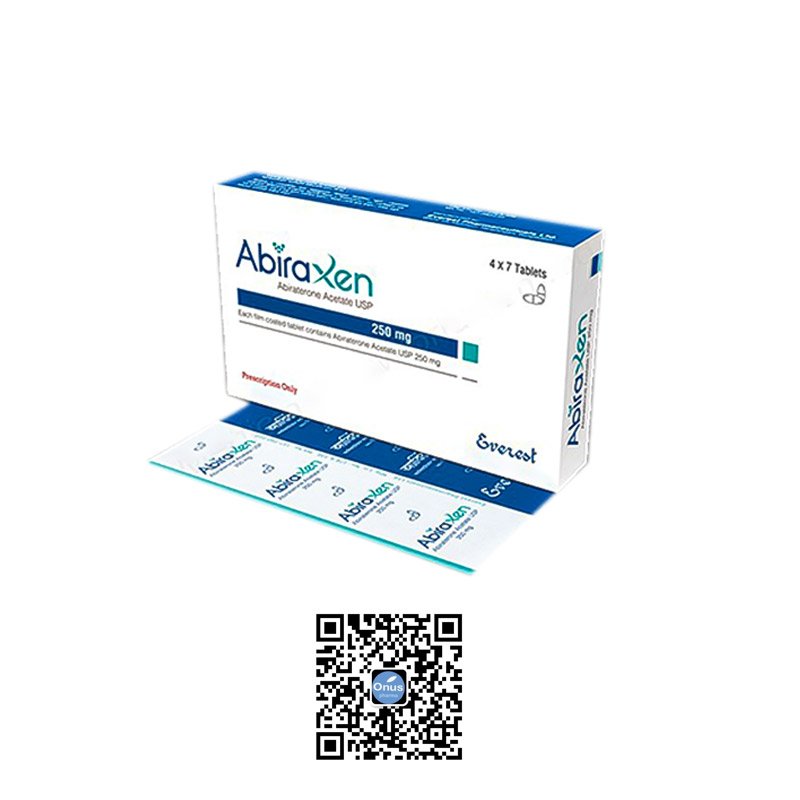
The 250mg tablet formulation (including Abiraxeen and similar regional brands) corresponds to the original formulation requiring empty-stomach administration — which is why this rule applies to the tablets you’re taking.
The practical takeaway
These two rules — always with prednisone, always on empty stomach — aren’t arbitrary prescribing conventions. They’re direct consequences of abiraterone’s mechanism and its absorption chemistry. The prednisone prevents a mechanistically unavoidable hormonal cascade from becoming dangerous, and provides adrenal support that the suppressed adrenal axis cannot self-supply. The empty stomach rule prevents drug levels from spiking into a range that was never tested and carries meaningful toxicity risk.
Both are genuinely non-negotiable in a way that few drug administration rules are — and both are worth explicitly confirming as understood with your oncologist before the first dose, rather than learning about their importance after a complication occurs.
Medical disclaimer: This page is for informational purposes only and does not constitute medical advice, diagnosis, or treatment. Osimertinib is a prescription medication that must only be used under the supervision of a qualified oncologist. Clinical outcomes data is drawn from published Phase III trials; individual results vary. Always consult your healthcare provider and refer to the full prescribing information before making any treatment decisions. Emergency: call your local emergency services or poison control immediately if you experience serious adverse effects.
Conatact US