Address
Sector 14, Road no. 18, Uttara, 1230
Dhaka, Bangladesh

Rx Prescripttion Only-YMYL Medical Content
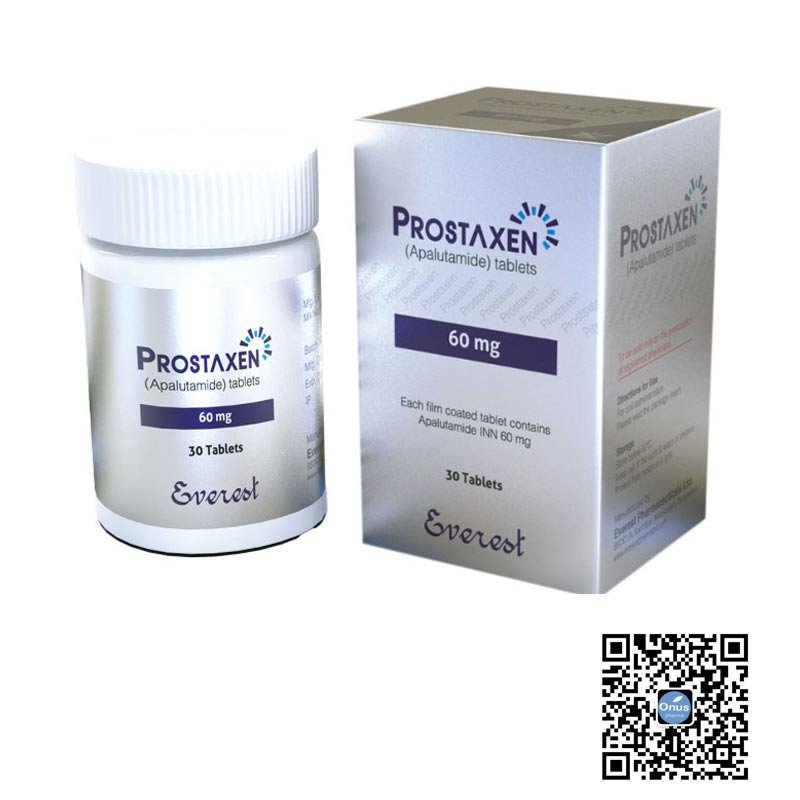
Approved for adults with metastatic castration-sensitive prostate cancer (mCSPC) and for adults with non-metastatic castration-resistant prostate cancer (nmCRPC) — always used in combination with androgen deprivation therapy (ADT, or castration).
1
2
3
4
MD
Medical Oncologist Review
Board-certified oncologist · 12+ years in thoracic malignancies
Content reviewed against FDA prescribing information, NCCN Guidelines v2.2024, and published Phase III trial data. Last updated June 2026.
These steps help you have an informed conversation. A confirmed EGFR mutation result is the starting point for any treatment decision.
Medical disclaimer: This page is for informational purposes only and does not constitute medical advice, diagnosis, or treatment. It is a prescription medication that must only be used under the supervision of a qualified oncologist. Clinical outcomes data is drawn from published Phase III trials; individual results vary. Always consult your healthcare provider and refer to the full prescribing information before making any treatment decisions. Emergency: call your local emergency services or poison control immediately if you experience serious adverse effects.
Here are key questions to bring to your oncologist — given that apalutamide has a hard seizure contraindication rather than a relative caution, and that bone health requires proactive assessment in a population already vulnerable from ADT, these two areas deserve the most focused pre-treatment conversation.
Before confirming apalutamide as your treatment
About seizure risk — a hard contraindication requiring explicit screening
About ADT combination — confirming the ongoing regimen
About bone health and fall/fracture risk
About cardiovascular monitoring
About skin reactions
About dosing and administration
About drug interactions
About hormonal effects and quality of life
About monitoring response
About the longer road
A practical tip: Because apalutamide is a strong inducer of CYP3A4 and CYP2C19 enzymes, it can substantially reduce the blood levels of many commonly used medications — including some statins, blood thinners, and other drugs — potentially making them less effective without any obvious warning sign. It’s worth asking your oncologist and pharmacist to conduct a formal review of every medication you take before starting apalutamide, since this interaction risk is broader and less obvious than the interactions associated with most other drugs in this conversation series.
This comparison sits in an interesting evidentiary space — no dedicated head-to-head RCT exists, but there’s more comparative data than most indirect comparisons in our series, including a real-world head-to-head study and matching-adjusted indirect comparisons from their respective phase 3 trials.
Both are next-generation androgen receptor inhibitors, approved in the same disease settings
| Apalutamide (Erleada) | Enzalutamide (Xtandi) | |
|---|---|---|
| Mechanism | Selective AR inhibitor — blocks AR ligand binding, nuclear translocation, and DNA binding | Same class — selective AR inhibitor |
| Indications | nmCRPC + mCSPC | nmCRPC + mCSPC + mCRPC (additional indication) |
| Pivotal trials | SPARTAN (nmCRPC) + TITAN (mCSPC) | PROSPER (nmCRPC) + ARCHES (mCSPC) |
| Dosing | 240mg once daily (four 60mg tablets) | 160mg once daily |
| FDA approval | 2018 (nmCRPC), 2019 (mCSPC) | 2012 (mCRPC), 2018 (nmCRPC), 2019 (mCSPC) |
Enzalutamide has a broader approved indication set — it also covers metastatic castration-resistant prostate cancer (mCRPC), an additional disease state where apalutamide isn’t currently approved.
Efficacy in nmCRPC — indirect comparisons suggest broadly comparable, with a possible enzalutamide edge
No head-to-head RCT exists for nmCRPC. A matching-adjusted indirect comparison of final data from PROSPER and SPARTAN found comparable efficacy of enzalutamide and apalutamide, with potentially a greater probability of longer metastasis-free survival, overall survival, and time to chemotherapy with enzalutamide versus apalutamide. This finding favoring enzalutamide numerically is worth understanding in context: the SPARTAN and PROSPER trials both excluded patients with a history of seizures, making the populations comparable in that respect, but other baseline differences between trial populations mean this indirect comparison has real methodological limitations.
A network meta-analysis across all three major nmCRPC trials (SPARTAN, PROSPER, ARAMIS) found darolutamide ranked first for overall survival benefit, followed by enzalutamide and then apalutamide — and in the subgroup of patients with PSA doubling time ≤6 months, enzalutamide ranked first.
Efficacy in mCSPC — real-world data suggests apalutamide may have an advantage here
This is where the picture shifts meaningfully. In October 2024, Johnson & Johnson announced results of a real-world head-to-head study showing that apalutamide provided a statistically significant overall survival benefit at 24 months compared to enzalutamide in patients with metastatic castration-sensitive prostate cancer. The proportion of patients alive at 24 months was 87.6% in the apalutamide cohort, consistent with the Phase 3 TITAN trial result of 82.4%.
In the mCSPC setting, similar results were seen in TITAN with apalutamide and in the enzalutamide ARCHES trial, but seven men treated with enzalutamide experienced seizures compared with no men in the standard treatment group, and overall more than twice as many men receiving enzalutamide stopped treatment compared to standard treatment.
Side effects — similar profiles with distinctive differences
In the PROSPER study of enzalutamide, the most common adverse events were fatigue (46%), musculoskeletal events (34%), fractures (18%), hypertension (18%), and falls (18%). In the SPARTAN study of apalutamide, the most common adverse events were fatigue (33%), hypertension (28%), rash (26%), falls (22%), and fracture (18%).
Three practical distinctions emerge from this comparison:
Fatigue — enzalutamide’s 46% fatigue rate is notably higher than apalutamide’s 33%, a difference meaningful enough to affect day-to-day quality of life over what is often years of treatment.
Rash — apalutamide’s 26% rash rate is a distinctive, drug-specific toxicity not prominently shared by enzalutamide, reflecting apalutamide’s known thyroid hormone-disrupting properties. This rash is generally manageable but can require dose interruption in more severe cases.
Seizure risk — both drugs carry seizure risk and both SPARTAN and PROSPER excluded patients with seizure history. Darolutamide had approximately 26 and 46 times lower blood-brain barrier penetration than apalutamide and enzalutamide respectively, resulting in fewer CNS adverse events including seizures — patients who received enzalutamide or apalutamide had an increased number of seizures compared with placebo, whereas patients who received darolutamide had the same seizure incidence as placebo. Between apalutamide and enzalutamide specifically, enzalutamide’s greater blood-brain barrier penetration (approximately 1.8 times higher than apalutamide) has been proposed as contributing to higher CNS-related side effects including fatigue, cognitive effects, and seizure risk.
Drug interactions — apalutamide’s CYP induction is a distinct concern
Apalutamide is a strong inducer of CYP3A4 and CYP2C19 enzymes — a broad drug interaction profile we highlighted in the product page questions as potentially affecting many commonly prescribed medications, including some statins and anticoagulants. Enzalutamide is also a CYP3A4 inducer, but this concern tends to be particularly prominent in prescribing discussions around apalutamide.
Where darolutamide fits — worth mentioning
Although there are no significant differences in adverse events among apalutamide, darolutamide, and enzalutamide overall, darolutamide has lower risks for some events such as fatigue, falls, rash, fracture, and seizure, and drug discontinuation resulting from adverse events was lowest with darolutamide. Any honest comparison of apalutamide versus enzalutamide should acknowledge that darolutamide exists as a third option with a broadly favorable safety profile across most of these same comparisons — particularly for patients where seizure risk, fatigue, or CNS side effects are significant concerns.
Bottom line
Apalutamide and enzalutamide are broadly comparable in efficacy for nmCRPC based on indirect comparisons, with the nmCRPC indirect analysis suggesting a possible enzalutamide edge while the mCSPC real-world data favors apalutamide — but neither comparison comes from a dedicated head-to-head RCT, and both should be interpreted accordingly. The most clinically actionable differences are practical: enzalutamide’s substantially higher fatigue rate versus apalutamide’s distinctive rash, both drugs’ shared seizure contraindication (with enzalutamide showing somewhat higher CNS penetration), and apalutamide’s broader CYP interaction profile. Darolutamide’s favorable safety profile means it deserves explicit mention in any treatment discussion where tolerability is the primary concern. This is a decision worth having directly with your urologist or oncologist — framed around your specific disease state, PSA kinetics, fatigue tolerance, medication list, and neurological history — rather than treating either drug as a clear default.
Prostate cancer’s dependence on male sex hormones is one of the most well-characterized vulnerabilities in all of oncology — and understanding how apalutamide exploits this dependency requires tracing the signaling pathway from the hormone itself all the way into the cancer cell’s nucleus, where growth genes actually get switched on.
The basic biology — why prostate cancer depends on androgens
The prostate gland is an androgen-dependent tissue from its earliest development — it requires testosterone and its more potent derivative, dihydrotestosterone (DHT), to grow and function normally. Prostate cancer cells inherit and exploit this same dependency, using androgen signaling as their primary growth and survival engine. This is why androgen deprivation therapy (reducing testosterone to castration levels through surgical or medical means) has been the backbone of advanced prostate cancer treatment for decades — cutting off the hormone supply starves the cancer of its main fuel.
What the androgen receptor does — the molecular switch
Androgens don’t act directly on DNA. Instead, they work through a dedicated receptor protein inside prostate cells called the androgen receptor (AR). In its resting state, the AR sits in the cell’s cytoplasm, held in an inactive configuration by chaperone proteins. When testosterone or DHT enters the cell and binds to the AR’s ligand-binding domain, this triggers a cascade of conformational changes: the AR releases its chaperone proteins, forms a dimer with another AR molecule, travels into the nucleus, binds to specific DNA sequences called androgen response elements, and switches on the genes responsible for prostate cell growth, survival, and proliferation.
This AR-to-nucleus-to-gene-activation pathway is the central engine driving androgen-dependent prostate cancer growth.
Why castration alone eventually fails — the problem of castration resistance
Androgen deprivation therapy works initially by removing the testosterone fuel that activates the AR. But prostate cancer cells are remarkably adaptable — over time, they develop mechanisms to keep the AR pathway active even at castration-level testosterone:
AR gene amplification — producing more AR protein so that even tiny amounts of remaining androgen can activate enough receptors to maintain growth signaling.
AR mutations — altering the ligand-binding domain so the receptor can be activated by non-testosterone molecules, including even anti-androgen drugs themselves in some cases.
Intratumoral androgen synthesis — cancer cells begin synthesizing their own androgens from cholesterol and other precursors, becoming partially independent of circulating testosterone.
These adaptations produce castration-resistant prostate cancer — the cancer is still AR-dependent, but it has found ways around the testosterone deprivation that initially controlled it.
How first-generation anti-androgens worked — and why they fell short
Earlier anti-androgen drugs (bicalutamide, flutamide, nilutamide) attempted to block androgen signaling by competing with testosterone for the AR’s ligand-binding domain. They had genuine activity but were ultimately limited because they bound the AR reversibly and with relatively low affinity — and critically, in the setting of high AR expression that develops in castration-resistant disease, these older drugs could paradoxically switch from blocking the AR to partially activating it, essentially behaving like weak androgens themselves. This “agonist switch” was a significant limitation.
How apalutamide works differently — blocking at multiple points simultaneously
Apalutamide is an orally administered, selective androgen receptor inhibitor that binds directly to the ligand-binding domain of the AR with substantially higher affinity than first-generation anti-androgens. But the critical advance over its predecessors isn’t just tighter binding — it’s that apalutamide simultaneously disrupts the AR pathway at multiple steps rather than just competing at the entry point:
Apalutamide prevents AR nuclear translocation, inhibits DNA binding, and impedes AR-mediated transcription, while lacking androgen receptor agonist activity.
Breaking this down:
Blocks ligand binding — prevents testosterone and DHT from docking at the AR’s binding domain.
Prevents nuclear translocation — even if AR does become activated, apalutamide keeps it trapped in the cytoplasm rather than allowing it to migrate into the nucleus where it would access DNA.
Inhibits DNA binding — blocks the AR from attaching to androgen response elements in the genome even if it reaches the nucleus.
Impedes AR-mediated transcription — prevents the growth-promoting genes from being switched on even if the AR manages to reach the DNA.
No agonist activity — crucially, unlike first-generation anti-androgens, apalutamide doesn’t flip to partial agonist behavior in high-AR-expression environments, which was the key failure mode of older drugs.
Why this multi-point blockade matters clinically
This layered mechanism is precisely why next-generation AR inhibitors like apalutamide are effective in castration-resistant disease where first-generation drugs failed. Even as prostate cancer cells amplify AR expression or develop mutations to keep signaling active, apalutamide’s simultaneous interference at binding, translocation, DNA attachment, and transcription creates redundant blockades that are harder for the cancer to route around than the single-point competitive binding that older anti-androgens relied on.
Why apalutamide is always combined with ADT rather than used alone
This connects directly to the biology: apalutamide blocks the AR pathway inside the cell, but ADT (surgical or medical castration) reduces the amount of testosterone available to activate AR in the first place. Using both together attacks the pathway from both ends simultaneously — cutting off the upstream hormone supply while blocking the downstream receptor machinery — producing a more complete suppression of androgen signaling than either approach alone could achieve.
Why the seizure risk makes mechanistic sense
This connects back to the safety warning we discussed on the product page and in the comparison with enzalutamide: the AR is expressed not just in prostate tissue but also in the brain and nervous system, where androgen signaling plays roles in neurological function. Apalutamide and enzalutamide both cross the blood-brain barrier to some degree — and their AR-blocking activity in neural tissue may alter neurological signaling thresholds in ways that, in susceptible individuals, lower the seizure threshold. This is why the seizure contraindication is mechanism-linked rather than a completely unexpected side effect, and why darolutamide’s substantially lower blood-brain barrier penetration translates into meaningfully lower seizure risk despite sharing the same overall AR-inhibiting mechanism.
The bigger picture
Apalutamide’s mechanism represents a deliberate evolution beyond the limitations of first-generation anti-androgens — moving from single-point competitive binding that prostate cancer cells could eventually outmaneuver, to simultaneous blockade at multiple steps of the AR activation pathway, with no agonist fallback behavior that had undermined its predecessors. Combined with ADT that removes the upstream hormonal fuel, this dual assault on androgen signaling from both the supply side and the receptor machinery side is precisely what produces the meaningful survival improvements seen in the SPARTAN and TITAN trials in patients whose cancers had already demonstrated at least partial resistance to testosterone deprivation alone.
Conatact US