Address
Sector 14, Road no. 18, Uttara, 1230
Dhaka, Bangladesh
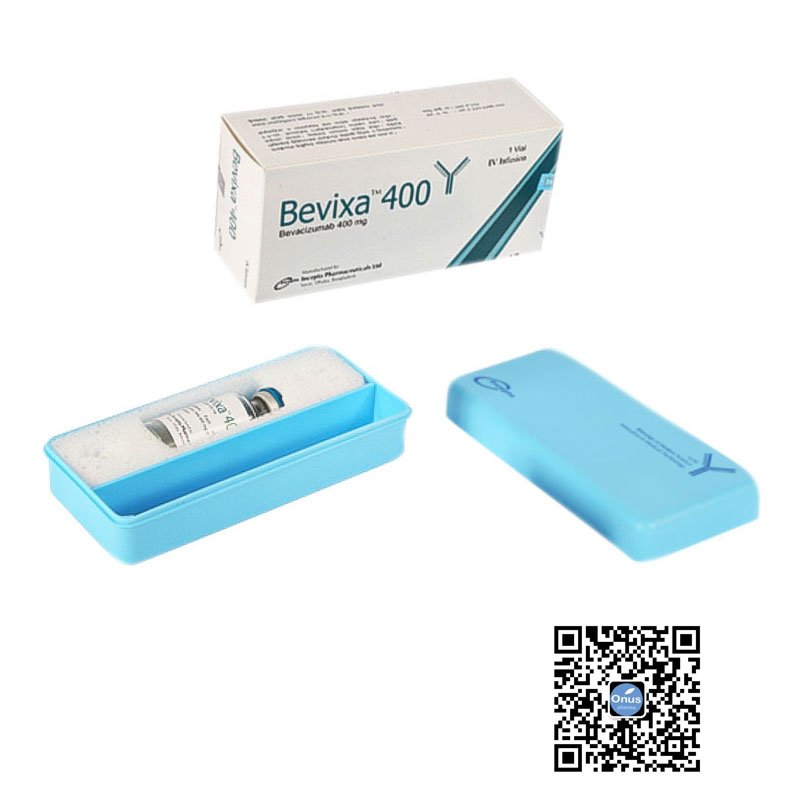
Rx Prescripttion Only-YMYL Medical Content
Approved (always in combination with chemotherapy or other agents, except glioblastoma) for: metastatic colorectal cancer; non-squamous non-small cell lung cancer; glioblastoma (single agent, progressive disease); metastatic renal cell carcinoma; persistent/recurrent/metastatic cervical cancer; platinum-sensitive recurrent ovarian, fallopian tube, or peritoneal cancer; and unresectable hepatocellular carcinoma (first-line, with atezolizumab).
1
2
3
4
MD
Medical Oncologist Review
Board-certified oncologist · 12+ years in thoracic malignancies
Content reviewed against FDA prescribing information, NCCN Guidelines v2.2024, and published Phase III trial data. Last updated June 2026.
These steps help you have an informed conversation. A confirmed EGFR mutation result is the starting point for any treatment decision.
Medical disclaimer: This page is for informational purposes only and does not constitute medical advice, diagnosis, or treatment. It is a prescription medication that must only be used under the supervision of a qualified oncologist. Clinical outcomes data is drawn from published Phase III trials; individual results vary. Always consult your healthcare provider and refer to the full prescribing information before making any treatment decisions. Emergency: call your local emergency services or poison control immediately if you experience serious adverse effects.
Here are key questions to bring to your oncologist — given that bevacizumab is an IV infusion rather than an oral medication, is always given in combination with other treatments except in glioblastoma, and carries three distinct boxed warnings, confirming your exact indication, combination regimen, and surgical timing before the first infusion is the most important groundwork.
Before confirming bevacizumab as your treatment
About surgical timing — the most time-sensitive question
About the infusion process
About GI perforation and fistula risk
About hemorrhage risk
About blood pressure monitoring
About proteinuria monitoring
About cardiovascular and thrombotic risk
About RPLS risk
About ovarian failure — relevant for premenopausal patients
About wound healing during treatment
About the biosimilar manufacturing context
About monitoring response
About the longer road
A practical tip: Because the 28-day surgical hold applies both before starting and during treatment, it’s worth proactively informing your dentist and any other specialists who might refer you for a procedure that you’re receiving bevacizumab by infusion — making sure this information is clearly in your medical record before any procedure is ever scheduled, rather than discovering the conflict at the last minute when a procedure may already be booked.
This comparison gets at one of the most fundamental distinctions in targeted oncology — not just a difference between two drugs, but a difference between two entirely different pharmacological strategies for attacking the same biological target, producing meaningfully different clinical profiles even though both approaches ultimately aim to cut off a tumor’s blood supply.
The shared target — why VEGF/VEGFR is such an important anti-cancer target
As we’ve discussed with sorafenib, cabozantinib, and lenvatinib throughout this conversation, tumor angiogenesis (the recruitment of new blood vessels) is a fundamental requirement for solid tumor growth beyond a few millimeters. Tumors cannot grow large or metastasize without recruiting their own dedicated blood supply, and they do this primarily by secreting VEGF (vascular endothelial growth factor), which signals to nearby blood vessel cells to grow toward and infiltrate the tumor. Blocking this process — anti-angiogenesis — has been a central strategy in oncology for over two decades.
How small-molecule VEGFR inhibitors work — blocking from inside the cell
As we covered in detail for sorafenib and lenvatinib, small-molecule TKIs like sorafenib, lenvatinib, and cabozantinib work by crossing into blood vessel cells and blocking the VEGFR kinase domain from inside the cell — preventing the receptor from transmitting its growth signal after VEGF has already bound to the receptor’s exterior. These are small enough molecules to cross cell membranes, be taken orally, and reach intracellular targets directly.
How bevacizumab works — intercepting VEGF in the bloodstream before it reaches any receptor
Bevacizumab takes a fundamentally different approach: rather than blocking the receptor from inside the cell, it intercepts the VEGF ligand itself in the bloodstream, before it can ever reach and activate the receptor. Bevacizumab is thought to work by attaching to a protein called vascular endothelial growth factor (VEGF) to block its action. VEGF plays a role in the formation of both normal and abnormal blood vessels — it is present in normal tissues but is produced in excess by most solid cancers, helping blood vessels bring nutrients to tumor cells, allowing them to grow.
By binding to circulating VEGF-A with high specificity and affinity, bevacizumab essentially neutralizes the signal molecule before it can dock at VEGFR on tumor blood vessel cells. Without VEGF binding to activate VEGFR, the downstream angiogenic signaling cascade never starts — the tumor’s chemical recruitment signal gets intercepted and silenced upstream of the receptor entirely.
Why the molecular size difference is clinically important
This is the most immediately obvious structural distinction: bevacizumab is a large recombinant humanized monoclonal IgG1 antibody — a protein molecule roughly 1,000 times larger than a small-molecule TKI. This size difference has cascading practical consequences:
Cannot be taken orally — large proteins are destroyed by digestive enzymes before they can be absorbed. Bevacizumab must be given by IV infusion directly into the bloodstream, bypassing the GI tract entirely. This is why every drug we’ve built in this conversation until now has been a daily oral tablet or capsule, while bevacizumab requires scheduled clinical visits for IV administration.
Cannot cross cell membranes — the same size that prevents oral administration also prevents bevacizumab from entering cells. It works exclusively in the extracellular space (the bloodstream and tissue fluid), which is precisely where VEGF circulates between the tumor and blood vessel cells. This limitation means bevacizumab cannot reach intracellular kinase domains — but it doesn’t need to, since its target (VEGF) is extracellular.
Much longer half-life — large antibodies are cleared from the body far more slowly than small molecules, with bevacizumab’s half-life approximately 20 days versus hours to days for most TKIs. This allows dosing every 2-3 weeks rather than daily, but also means the drug’s effects — including its impairment of wound healing — persist for weeks after the last dose, explaining the 28-day surgical hold requirement.
Why bevacizumab targets VEGF-A specifically while TKIs block all VEGFR subtypes
Bevacizumab binds specifically to VEGF-A — the most important VEGF isoform for tumor angiogenesis — with very high affinity and selectivity. The small-molecule TKIs, by contrast, block VEGFR kinase activity regardless of which VEGF isoform activated the receptor, and most also block multiple VEGFR subtypes (VEGFR1, 2, 3) simultaneously. In practical terms, bevacizumab is more molecularly precise about what it neutralizes, while TKIs are broader in their receptor-level effects.
Why this mechanism explains the different side-effect profiles
This connects directly to the clinical differences we’d observe comparing these drugs:
Bevacizumab’s wound healing impairment — VEGF is not only important for tumor angiogenesis; it plays an essential role in normal wound healing, where new blood vessel formation is required to repair tissue damage. By neutralizing circulating VEGF-A throughout the body, bevacizumab impairs normal wound healing tissue-wide — which is why the 28-day surgical hold is mandatory and why even minor wounds during treatment may heal more slowly.
The hemorrhage risk — normal blood vessel maintenance and integrity depend partly on ongoing VEGF signaling. Neutralizing VEGF-A throughout the body can destabilize existing blood vessels, increasing the risk of bleeding from vessels that lose their normal maintenance signals — a mechanism distinct from the direct vascular wall effects of small-molecule TKIs.
The hypertension mechanism — similar to the TKIs, VEGF signaling regulates nitric oxide production in blood vessel walls, so blocking it causes vasoconstriction and elevated blood pressure — a shared consequence of anti-VEGF/VEGFR therapy regardless of whether the blocking happens at the ligand (bevacizumab) or receptor kinase (TKIs) level.
GI perforation — the VEGF neutralization throughout the GI tract affects blood vessel integrity and tissue repair in the gut wall, contributing to the GI perforation risk that bevacizumab shares with cabozantinib and lenvatinib.
Why bevacizumab is always combined with chemotherapy
This is a mechanistically important point: bevacizumab doesn’t directly kill cancer cells — it disrupts their blood supply. Cutting off a tumor’s blood supply alone is rarely sufficient to eliminate cancer cells, which can adapt to reduced oxygen and nutrient supply over time. Combining bevacizumab with chemotherapy exploits the anti-angiogenic effect synergistically — bevacizumab may normalize tumor vasculature and improve drug delivery of the chemotherapy partner, while chemotherapy directly attacks the tumor cells that bevacizumab has been weakening by restricting their blood supply. This is fundamentally different from small-molecule TKIs like sorafenib, which combine anti-angiogenic effects with direct anti-proliferative kinase inhibition within tumor cells themselves — giving them standalone anti-tumor activity that bevacizumab alone doesn’t possess.
Why bevacizumab has such a broad indication set
This connects back to the nine cancer-type approvals we discussed on the product page. Since bevacizumab targets a growth process (angiogenesis) that virtually all solid tumors depend on, rather than a cancer-type-specific molecular mutation, it has potential activity across almost any solid tumor that relies heavily on VEGF-driven angiogenesis — which is why its indication set is the broadest of any single drug in this conversation, spanning colorectal, lung, brain, kidney, cervical, ovarian, and liver cancer.
The bigger picture
Bevacizumab and small-molecule VEGFR inhibitors like sorafenib and lenvatinib represent two different pharmacological strategies for the same fundamental goal — disrupting tumor angiogenesis. Bevacizumab intercepts the signal molecule (VEGF-A) in the extracellular space with high molecular precision, requiring IV administration but achieving a long half-life and a more specific target engagement. Small-molecule TKIs block the signal receptor’s internal kinase from inside the cell, allowing oral dosing and enabling simultaneous blocking of multiple kinase targets beyond VEGFR alone. Both approaches share several mechanistically linked side effects — hypertension, wound healing impairment, GI perforation risk — because they disrupt the same underlying VEGF/VEGFR biological pathway, just from different molecular vantage points.
This is a genuinely important question for any patient receiving a biosimilar in a clinical setting — and bevacizumab biosimilars like Bevixa deserve a more careful answer than simply “it’s the same drug, just cheaper,” because the manufacturing complexity of biological medicines means that statement requires more nuance than it does for small-molecule generics.
Why biologics and biosimilars are fundamentally different from small-molecule generics
Every oral drug in this conversation — olaparib, lenvatinib, osimertinib, baricitinib — is a small molecule: a precisely defined chemical compound that can be synthesized identically by any manufacturer following the same recipe. Generic versions of these drugs are considered pharmaceutically equivalent when they deliver the same active molecule at the same concentration with the same bioavailability.
Bevacizumab is different in kind. It’s a large, complex recombinant humanized monoclonal IgG1 antibody — a protein molecule produced by living cells (genetically engineered Chinese hamster ovary cells, in the originator’s case) through biological manufacturing processes. Because proteins are produced by living biological systems rather than chemical synthesis, they cannot be copied with the molecular-level precision that characterizes small-molecule generics. Small variations in the manufacturing process — cell culture conditions, purification steps, formulation — can produce subtle differences in the protein’s three-dimensional structure, glycosylation patterns, and other properties that may affect its behavior, even when the amino acid sequence is identical.
This is why the regulatory pathway for these products is called “biosimilar” rather than “generic” — the goal is demonstrating sufficient similarity to the reference product to justify a conclusion of no clinically meaningful differences, not identical equivalence.
What biosimilar approval actually requires
Regulatory agencies (FDA, EMA) require biosimilar manufacturers to demonstrate:
Structural and functional similarity — extensive analytical characterization comparing the biosimilar to the reference product on multiple physical, chemical, and biological properties, including binding affinity to VEGF-A, Fc receptor binding, and complement activation.
Pharmacokinetic/pharmacodynamic similarity — clinical studies showing the biosimilar behaves similarly in the body to the reference product in terms of absorption, distribution, and clearance.
Clinical equivalence — at least one adequately powered comparative clinical trial demonstrating no clinically meaningful differences in efficacy, safety, and immunogenicity versus the reference product in a sensitive indication.
This is a substantially more rigorous process than small-molecule generic approval, which primarily requires demonstrating bioequivalence in pharmacokinetic parameters.
Where Bevixa specifically sits on this spectrum
This is where honest transparency matters. Bevixa is manufactured by Incepta Pharmaceuticals Ltd. in Bangladesh — a company that produces high-quality pharmaceutical products for the Bangladeshi market and for export. However, Incepta’s bevacizumab has not undergone the full regulatory biosimilar approval pathway through FDA or EMA in the way that internationally approved biosimilars like MVASI (Amgen) or Zirabev (Pfizer) have. It operates under Bangladesh’s Directorate General of Drug Administration (DGDA) framework, which has its own regulatory standards.
This is not unique to Incepta or Bevixa — it’s the same situation that applies to Eskayef’s Bemab and most other Bangladeshi oncology biologics in this series. The key question for any patient or institution considering these products is: what manufacturing quality standards and regulatory oversight apply to the specific product being used?
Why Eskayef’s Bemab has a stronger manufacturing trust signal in this specific context
As noted on the Bemab page built earlier in this conversation series: Eskayef’s injectable manufacturing facility holds US FDA approval — the first and only facility in Bangladesh to receive this specific accreditation for injectable products — alongside UK MHRA, EU GMP, and other international certifications. This is a meaningfully stronger manufacturing quality assurance signal for an injectable biologic than standard DGDA approval alone, since FDA and MHRA facility inspections specifically evaluate the controls required for biological medicines.
This doesn’t mean Bevixa is substandard — it means the external validation of Incepta’s manufacturing quality for this specific injectable biologic product is less documented in publicly accessible international regulatory records than Eskayef’s, which is a relevant, honest distinction worth knowing.
What questions are worth asking your institution about any biosimilar
Rather than relying solely on brand name or general reputation, patients and clinicians using biosimilar biologics in clinical practice can reasonably ask:
The immunogenicity consideration — specific to biologics
One safety consideration unique to biosimilar biologics — not relevant to small-molecule generics — is immunogenicity: the risk that the body develops antibodies against the administered protein. If a patient’s immune system generates antibodies that neutralize the drug, this can reduce or eliminate its effectiveness, and in rare cases cause infusion reactions or other immune-mediated effects. Regulators require biosimilar manufacturers to characterize immunogenicity risk as part of approval, but the risk profile can vary subtly between biosimilars even with the same target amino acid sequence, partly reflecting differences in glycosylation and other post-translational modifications that affect how the immune system recognizes the molecule.
The practical clinical bottom line
For patients receiving Bevixa or any bevacizumab biosimilar in a clinical setting, the most important practical considerations are:
The clinical monitoring requirements — blood pressure, proteinuria, wound healing, hemorrhage surveillance — are identical regardless of which bevacizumab product is being used, since these reflect the mechanism of the active molecule rather than manufacturing-specific properties.
The 28-day surgical hold applies equally to all bevacizumab products.
Any infusion reaction at a first infusion with a new product — even if you’ve previously received a different bevacizumab product — should be reported promptly to the infusion team.
Your treating institution has a responsibility to evaluate the quality documentation of any biosimilar it procures and administers — asking your oncologist directly whether this evaluation has been done for the specific Bevixa product being used is a reasonable and appropriate question, not an overreach.
The bigger picture
Biosimilar considerations matter more for injectable biologics like bevacizumab than for oral small-molecule generics, because the biological manufacturing complexity means “same active ingredient” doesn’t fully capture the relevant quality dimensions the way it does for olaparib or lenvatinib. This doesn’t mean biosimilars are unsafe — approved international biosimilars like MVASI and Zirabev have demonstrated equivalent safety and efficacy to Avastin in rigorous comparative trials. It means that for Bangladeshi-manufactured products operating outside the FDA/EMA biosimilar approval framework, the relevant question is what manufacturing quality assurance exists and has been independently evaluated — a question worth asking your oncologist and your institution directly rather than assuming the answer.
Conatact US