Address
Sector 14, Road no. 18, Uttara, 1230
Dhaka, Bangladesh

Rx Prescripttion Only-YMYL Medical Content
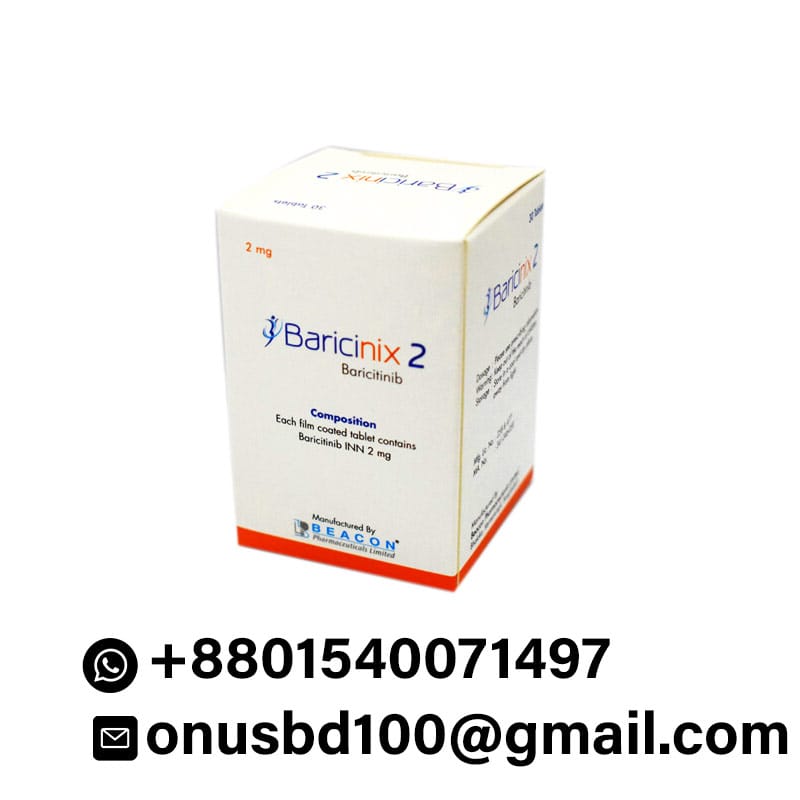
The 2mg once-daily dose is specifically appropriate for: patients aged 75 and older; patients with a history of chronic or recurrent infections; patients with moderate renal impairment (creatinine clearance 30–60 mL/min); patients on strong OAT3 inhibitors such as probenecid; and patients who have achieved sustained disease control on 4mg and are eligible for dose tapering.
1
2
3
4
MD
Medical Oncologist Review
Board-certified oncologist · 12+ years in thoracic malignancies
Content reviewed against FDA prescribing information, NCCN Guidelines v2.2024, and published Phase III trial data. Last updated June 2026.
These steps help you have an informed conversation. A confirmed EGFR mutation result is the starting point for any treatment decision.
Medical disclaimer: This page is for informational purposes only and does not constitute medical advice, diagnosis, or treatment. It is a prescription medication that must only be used under the supervision of a qualified oncologist. Clinical outcomes data is drawn from published Phase III trials; individual results vary. Always consult your healthcare provider and refer to the full prescribing information before making any treatment decisions. Emergency: call your local emergency services or poison control immediately if you experience serious adverse effects.
Here are key questions to bring to your rheumatologist — since the 2mg dose has several distinct clinical reasons behind it rather than being a generic “starter” dose, understanding specifically why you’re on this strength is the most useful starting point for the conversation.
Understanding why you’re specifically on 2mg
If age is the reason (75 and older)
If a history of infections is the reason
If kidney function is the reason
If a drug interaction is the reason
If this is a taper from 4mg
About ongoing monitoring at this dose
About infection screening
About dosing and administration
About drug interactions
About what to expect
A practical tip: Because the 2mg dose serves several genuinely different clinical purposes, it’s worth asking your rheumatologist to state explicitly, in one sentence, the specific reason you’re on this dose rather than 4mg — having that clear in your own mind makes it much easier to recognize if your situation changes in a way that might call for a dose adjustment down the road.
Tapering from 4mg down to 2mg is one of the more encouraging conversations in rheumatoid arthritis management — it represents a patient doing well enough that the treatment team can consider stepping back, rather than a sign that something has gone wrong.
The basic clinical criteria — sustained disease control, not just feeling better today
A dose of 2mg once daily may be considered for patients who have achieved sustained control of disease activity with 4mg once daily and are eligible for dose tapering. The key word here is “sustained” — this isn’t a decision made after one good appointment or a single set of improved labs. Rheumatologists are looking for disease control that has held steady over a meaningful period of time, not just a temporary good stretch.
What “disease control” actually means in practice
In rheumatoid arthritis management, disease activity is typically tracked using standardized composite scores that combine several measures: the number of tender and swollen joints, patient-reported pain and overall assessment, and inflammatory markers from blood tests (such as ESR or CRP). A rheumatologist considering a taper is generally looking for a patient who has reached what’s called low disease activity or remission on these standardized scales, and has maintained that status consistently over multiple consecutive visits — not just touched that target briefly before relapsing again.
Why timing and consistency matter so much
Rheumatoid arthritis can fluctuate, and a single good appointment doesn’t reliably predict that a lower dose will continue to control the disease adequately. Most rheumatologists want to see this stable, low-disease-activity state sustained across several months and multiple assessments before considering a step-down — essentially building confidence that the improvement reflects genuine, durable disease control rather than a temporary fluctuation that happened to coincide with a particular visit.
Why a taper is approached cautiously rather than abruptly
Unlike stopping a medication outright, tapering to 2mg keeps the patient on active treatment rather than withdrawing it entirely — this is an important, deliberate middle ground. The goal is to find the lowest effective dose that continues to control disease activity, since ongoing JAK inhibition still carries the cardiovascular, infection, and blood clot risks we’ve discussed throughout this conversation, and minimizing cumulative drug exposure while maintaining disease control is a reasonable, patient-centered goal once that control has been firmly established.
What happens after the dose is reduced — monitoring continues, not relaxes
A taper to 2mg isn’t a one-time event followed by reduced attention — it requires the same kind of structured follow-up as the original treatment decision. Your rheumatologist will want to reassess your disease activity using the same standardized measures at follow-up visits after the dose change, specifically watching for any sign that joint symptoms, swelling, or inflammatory markers are beginning to creep back up. If disease activity remains well controlled at 2mg over subsequent visits, this confirms the lower dose is adequate for you specifically.
What happens if symptoms return at the lower dose
If disease activity worsens after tapering to 2mg, the established response is generally to return to the 4mg dose that had previously achieved control, rather than considering the taper a failure of treatment overall. This is a normal, anticipated possibility built into the tapering approach — not every patient who reaches sustained low disease activity on 4mg will necessarily maintain that same level of control at 2mg, and finding this out is part of the legitimate clinical reasoning behind attempting a careful taper in the first place.
Why this differs from the other reasons a patient might be on 2mg
It’s worth being clear about how this scenario differs from the other situations we discussed where 2mg is used — age 75 and older, infection history, or kidney function. In those cases, 2mg is chosen as the appropriate dose from the outset, often because of an inherent patient characteristic that doesn’t change. A taper is different: it specifically follows a period of successful treatment at the higher 4mg dose, and the lower dose is being tested as a maintenance strategy precisely because the disease has already been brought under control.
Why this conversation should be patient-initiated as well as physician-initiated
If you’ve been feeling consistently well on 4mg for an extended period, this is a reasonable topic to raise proactively with your rheumatologist rather than waiting for them to bring it up — particularly if you have any concerns about cumulative medication exposure, cost considerations, or simply want to understand whether a lower-risk maintenance approach might be appropriate for your specific situation at this point in your treatment.
The bigger picture
This comes down to a basic pharmacological principle: a drug’s dose needs to match how efficiently the body can clear it, and the kidneys turn out to be baricitinib’s primary exit route — which means impaired kidney function doesn’t just slow elimination a little, it can cause the drug to build up to meaningfully higher levels than intended.
The basic biology — how drugs get cleared from the body
Every medication that enters the bloodstream eventually needs to be removed, primarily through two main routes: metabolism and clearance by the liver, or filtration and excretion by the kidneys. Different drugs rely on these two pathways to very different degrees — some are almost entirely liver-cleared (as we discussed with glecaprevir/pibrentasvir’s hepatic clearance), while others depend heavily on the kidneys.
Baricitinib’s specific clearance pathway
Baricitinib is predominantly cleared through the kidneys via renal excretion, meaning the kidneys play the primary role in removing this drug from the bloodstream and ultimately the body. This is fundamentally different from a drug like glecaprevir/pibrentasvir, which we discussed is processed almost entirely by the liver — baricitinib’s clearance profile sits at essentially the opposite end of that spectrum.
Why reduced kidney function causes drug accumulation
When kidney function declines — measured clinically as creatinine clearance, an estimate of how efficiently the kidneys are filtering blood — the kidneys become less effective at removing baricitinib from circulation at the normal rate. If a patient with reduced kidney function takes the same 4mg dose intended for someone with normal kidney function, the drug doesn’t get cleared as quickly, and blood levels build up higher than intended and stay elevated for longer than expected.
This matters because a drug’s safety and efficacy profile is established based on specific, expected blood concentration ranges from clinical trials. If kidney impairment causes those concentrations to run higher than what was studied, this can increase the risk of side effects — including the infection, blood clot, and cardiovascular risks we’ve already discussed at length — without necessarily providing any additional therapeutic benefit beyond what the standard dose already achieves.
Why the dose reduction to 2mg specifically addresses this
The recommended dose is 2mg once daily in patients with creatinine clearance between 30 and 60 mL/min. By cutting the dose roughly in half for patients with this degree of kidney impairment, the goal is to compensate for the reduced clearance rate — administering less drug per day to offset the fact that each dose is being eliminated more slowly, aiming to keep overall blood concentrations within the same target range that’s been shown to be both effective and reasonably safe in clinical trials.
This is a standard pharmacological principle applied across many renally-cleared medications, not something unique to baricitinib: when a drug’s main clearance pathway is impaired, the dose generally needs to be reduced to avoid unintended accumulation, rather than keeping the dose the same and accepting higher, less predictable blood levels.
Why there’s a hard cutoff at severe impairment, rather than just continuing to reduce the dose further
Baricitinib is not recommended for use in patients with creatinine clearance below 30 mL/min. This represents a different kind of decision than the 4mg-to-2mg adjustment — rather than simply reducing the dose further for more severe kidney impairment, the recommendation becomes to avoid the medication altogether below this threshold. This reflects that below a certain point, kidney function may be too compromised to reliably and predictably clear the drug at any reasonably effective dose, making the risk-benefit balance unfavorable regardless of how low the dose is adjusted — essentially, there may not be a dose low enough to maintain both safety and a meaningful therapeutic effect in this more severely impaired population, especially given that this population wasn’t well studied in the original clinical trials establishing baricitinib’s safety profile.
Why this connects to the broader monitoring picture
This is part of why baseline kidney function assessment is such a standard, non-negotiable part of starting baricitinib, and why kidney function continues to be monitored periodically during treatment, particularly in older patients (who are more likely to have age-related declines in kidney function) or those with other risk factors for kidney disease. Kidney function isn’t necessarily static — it can change over time due to aging, other medical conditions, or other medications — meaning a patient who started on the standard 4mg dose with normal kidney function could potentially need a dose adjustment later in their treatment course if their kidney function declines.
Why this differs from baricitinib’s liver-related guidance
It’s worth contrasting this with what we know about baricitinib and liver function: no dose adjustment is required for mild or moderate hepatic impairment, though it’s not recommended in severe hepatic impairment. This asymmetry — meaningful dose adjustment needed for even moderate kidney impairment, but not for mild-to-moderate liver impairment — directly reflects how heavily this particular drug relies on the kidneys specifically, rather than the liver, as its primary clearance pathway.
The bigger picture
Kidney function affects baricitinib dosing because the kidneys are the primary route through which this drug leaves the body — when that clearance pathway slows down due to impaired kidney function, the same dose that’s safe and effective in someone with normal kidney function can build up to higher, potentially riskier concentrations in someone whose kidneys aren’t filtering as efficiently. The dose reduction to 2mg for moderate impairment, and the recommendation to avoid the drug altogether below a certain threshold of kidney function, both reflect careful pharmacological calibration aimed at keeping blood concentrations within the range that clinical trials have shown to be both effective and reasonably safe — which is exactly why kidney function assessment is such a foundational, ongoing part of using this medication safely.





Conatact US