Address
Sector 14, Road no. 18, Uttara, 1230
Dhaka, Bangladesh

Rx Prescripttion Only-YMYL Medical Content
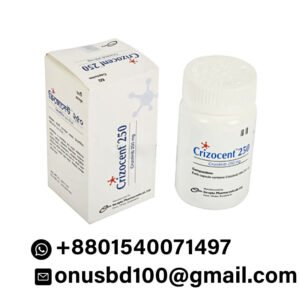
Indicated for adults with metastatic ALK-positive NSCLC and for metastatic ROS1-positive NSCLC — the first FDA-approved biomarker-driven therapy for both ALK-positive and ROS1-positive metastatic NSCLC, and the only FDA-approved drug specifically for ROS1-positive NSCLC.
1
2
3
4
MD
Medical Oncologist Review
Board-certified oncologist · 12+ years in thoracic malignancies
Content reviewed against FDA prescribing information, NCCN Guidelines v2.2024, and published Phase III trial data. Last updated June 2026.
These steps help you have an informed conversation. A confirmed EGFR mutation result is the starting point for any treatment decision.
Medical disclaimer: This page is for informational purposes only and does not constitute medical advice, diagnosis, or treatment. It is a prescription medication that must only be used under the supervision of a qualified oncologist. Clinical outcomes data is drawn from published Phase III trials; individual results vary. Always consult your healthcare provider and refer to the full prescribing information before making any treatment decisions. Emergency: call your local emergency services or poison control immediately if you experience serious adverse effects.
Here are key questions to bring to your oncologist — given that second- and third-generation ALK inhibitors have largely replaced crizotinib as first-line therapy for ALK-positive NSCLC, the most important question to ask upfront is whether crizotinib is actually the most appropriate choice for your specific situation, or whether you’re being prescribed it specifically for ROS1-positive disease where it remains the only approved option.
Before confirming crizotinib as your treatment
About vision disorders — the most common side effect and one to plan for specifically
About liver monitoring
About lung monitoring — interstitial lung disease/pneumonitis
About cardiac monitoring
About kidney function and dosing
About dosing and administration
About managing common side effects
About drug interactions
About contraception
About monitoring response
About the longer road
A practical tip: Because second-generation ALK inhibitors have demonstrated clear superiority over crizotinib in ALK-positive NSCLC in terms of both progression-free survival and intracranial control, it’s worth asking your oncologist to explain directly why crizotinib is the recommended choice for your specific situation rather than accepting it as the default first option — unless you’re ROS1-positive, where this question has a clear answer, knowing the specific clinical reasoning behind the choice matters more here than with many other drugs in this series.
This comparison has one of the clearest, most decisive outcomes in our entire series — a large, randomized head-to-head trial produced a result that fundamentally changed first-line treatment for ALK-positive NSCLC, and the field has moved on accordingly.
Both target ALK but represent different generations of the same drug class
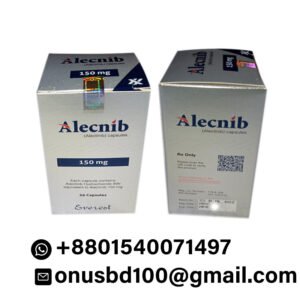
| Crizotinib (Xalkori) | Alectinib (Alecensa) | |
|---|---|---|
| Generation | First — established the ALK inhibitor class | Second — designed specifically to overcome crizotinib’s limitations |
| FDA approval | 2011 | 2015 (accelerated), 2017 (regular, first-line) |
| Targets | ALK, ROS1, c-Met, RON | ALK and RET — more selective |
| Dosing | 250mg twice daily | 600mg twice daily |
| Pivotal first-line trial | PROFILE 1014 | ALEX |
The ALEX trial — a decisive head-to-head result
The ALEX trial directly compared alectinib versus crizotinib as first-line therapy in previously untreated ALK-positive metastatic NSCLC, and the result was unambiguous. Alectinib’s pivotal trial showed substantially reduced CNS progression compared to crizotinib (12% vs 45%, HR 0.16), with median progression-free survival of 34.8 months versus 10.9 months with crizotinib — a more than threefold difference in progression-free survival. This is among the largest PFS differences ever seen in a head-to-head NSCLC trial.
Why the CNS finding is particularly important
The CNS progression difference — 12% versus 45% — is arguably even more clinically significant than the raw PFS numbers. ALK-positive NSCLC has a notably high rate of brain metastases, making CNS control one of the most important treatment goals in this specific cancer subtype. Crizotinib’s poor CNS penetration was a well-recognized limitation of the first-generation drug — patients would often respond well systemically but develop brain progression while the drug controlled disease elsewhere in the body. Alectinib was specifically engineered to address this by achieving meaningful concentrations in the central nervous system, and the ALEX results confirmed this in a rigorous, prospective clinical trial setting.
Overall survival — later data reinforced alectinib’s advantage
Beyond the PFS benefit, longer-term follow-up data from ALEX demonstrated meaningful overall survival benefit for alectinib over crizotinib, confirming that the progression-free survival advantage translated into patients living longer — not just having more time before their disease progressed.
Side effects — alectinib’s profile is also more favorable
As we discussed in the brigatinib vs alectinib comparison, alectinib’s side-effect pattern — anemia, elevated bilirubin, peripheral edema — is generally considered more manageable than crizotinib’s distinctively high rate of vision disorders (occurring in over 60% of patients), nausea, vomiting, and the QT prolongation and bradycardia risks. Alectinib does not carry the same prominent vision disorder signal, and its cardiac monitoring requirements are less intensive than crizotinib’s.
Where crizotinib remains relevant
Given these results, it’s worth being direct: in ALK-positive NSCLC, crizotinib is no longer the preferred first-line option at most major cancer centers when alectinib (or brigatinib, or lorlatinib) are available and accessible. The field has moved on, and current NCCN guidelines reflect this clearly.
However, crizotinib retains genuine clinical relevance in specific circumstances:
For ROS1-positive NSCLC specifically, crizotinib remains the only FDA-approved targeted therapy, and the newer ALK-specific second-generation drugs like alectinib weren’t developed with this separate, distinct rearrangement as a primary focus.
Access and cost remain real factors in many healthcare settings globally — crizotinib’s generic availability (including from manufacturers like Beacon Pharmaceuticals) makes it substantially more accessible in price-sensitive markets than branded newer-generation agents, and for patients where alectinib or brigatinib are simply not obtainable, crizotinib still represents a meaningful, active-therapy option that substantially outperforms chemotherapy.
Post-progression sequencing — patients who progressed on crizotinib can still respond to second-generation ALK inhibitors like alectinib or brigatinib, since these later-generation drugs were designed specifically to overcome the resistance mutations that develop against crizotinib.
Bottom line
This is one of the clearest comparisons in our entire series: alectinib comprehensively outperformed crizotinib in the ALEX head-to-head trial, showing more than three times the progression-free survival, dramatically better CNS control, a more favorable side-effect profile, and confirmed overall survival benefit. For ALK-positive NSCLC specifically, second-generation agents like alectinib have replaced crizotinib as the preferred first-line approach in guidelines and standard practice. Crizotinib’s ongoing clinical value in the ALK-positive setting is primarily in contexts where newer agents aren’t accessible, or as part of a sequenced treatment approach where it’s followed by a newer-generation drug at progression — and its unique position in ROS1-positive disease remains separately important.
ROS1-positive NSCLC is a genuinely distinct molecular subtype of lung cancer that deserves its own explanation rather than being treated as simply “another version of ALK-positive disease” — the two share some superficial similarities but arise from different genes, have different biology, and currently have a very different targeted therapy landscape.
What ROS1 is and what it normally does
ROS1 is a receptor tyrosine kinase — a protein on the surface of cells that, when activated by the right signal, triggers internal growth and survival pathways. In normal adult tissue, ROS1 is expressed at relatively low levels and its precise physiological role isn’t fully understood, which is actually clinically useful: because normal cells rarely depend heavily on ROS1 signaling, drugs that target it can attack cancer cells dependent on aberrant ROS1 activity with relatively limited effects on normal tissue.
What makes a tumor “ROS1-positive”
In a small subset of NSCLC — approximately 1-2% of cases — a chromosomal rearrangement fuses the ROS1 gene to a partner gene, creating an abnormal fusion protein. The most common fusion partner is CD74, though several others exist. This fusion protein behaves like a kinase that’s permanently switched on, continuously driving cell proliferation and survival signals regardless of any normal regulatory input — functionally similar to the EML4-ALK fusion we discussed when covering ALK-positive disease.
This is why ROS1-positive NSCLC is described as an “oncogene-addicted” cancer — the tumor has become heavily dependent on this single, abnormal, constitutively active kinase for its growth and survival, making it particularly vulnerable to drugs that specifically block that kinase.
How ROS1-positive NSCLC differs from ALK-positive disease
This is where the comparison gets genuinely interesting from a molecular perspective. The ROS1 kinase domain is structurally highly similar to the ALK kinase domain — so similar, in fact, that drugs designed to block ALK also happen to block ROS1 with meaningful potency. This structural overlap is precisely why crizotinib, originally developed and approved for ALK-positive NSCLC, also showed substantial activity in ROS1-positive disease, eventually earning its separate FDA approval for that indication in 2016.
However, ROS1-positive NSCLC is clinically and molecularly distinct in several important ways:
It tends to occur in younger patients, more often non-smokers or light smokers, and more commonly in adenocarcinoma histology — a demographic overlap with ALK-positive disease that reflects their shared status as oncogene-driven cancers in a population that doesn’t carry the heavy carcinogen exposure driving more typical lung cancer.
The specific resistance mechanisms that develop against targeted therapy differ from ALK-positive disease — ROS1 develops its own specific acquired resistance mutations over time, which is part of why the treatment options available after progression on crizotinib differ from the robust second- and third-generation ALK inhibitor landscape we’ve discussed throughout this conversation.
How crizotinib specifically works against ROS1-positive tumors
Crizotinib is an inhibitor of receptor tyrosine kinases including ALK, Hepatocyte Growth Factor Receptor (HGFR, c-Met), ROS1, and RON. The formation of ALK fusion proteins results in activation and dysregulation of the gene’s expression and signaling which can contribute to increased cell proliferation and survival in tumors expressing these proteins — and crizotinib demonstrated concentration-dependent inhibition of ALK, ROS1, and c-Met phosphorylation in cell-based assays using tumor cell lines. ASCO Post
By binding to and blocking the kinase domain of the abnormal ROS1 fusion protein, crizotinib prevents it from phosphorylating (activating) its downstream signaling targets — shutting off the constitutive growth and survival signal that the tumor has become dependent on. With this central oncogenic driver disabled, ROS1-positive cancer cells lose their primary proliferative advantage and undergo growth arrest or cell death.
How well does it actually work in ROS1-positive disease?
The PROFILE 1001 trial included a dedicated ROS1-positive cohort that established crizotinib’s efficacy in this population — showing overall response rates around 72% in ROS1-positive patients, with a median duration of response exceeding 17 months in some analyses. These are response rates and durations that clearly outperform what chemotherapy achieves in unselected NSCLC, reflecting the same principle we’ve seen throughout this conversation: precisely matching a targeted drug to the specific molecular driver of a patient’s cancer produces dramatically better results than treating all patients identically regardless of their tumor’s biology.
Why crizotinib’s brain penetration limitation matters differently in ROS1-positive disease
As we discussed in the ALK-positive context, crizotinib has limited ability to cross the blood-brain barrier in adequate concentrations, which allowed brain metastases to be a common site of disease progression even in patients whose systemic disease responded well. In ALK-positive NSCLC, this problem has been substantially addressed by second-generation drugs like alectinib and brigatinib. In ROS1-positive NSCLC, the targeted therapy landscape is considerably less developed — there isn’t the same progression of first-, second-, and third-generation agents with improving CNS penetration that the ALK field has built up over the past decade — making crizotinib’s CNS limitation a more ongoing practical challenge in this population.
What comes after crizotinib in ROS1-positive disease — an evolving picture
The options after progression on crizotinib in ROS1-positive NSCLC are less clearly defined than in ALK-positive disease. Lorlatinib, the third-generation agent originally developed for ALK-positive NSCLC, also has activity against ROS1 due to the same kinase domain structural similarity that makes crizotinib effective — and has shown activity in some ROS1-positive patients who progressed on crizotinib. Entrectinib, a separate TKI approved for both ROS1-positive NSCLC and NTRK-fusion positive tumors, also covers this indication with better CNS penetration than crizotinib. But the overall landscape of approved, well-validated options after first-line crizotinib failure in ROS1-positive disease is more limited than what ALK-positive patients currently have access to, reflecting how much smaller the ROS1-positive population is and how much less drug development has been specifically directed at it.
The bigger picture
ROS1-positive NSCLC represents a molecularly defined, oncogene-addicted cancer subtype where crizotinib’s ability to block an abnormally activated fusion kinase translates into genuine, substantial clinical benefit — a proof-of-concept that mirrors what was established for ALK-positive disease but in a separately important patient population. Crizotinib’s unique position as the only FDA-approved drug specifically for this indication, rather than simply a first-generation option that’s been superseded, reflects both the structural overlap between ROS1 and ALK that made the drug effective here, and the reality that the ROS1-positive population hasn’t yet attracted the same depth of competitive drug development that produced the impressive second- and third-generation ALK inhibitor options we’ve covered throughout this conversation.
Conatact US