Address
Sector 14, Road no. 18, Uttara, 1230
Dhaka, Bangladesh

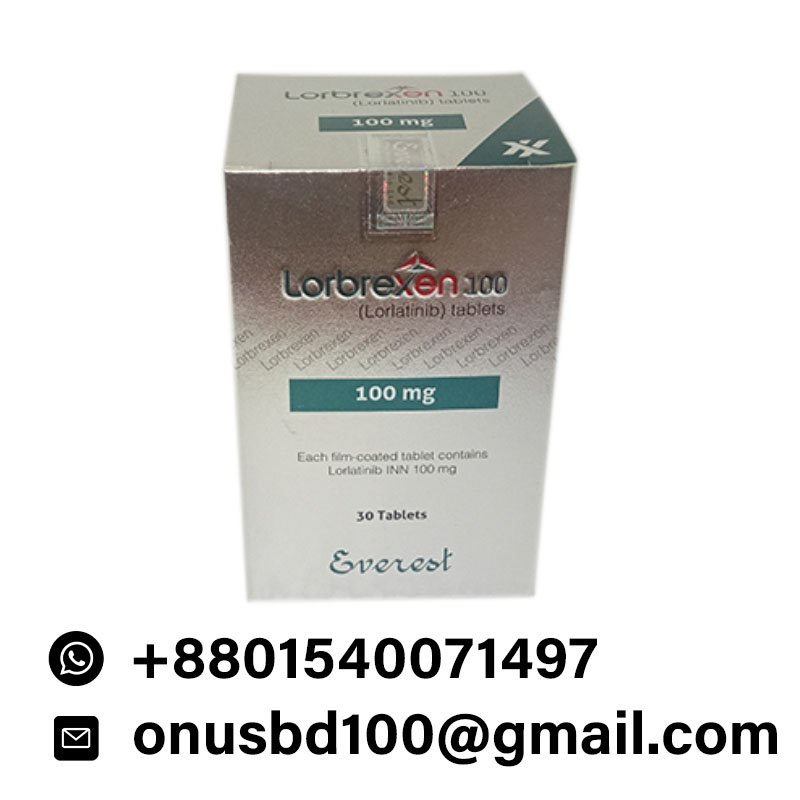
Rx Prescripttion Only-YMYL Medical Content
Indicated for adults with ALK-positive advanced NSCLC after progression on alectinib or ceritinib as the first ALK inhibitor therapy; or after progression on crizotinib and at least one other ALK inhibitor. Also increasingly used first-line based on CROWN trial data, and has activity in ROS1-positive NSCLC and after progression on other RET inhibitors.
1
2
3
4
MD
Medical Oncologist Review
Board-certified oncologist · 12+ years in thoracic malignancies
Content reviewed against FDA prescribing information, NCCN Guidelines v2.2024, and published Phase III trial data. Last updated June 2026.
These steps help you have an informed conversation. A confirmed EGFR mutation result is the starting point for any treatment decision.
Medical disclaimer: This page is for informational purposes only and does not constitute medical advice, diagnosis, or treatment. It is a prescription medication that must only be used under the supervision of a qualified oncologist. Clinical outcomes data is drawn from published Phase III trials; individual results vary. Always consult your healthcare provider and refer to the full prescribing information before making any treatment decisions. Emergency: call your local emergency services or poison control immediately if you experience serious adverse effects.
Here are key questions to bring to your oncologist — given that lorlatinib has the most unusual pre-treatment preparation requirements of any drug in this entire conversation series — near-universal hyperlipidaemia requiring proactive statin planning, CNS effects requiring carer involvement and baseline cognitive assessment, and a complete failure of hormonal contraceptives rather than simply reduced efficacy — these three areas demand specific, explicit discussion before your first dose.
Before confirming lorlatinib as your treatment
About lipid management — plan this before starting, not reactively
About CNS effects — the most important safety conversation for this drug
About contraception — hormonal methods are rendered ineffective, not just less effective
About peripheral neuropathy
About blood glucose monitoring
About blood pressure
About the CYP3A drug interaction — both directions matter
About dosing and administration
About monitoring response
About the longer road
A practical tip: The CNS effects are the aspect of this medication that most often catches patients and families unprepared — not because they’re always severe, but because subtle cognitive or mood changes can develop gradually and the patient themselves is often the last person to notice them. Before your first dose, have an explicit conversation with a trusted family member or carer about what to watch for, and establish a clear, direct channel for them to contact your oncologist if they observe concerning changes — separate from and in addition to your own reporting.
This comparison represents the defining clinical debate in first-line ALK-positive NSCLC right now — the field genuinely disagrees, prominent oncologists have published competing perspectives in the same journal, and the answer depends meaningfully on how individual patients and clinicians weigh extraordinary efficacy against a distinctly more complex toxicity profile.
Both are approved first-line options — different generations, different philosophies
| Alectinib (Alecensa) | Lorlatinib (Lorbrena) | |
|---|---|---|
| Generation | Second — selective ALK/RET | Third — designed to cover ALK resistance mutations |
| FDA first-line approval | 2017 | 2021 (based on CROWN) |
| Pivotal first-line trial | ALEX | CROWN |
| Dosing | 600mg twice daily | 100mg once daily |
| Compared against | Crizotinib (ALEX) | Crizotinib (CROWN) |
Neither drug has been tested head-to-head against the other in a dedicated randomized trial — the comparison is based on cross-trial analysis of ALEX and CROWN, both of which used crizotinib as comparator, adjusted for their different patient populations.
Efficacy — lorlatinib has a statistically striking PFS advantage in the data
In ALEX, alectinib produced a median PFS of 34.8 months versus 10.9 months with crizotinib. In other first-line ALK TKI trials, median PFS ranged from approximately 26 to 35 months, with 4-year PFS rates of 36%-44% across alectinib, brigatinib, and ensartinib.
Lorlatinib demonstrated best-in-class efficacy with unprecedented progression-free survival. The CROWN 5-year and 7-year updates showed lorlatinib’s 4-year PFS rate substantially exceeding the 36-44% range seen with second-generation inhibitors — with no new intracranial progression events occurring after the first 30 months on lorlatinib, resulting in a sustained plateau in intracranial TTP and indicating a prolonged protective effect against the development of new brain metastases.
The PFS and CNS durability data clearly favor lorlatinib by a meaningful margin in cross-trial comparison. Whether this translates to confirmed overall survival advantage over alectinib is not yet established — OS data from CROWN versus an alectinib-treated comparator doesn’t exist in a randomized setting.
The CNS comparison — lorlatinib’s most important clinical advantage
Both drugs penetrate the blood-brain barrier meaningfully — this was the defining advance of second-generation ALK inhibitors over crizotinib. But lorlatinib’s CNS activity is qualitatively different in degree and durability. The plateau in intracranial progression events after 30 months in CROWN is not seen with alectinib’s ALEX data. For patients with baseline brain metastases, or those at high risk of CNS progression, this difference carries real clinical weight.
Side effects — the central argument against lorlatinib first-line
This is where the comparison becomes genuinely complex, and where prominent oncologists actively disagree about the correct weighting.
Lorlatinib has a distinct toxicity profile that includes hyperlipidemia, edema, weight gain, reversible peripheral neuropathy, and, importantly, CNS toxicities that range from mild speech effects to more significant cognitive or mood effects.
In the CROWN study, 21% of patients experienced cognitive adverse effects, with 16% experiencing mood-related adverse effects on lorlatinib. Hallucinations in 7% and seizures in 3% add further CNS burden not seen with alectinib.
Alectinib’s profile — myalgia, constipation, edema, elevated bilirubin, photosensitivity, bradycardia — is clinically significant but doesn’t include the CNS effects, near-universal hyperlipidaemia requiring statin therapy, or the contraceptive failure that lorlatinib introduces.
The practical question is: for a patient who may live many years with ALK-positive NSCLC, is the additional PFS benefit of lorlatinib worth managing near-universal hyperlipidaemia, potential cognitive effects, and the possibility of hallucinations or seizures — versus a cleaner daily experience on alectinib, knowing that lorlatinib remains available at progression?
The sequencing argument — alectinib followed by lorlatinib
This is the most important strategic counter-argument to lorlatinib first-line. If a patient receives alectinib first-line and eventually progresses, lorlatinib is available second-line and retains meaningful activity against many of the ALK resistance mutations that develop under alectinib. The patient gets years of alectinib’s more favorable tolerability profile, then transitions to lorlatinib when needed.
Lorlatinib has contributed to success in later-line settings, controlling some ALK resistance mutations and some cases of CNS progression.
The counter-argument is that some patients who progress on alectinib may no longer be fit enough to receive lorlatinib, or may develop CNS progression during alectinib treatment that lorlatinib given earlier would have prevented. The plateau in CNS events specifically after 30 months with lorlatinib first-line suggests a window of protection that sequential therapy may not fully replicate.
The honest summary of where expert opinion sits
In the absence of head-to-head trials, clinicians face a dilemma in determining which of the available ALK TKIs is preferred for use in newly diagnosed patients.
The “lorlatinib first” camp argues: best-in-class PFS data, unmatched CNS protection including a sustained plateau, covers most resistance mutations preemptively, once-daily dosing convenience, and NCCN Category 1 first-line designation.
The “alectinib first” camp argues: no head-to-head OS advantage demonstrated, CNS toxicities including cognitive effects are qualitatively different from physical side effects and affect quality of life in ways that matter for a population that may live many years, lorlatinib remains available and effective after alectinib progression, and exposing all patients to lorlatinib’s CNS burden upfront means some patients bear that toxicity unnecessarily.
Neither position is unreasonable. The correct answer genuinely depends on the individual patient — their CNS metastasis status, baseline cognitive concerns, age, comorbidities, occupational demands, and personal values around tolerability versus maximum disease control.
Bottom line
Lorlatinib has the strongest PFS and CNS durability data of any first-line ALK inhibitor, and NCCN guidelines have given it Category 1 first-line designation reflecting this. Alectinib remains a highly effective, guideline-supported first-line option with a more familiar and manageable tolerability profile, and preserves lorlatinib as an active subsequent therapy. This is one of the few comparisons in this conversation where the honest answer is that there is genuine, unresolved expert disagreement — the right choice depends on your specific CNS status, your baseline cognitive health, how you personally weight additional PFS protection against potential cognitive side effects, and your oncologist’s clinical experience managing both drugs. This conversation deserves explicit, unhurried time with your oncologist rather than a default prescription of whichever drug is most recently approved.
Lorlatinib’s resistance-overcoming mechanism is one of the most elegant examples of deliberate, iterative drug design in targeted oncology — each generation of ALK inhibitor was built not just to be more potent than its predecessor, but specifically to address the molecular escape mechanisms that the previous generation’s clinical use revealed.
The fundamental challenge — why cancer cells inevitably develop resistance
Every targeted therapy we’ve covered in this conversation faces the same underlying biological problem: when a drug eliminates the vast majority of cancer cells dependent on a specific molecular driver, the rare cells that carry pre-existing or newly acquired mutations allowing survival under drug pressure are selected for and expand. In ALK-positive NSCLC, this process plays out in a well-characterized, increasingly predictable way — each generation of ALK inhibitor creates selective pressure that reveals specific resistance mutations, which then become the target the next generation must address.
What resistance to first-generation ALK inhibitors (crizotinib) looked like
As we covered on the alectinib page, crizotinib’s resistance mechanisms included ALK kinase domain mutations (particularly L1196M and G1269A gatekeeper mutations), poor CNS penetration allowing brain metastases to develop as a sanctuary site, and alternative pathway activation through bypass mechanisms like MET amplification. Second-generation inhibitors like alectinib and brigatinib were specifically designed to address these — they cover the common crizotinib-resistance ALK mutations, penetrate the CNS meaningfully, and achieve deeper ALK inhibition through greater selectivity.
What resistance to second-generation ALK inhibitors looks like — the landscape lorlatinib was designed to address
When patients progress on alectinib or brigatinib, the molecular resistance landscape is more complex and more diverse than what emerged after crizotinib. Several patterns have been characterised:
Compound ALK mutations — the most clinically important resistance mechanism specific to second-generation inhibitor failure. Under selective pressure from alectinib or brigatinib, cancer cells can develop two simultaneous mutations in the ALK kinase domain — for example, G1202R combined with a second mutation. These compound mutations are particularly resistant to second-generation drugs because even if one mutation doesn’t fully abolish binding, the combination does. Lorlatinib demonstrated in vitro activity against multiple mutant forms of the ALK enzyme, including some mutations detected in tumors at the time of disease progression on crizotinib and other ALK inhibitors, including the G1202R and I1171T mutations.
G1202R as a specific, common alectinib-resistance mutation — this solvent-front mutation emerges frequently after alectinib failure specifically. It sits at a position on the ALK kinase domain where alectinib’s binding is disrupted, but lorlatinib’s larger, more conformationally flexible molecular structure maintains adequate binding affinity despite the structural change the mutation introduces.
ALK amplification — cancer cells can overcome ALK inhibition by simply producing vastly more ALK protein, outcompeting the drug’s capacity to suppress all available copies. Lorlatinib’s higher potency and deeper target engagement give it the capacity to suppress ALK activity even at elevated expression levels that defeat less potent inhibitors.
CNS as a resistance sanctuary — even if systemic ALK inhibition is maintained, cancer cells in the CNS can persist and progress if drug concentrations there are insufficient. This CNS sanctuary problem is less about molecular resistance and more about pharmacokinetic inadequacy.
How lorlatinib was specifically engineered to overcome these mechanisms
Lorlatinib is a kinase inhibitor with in vitro activity against ALK and ROS1 as well as TYK1, FER, FPS, TRKA, TRKB, TRKC, FAK, FAK2, and ACK. But the design principle most relevant to resistance coverage goes beyond target breadth — it’s about molecular geometry and size.
Lorlatinib is a macrocyclic molecule — its chemical structure forms a ring that gives it a three-dimensional shape different from the linear molecules of first and second-generation ALK inhibitors. This macrocyclic structure was deliberately chosen because it allows the drug to maintain binding contacts with the ALK kinase domain across a wider range of mutational configurations. When a resistance mutation changes the shape of the ATP-binding pocket, lorlatinib’s macrocyclic flexibility allows it to accommodate these structural changes and maintain binding where a more rigidly linear molecule would lose contact with the mutated surface.
This is the molecular explanation for why lorlatinib covers ALK resistance mutations including G1202R, I1171T, and many compound mutations that specifically defeat alectinib and brigatinib — it was designed with a molecular architecture that can accommodate the structural diversity that ALK mutations produce.
The CNS penetration advantage — eliminating the sanctuary site
With longer follow-up, lorlatinib continued to show remarkable and durable intracranial activity in patients with advanced ALK-positive NSCLC. No new intracranial progression events occurred after the first 30 months on lorlatinib, resulting in a sustained plateau in intracranial TTP and indicating a prolonged protective effect against the development of new brain metastases.
The CNS sanctuary problem is addressed by lorlatinib’s pharmacokinetic properties — its molecular size, lipophilicity, and efflux transporter profile allow it to achieve and sustain therapeutic concentrations in the central nervous system at levels that appear sufficient to eliminate even micrometastatic seeding before it becomes clinically apparent disease. This sustained plateau, unique among all ALK inhibitors in long-term data, suggests lorlatinib is doing something qualitatively different in the CNS — not just controlling existing metastases but preventing new ones from establishing.
Why lorlatinib’s own resistance profile matters for sequencing decisions
This is worth understanding explicitly because it shapes the strategic logic of which drug to use first. The resistance mechanisms that emerge against lorlatinib itself are different from — and generally less tractable than — those that emerge against second-generation inhibitors. When cancer cells develop resistance to lorlatinib, they frequently do so through mechanisms that simultaneously restore sensitivity to earlier-generation ALK inhibitors — a phenomenon called “resensitisation” that has been observed clinically. But they also sometimes develop resistance mechanisms for which no approved ALK inhibitor currently exists.
This asymmetry has implications: starting with alectinib preserves lorlatinib as a meaningful subsequent option with known activity against post-alectinib resistance mutations. Starting with lorlatinib creates a post-progression landscape that is considerably less well-mapped, since what comes after lorlatinib in the ALK-positive setting remains an active area of research without the clear algorithmic answer that the alectinib → lorlatinib sequence provided.
The bigger picture
Lorlatinib overcomes second-generation ALK inhibitor resistance through three converging mechanisms — a macrocyclic molecular architecture that maintains kinase binding across a wider range of ALK resistance mutations than the linear structures of alectinib and brigatinib, sufficient CNS penetration to eliminate the brain sanctuary site that selective pressure allows cancer cells to exploit, and higher potency against ALK that overwhelms amplification-driven resistance. Each of these was a deliberate design response to specific, clinically observed failure modes of the generation before it — making lorlatinib the clearest example in this conversation of iterative, resistance-aware drug development: each generation learning from precisely how the previous generation’s patients eventually progressed, and building the next drug specifically around those lessons.
Conatact US