Address
Sector 14, Road no. 18, Uttara, 1230
Dhaka, Bangladesh

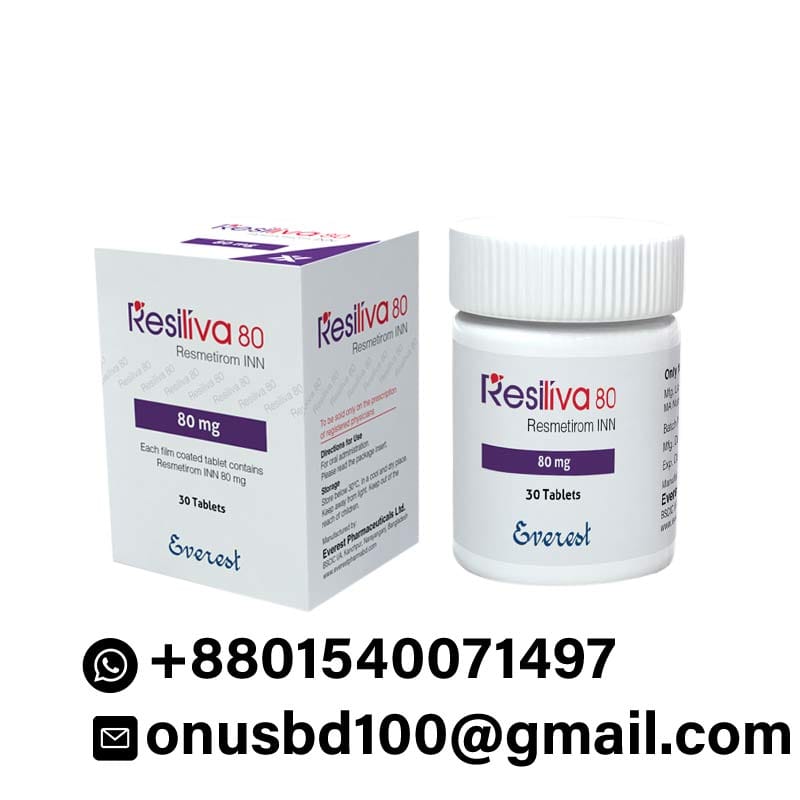
Rx Prescripttion Only-YMYL Medical Content
Indicated, in conjunction with diet and exercise, for adults with noncirrhotic NASH/MASH (metabolic dysfunction-associated steatohepatitis) with moderate to advanced liver fibrosis (stages F2 to F3) — the first and only FDA-approved medication specifically for this condition.
1
2
3
4
MD
Medical Oncologist Review
Board-certified oncologist · 12+ years in thoracic malignancies
Content reviewed against FDA prescribing information, NCCN Guidelines v2.2024, and published Phase III trial data. Last updated June 2026.
These steps help you have an informed conversation. A confirmed EGFR mutation result is the starting point for any treatment decision.
Medical disclaimer: This page is for informational purposes only and does not constitute medical advice, diagnosis, or treatment. It is a prescription medication that must only be used under the supervision of a qualified oncologist. Clinical outcomes data is drawn from published Phase III trials; individual results vary. Always consult your healthcare provider and refer to the full prescribing information before making any treatment decisions. Emergency: call your local emergency services or poison control immediately if you experience serious adverse effects.
Here are key questions to bring to your doctor — given that this is an accelerated/conditional approval with a real hepatotoxicity signal, and that it’s only proven to work alongside diet and exercise rather than as a standalone fix, those are the two threads worth pulling on most before starting.
Before confirming this treatment
About the accelerated/conditional approval — understanding what that means
About the hepatotoxicity risk — the most important safety conversation
About the gallbladder risk
About diet and exercise — not optional alongside this medication
About my weight and dosing
About drug interactions
About managing side effects
About monitoring response
About the bigger picture for my liver health
A practical tip: Because this medication’s value is built on combining it with real lifestyle change, not replacing the need for it, it’s worth asking your doctor directly how they’ll know whether any improvement you see is coming from the medication, the lifestyle changes, or both together — and what that distinction would mean for your long-term plan if you were ever considering stopping either part of the approach.
This is timely — semaglutide actually became the second FDA-approved MASH treatment since I last researched this drug, which changes the comparison meaningfully. These two drugs work through genuinely different mechanisms and bring different strengths to the table.
Two different approval timelines, same fibrosis population
| Resmetirom (Rezdiffra) | Semaglutide (Wegovy) | |
|---|---|---|
| FDA approval | March 2024 — first approved treatment for MASH | August 2025 — second approved treatment for MASH |
| Mechanism | THR-β agonist — liver-directed | GLP-1 receptor agonist |
| Administration | Daily oral tablet | Once-weekly subcutaneous injection |
| Approved population | Noncirrhotic MASH, F2-F3 fibrosis | MASH with fibrosis |
Fundamentally different mechanisms — direct liver action vs. systemic metabolic effect
Resmetirom primarily targets hepatic lipid disposal, whereas semaglutide unloads systemic caloric pressure — this is the conceptual heart of the comparison. Resmetirom works directly inside liver cells, activating THR-β to increase fat breakdown specifically in the liver. Semaglutide works through an entirely different, body-wide pathway: it’s a GLP-1 receptor agonist that reduces appetite and caloric intake, producing substantial weight loss that, in turn, indirectly benefits the liver.
Post-hoc analyses revealed that patients who lost more than 10% body weight experienced greater fibrosis regression, supporting the idea that weight loss, rather than a direct antifibrotic mechanism, plays the central role in histologic repair with GLP-1 therapy. This is a meaningfully different therapeutic logic than resmetirom’s direct, liver-targeted approach.
Efficacy — both show real histologic benefit, broadly in a similar range
In the ESSENCE phase 3 trial, the combined endpoint of both steatohepatitis resolution and at least one stage of fibrosis improvement was achieved by 32.8% of semaglutide-treated patients versus 16.2% with placebo. This came alongside substantial weight reduction — a mean change of -10.5% with semaglutide versus -2.0% with placebo.
This is comparable in magnitude to resmetirom’s MAESTRO-NASH results we covered on the product page (24-30% achieving the primary endpoints versus 10-14% placebo) — both drugs clear a similar bar of meaningful, statistically significant histologic benefit over placebo, though they aren’t from a head-to-head trial against each other.
A key practical finding — they may work even better together
A prespecified analysis of MAESTRO-NASH specifically examined resmetirom’s effects in patients who were already on stable background GLP-1 receptor agonist or SGLT2 inhibitor therapy and found resmetirom maintained consistent benefit regardless of this background treatment. Notably, achieving at least 5% weight loss enhanced resmetirom’s efficacy for both MASH resolution and fibrosis improvement, suggesting a complementary rather than competing mechanism between the two drug classes.
This is echoed directly by clinical experts: some patients will have an initial response to GLP-1 therapy but may still experience progressive disease over time, at which point resmetirom could be added on top of GLP-1 therapy — meaning these increasingly look like sequential or combination options rather than strictly either-or competitors.
Tolerability — this is where the practical difference is most pronounced
Tolerability issues and insurance coverage challenges lead to 20-30% of patients discontinuing GLP-1 therapy — a substantial real-world dropout rate driven by the well-known GLP-1 side effects (nausea, vomiting, and gastrointestinal symptoms during dose escalation). Many patients who don’t tolerate the GLP-1 medication can be switched to resmetirom instead, according to clinical opinion — positioning resmetirom partly as a fallback for GLP-1-intolerant patients, similar in spirit to how we’ve discussed drug-switching strategies for side-effect intolerance elsewhere in this conversation.
Cardiovascular benefit — a genuine advantage unique to semaglutide
Semaglutide’s impact on cardiovascular outcomes has been confirmed in large trials for diabetes and obesity, where major adverse cardiovascular events were reduced by 21-26%. Since cardiovascular disease is the leading cause of death in MASH patients, this additional benefit could be clinically crucial even if semaglutide’s direct effect on liver fibrosis is somewhat slower or more modest than other medications. This is a meaningful point: resmetirom’s benefit is essentially liver-confined, while semaglutide offers a broader cardiometabolic benefit that directly addresses what’s often the bigger overall mortality risk in this patient population.
Cost-effectiveness — recent modeling favors semaglutide
A cost-effectiveness analysis comparing semaglutide and resmetirom against standard of care in noncirrhotic MASH with F2-F3 fibrosis found semaglutide demonstrated superior cost-effectiveness compared with both standard of care and resmetirom, with semaglutide’s cardiovascular mortality benefit further strengthening its economic value. This is a notable finding, since GLP-1 medications are often perceived as expensive — but when cardiovascular benefit is factored into the broader health-economic picture, the analysis favored semaglutide.
Where the field appears to be heading
Future goals in this field include improving efficacy and tolerability, and potentially combining treatments like resmetirom and GLP-1 therapy for enhanced outcomes, with long-term cardiovascular benefits expected to make GLP-1s a valuable addition to MASH treatment strategies — strongly suggesting that the future of MASH treatment isn’t necessarily “pick one,” but increasingly “use both, sequentially or together,” matched to what the individual patient needs and tolerates.
Bottom line
Resmetirom and semaglutide aren’t strictly competing options — they work through different mechanisms (direct hepatic lipid metabolism versus systemic weight loss and metabolic improvement) and appear to provide complementary, not redundant, benefit when used together. Resmetirom offers a once-daily oral option with a liver-specific mechanism and a reasonable fallback when GLP-1 intolerance is the issue; semaglutide offers substantial weight loss, possible superior cost-effectiveness when cardiovascular benefit is included, and protection against the cardiovascular disease that’s often the leading cause of death in this patient population, but comes with a meaningfully higher real-world discontinuation rate due to tolerability. For a patient with MASH and significant fibrosis, particularly one who also has obesity, type 2 diabetes, or elevated cardiovascular risk, this is exactly the kind of decision where a hepatologist working alongside an endocrinologist or your primary care physician can help weigh whether one, the other, or a combination approach fits your overall metabolic picture best.
Resmetirom’s mechanism is a genuinely clever piece of pharmacology — it borrows a normal, everyday function that thyroid hormone performs throughout the body, but engineers the drug to act almost exclusively where it’s needed (the liver) while sparing the tissues where thyroid hormone activity could cause harm.
The basic biology — what thyroid hormone normally does in the liver
Thyroid hormone is one of the body’s master metabolic regulators, influencing how fast cells burn energy throughout the body. In the liver specifically, thyroid hormone signaling — acting through a receptor called THR-β (thyroid hormone receptor-beta) — plays an important role in regulating how the liver handles fat: it promotes the breakdown of stored fat (lipid catabolism) and supports the liver’s ability to clear excess fat rather than accumulate it.
In patients with MASH, this protein, thyroid hormone receptor beta, located in liver cells called hepatocytes, is less activated than it should be — meaning one underlying feature of fatty liver disease is a kind of localized under-functioning of this fat-clearing signaling pathway within the liver itself, even though a person’s overall thyroid function (as measured by routine blood thyroid tests) may be completely normal.
How resmetirom restores this signaling — selectively
Resmetirom works by binding to and activating THR-β. In doing so, it essentially turns back on, or amplifies, the liver’s natural fat-clearing machinery that had become underactive in the disease state. By activating THR-beta, resmetirom increases fat breakdown; this reduces the amount of fat stored in the liver, which can help reduce inflammation and fibrosis, and improve liver function.
This gives a clear, logical chain of cause and effect: activate THR-β → increase fat breakdown in liver cells → reduce the fat actually stored in the liver → reduce the inflammation that excess fat triggers → over time, allow some reversal of the fibrosis (scarring) that chronic inflammation had been causing.
Why selectivity for THR-β specifically (not THR-α) matters enormously
This is the part of the mechanism that makes resmetirom clinically usable rather than dangerously broad-acting. The body actually has two main thyroid hormone receptor subtypes with different jobs in different tissues:
THR-β is the dominant form in the liver, and it’s the form most directly responsible for regulating liver fat metabolism.
THR-α is the dominant form in the heart and other tissues, where excess thyroid hormone activity can cause serious problems — a faster heart rate, arrhythmias, bone density loss, and other classic symptoms of hyperthyroidism.
Natural thyroid hormone activates both receptor types throughout the body, which is exactly why simply giving someone more thyroid hormone to treat fatty liver disease would be far too risky — it would also overstimulate the heart and other THR-α-dominant tissues, producing dangerous hyperthyroid-like side effects.
Resmetirom was specifically engineered to be selective for THR-β over THR-α, allowing it to deliver concentrated, liver-focused “thyroid hormone-like” benefit on fat metabolism while largely avoiding the cardiac and systemic effects that would come from broadly activating THR-α throughout the body. This selective targeting is the central pharmacological achievement that makes this drug class viable as a fatty liver treatment at all.
Why this is sometimes described as “liver-directed”
This connects directly to language used elsewhere about this drug: resmetirom primarily targets hepatic lipid disposal — and part of why it can be described this way is precisely this THR-β selectivity, which concentrates its metabolic effect on the organ where the receptor subtype is dominant, rather than producing the kind of body-wide metabolic shift that would occur with non-selective thyroid hormone activation.
Why this differs fundamentally from semaglutide’s approach
This circles back directly to the comparison we just discussed: resmetirom’s THR-β agonism represents a primarily hepatic, fat-metabolism-focused mechanism, in contrast to semaglutide’s GLP-1 receptor agonism, which works through appetite suppression and systemic weight loss rather than a direct, liver-specific action. Resmetirom essentially tells liver cells directly to burn off stored fat more efficiently; semaglutide reduces the amount of excess caloric intake reaching the body in the first place, with liver fat reduction following somewhat indirectly as a downstream consequence of that broader weight loss.
Why this mechanism connects to the hepatotoxicity monitoring requirement
This is worth tying back to the safety profile we discussed: even with THR-β selectivity, resmetirom is still meaningfully altering active metabolic processes within liver cells — increasing the rate of fat breakdown and processing. This kind of increased metabolic activity within the liver is part of why ongoing liver enzyme monitoring is built into how this medication is used clinically; the same mechanism that drives its therapeutic benefit also means the liver is undergoing more active processing than usual, which is worth tracking carefully even in a drug designed to be selective and liver-protective in its overall effect.
The bigger picture
Resmetirom essentially recreates one beneficial, normally underactive piece of thyroid hormone’s natural role in liver fat regulation, while engineering around the dangerous, broader effects that come with non-selective thyroid hormone receptor activation elsewhere in the body. This selective, liver-confined activation of THR-β is what allowed it to become the first medication specifically designed and approved for a disease that, until 2024, had no targeted pharmacological treatment at all — relying instead entirely on diet, exercise, and managing the broader metabolic conditions (diabetes, obesity, high cholesterol) that drive fatty liver disease in the first place.



Price Inquery