Address
Sector 14, Road no. 18, Uttara, 1230
Dhaka, Bangladesh

Rx Prescripttion Only-YMYL Medical Content
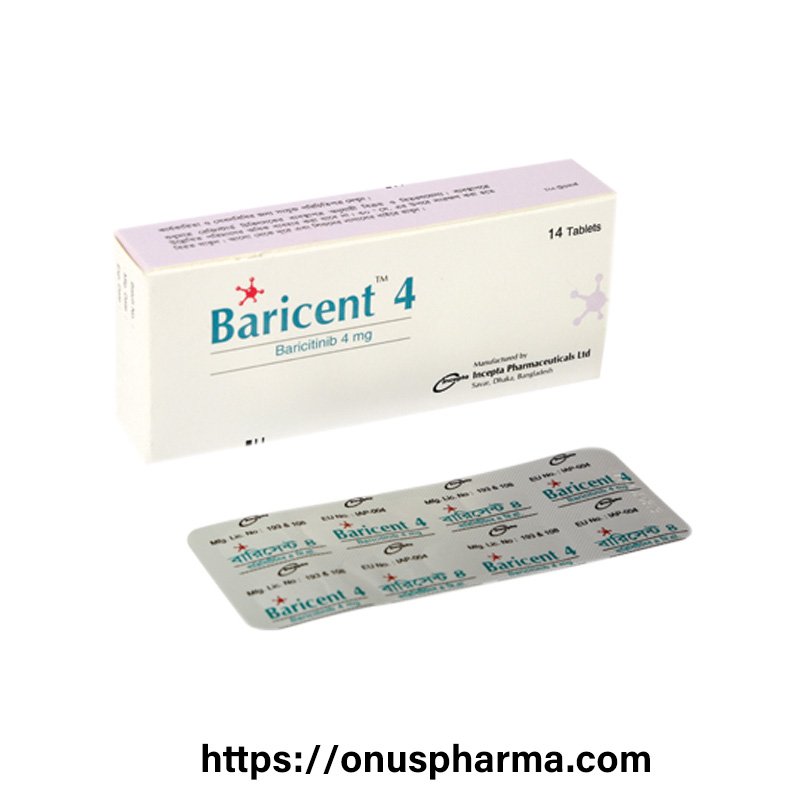
Approved for adults with moderate-to-severe rheumatoid arthritis (RA) with inadequate response to one or more TNF inhibitors, and for severe alopecia areata and moderate-to-severe atopic dermatitis in eligible adults.
$20.00 – $60.00Price range: $20.00 through $60.00
1
2
3
4
MD
Medical Oncologist Review
Board-certified oncologist · 12+ years in thoracic malignancies
Content reviewed against FDA prescribing information, NCCN Guidelines v2.2024, and published Phase III trial data. Last updated June 2026.
These steps help you have an informed conversation. A confirmed EGFR mutation result is the starting point for any treatment decision.
Medical disclaimer: This page is for informational purposes only and does not constitute medical advice, diagnosis, or treatment. It is a prescription medication that must only be used under the supervision of a qualified oncologist. Clinical outcomes data is drawn from published Phase III trials; individual results vary. Always consult your healthcare provider and refer to the full prescribing information before making any treatment decisions. Emergency: call your local emergency services or poison control immediately if you experience serious adverse effects.
Before confirming baricitinib as your treatment
About the boxed warnings — this is the most important section
About vaccinations and infection prevention
About what to expect
About my specific situation
About the longer road
A practical tip: Given the cardiovascular and clotting boxed warnings, it’s worth specifically asking whether your rheumatologist will coordinate with your primary care doctor (or a cardiologist, if relevant) for ongoing risk monitoring — not just at the start of treatment.
Here’s how the three JAK inhibitors compare. Unlike the ponatinib comparison (where one drug occupied a distinct niche), these three are genuine alternatives competing for similar patients — selectivity and indication breadth are the main differentiators.
Generation and selectivity
| Tofacitinib (Xeljanz) | Baricitinib (Olumiant) | Upadacitinib (Rinvoq) | |
|---|---|---|---|
| Approved | 2012 | 2018 | 2019 |
| JAK selectivity | Pan-JAK (JAK1/JAK3, some JAK2) | JAK1/JAK2 selective | JAK1 selective |
| Dosing | 5mg twice daily (or 11mg XR once daily) | 2mg or 4mg once daily | 15mg once daily (higher doses for other indications) |
| First to market | Yes — first oral JAK inhibitor approved for RA | Second | Most recent of the three |
The selectivity differences matter in theory — JAK1 is more associated with inflammatory signaling, while JAK2 involvement is linked to effects on blood cell production. In practice, the clinical safety differences between these drugs have turned out to be smaller than their selectivity profiles might suggest.
The shared boxed warnings — why all three look similar here
This is the most important point: all three carry essentially the same boxed warnings (serious infections, mortality, malignancy, MACE, thrombosis), even though tofacitinib was the one actually studied in the trial that triggered them.
The ORAL Surveillance trial compared tofacitinib against TNF inhibitors in RA patients aged 50+ with at least one cardiovascular risk factor, and found increased rates of cardiovascular events, blood clots, and cancer with tofacitinib. Regulatory agencies then extended these boxed warnings to the entire JAK inhibitor class — including baricitinib and upadacitinib — as a precaution, even though dedicated trials of that scale weren’t repeated for each drug individually.
This means: if you’re in the higher-risk group (50+, with a cardiovascular risk factor), all three carry the same labeled warnings, and the choice between them often comes down to other factors.
Efficacy and indication breadth
| Tofacitinib | Baricitinib | Upadacitinib | |
|---|---|---|---|
| Rheumatoid arthritis | Yes | Yes | Yes — and showed numerically higher ACR response rates vs adalimumab in head-to-head trial (SELECT-COMPARE) |
| Ulcerative colitis | Yes | No | Yes |
| Crohn’s disease | No | No | Yes |
| Psoriatic arthritis | Yes | No | Yes |
| Ankylosing spondylitis | No | No | Yes |
| Atopic dermatitis | No | Yes | Yes |
| Alopecia areata | No | Yes | No |
Upadacitinib has the broadest approved indication list of the three, which is one reason it’s often considered when a patient has overlapping conditions (e.g., RA plus inflammatory bowel disease).
Side effect nuances beyond the shared boxed warnings
Cost and access
Tofacitinib has been on the market longest and may have more established formulary positioning in some health systems, though none of these three have generic versions widely available yet in most markets.
Bottom line
For RA specifically, all three are reasonable options and head-to-head differences are often smaller than the shared class warnings suggest — the choice frequently comes down to dosing convenience (once-daily vs twice-daily), indication overlap if you have another autoimmune condition (upadacitinib’s breadth), and your prescriber’s experience with a particular agent. The cardiovascular/clotting risk screening conversation should happen regardless of which one is being considered, since the boxed warnings apply across the class.
Your rheumatologist will weigh this against your specific risk profile, prior treatment history, and any other autoimmune conditions you’re managing.
Pre-treatment screening for JAK inhibitors like baricitinib is fairly standardized across the drug class, given the shared boxed warnings. Here’s what’s typically involved:
Infection screening — the most critical category
Tuberculosis (TB) screening is required before starting. This usually means a TB skin test (PPD) or interferon-gamma release assay (IGRA, such as QuantiFERON-TB), often combined with a chest X-ray to check for signs of prior or latent TB. If latent TB is found, treatment for it typically needs to begin before or alongside starting baricitinib.
Hepatitis B and C screening is done via blood tests — hepatitis B surface antigen, core antibody, and surface antibody, plus hepatitis C antibody. JAK inhibitors can reactivate dormant hepatitis B, so a positive result doesn’t necessarily rule out treatment, but it changes the monitoring plan significantly and may require antiviral prophylaxis.
A general assessment for any active infection — even something that seems minor, like a urinary tract infection or skin infection — is also part of this step, since starting an immunosuppressive medication during an active infection is avoided.
Baseline blood work
Cardiovascular and clotting risk assessment
This connects directly to the boxed warnings. Your physician will typically review:
There’s no single “test” for this — it’s a risk-factor assessment that may prompt additional baseline tests (ECG, for example) depending on what’s found.
Cancer screening considerations
Given the malignancy boxed warning, your physician may review whether you’re up to date on age-appropriate cancer screenings (such as skin checks, given increased non-melanoma skin cancer risk associated with JAK inhibitors, or other screenings relevant to your age and history).
Vaccination status review
Before starting, it’s common to review and update vaccinations — particularly the shingles (herpes zoster) vaccine, since reactivation of varicella-zoster virus is more common on JAK inhibitors. Live vaccines generally need to be completed before starting treatment, since they may not be safe to give once you’re on an immunosuppressive medication.
Pregnancy testing
For anyone of childbearing potential, a baseline pregnancy test is typically done, along with a discussion of contraception requirements during treatment.
Summary table
| Category | Test/Assessment |
|---|---|
| Infection | TB test + chest X-ray, hepatitis B/C panel, active infection check |
| Blood work | CBC, liver function, lipid panel, kidney function |
| Cardiovascular | Risk factor review (age, smoking, BP, history) |
| Cancer | Age-appropriate screening review |
| Vaccines | Shingles vaccine status, live vaccine timing |
| Pregnancy | Baseline test if applicable |
Most of these continue as ongoing monitoring after starting too — this isn’t a one-time checklist, particularly the blood counts, liver enzymes, and lipid panel, which are usually rechecked periodically throughout treatment.
This is a sensitive area where your physician’s full picture of your health history matters more than any general list — worth bringing up anything in your history that might fall into these categories, even if it seems unrelated.
Conatact US