Address
Sector 14, Road no. 18, Uttara, 1230
Dhaka, Bangladesh

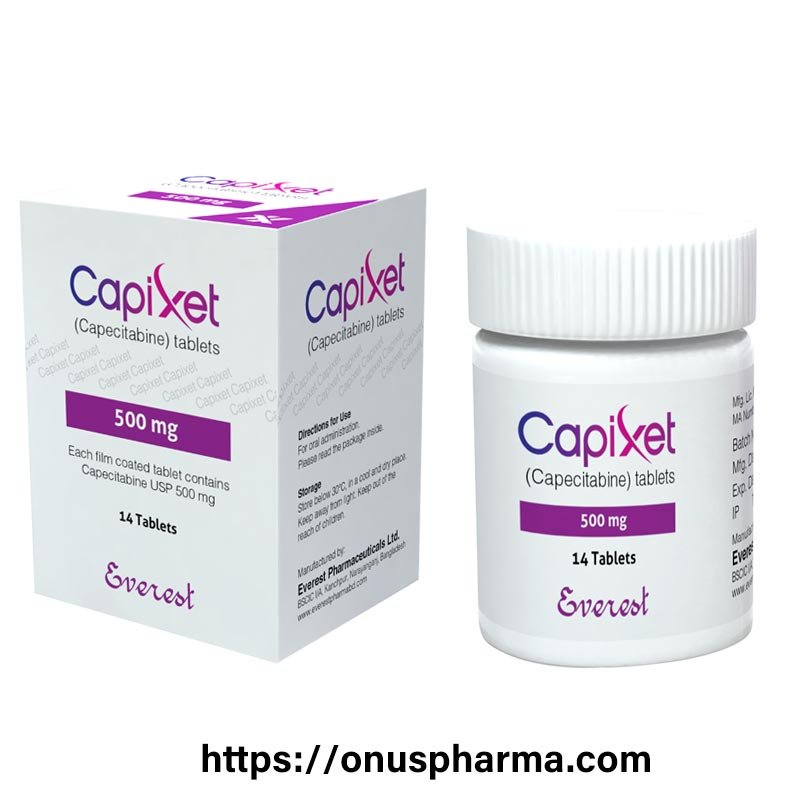
Rx Prescripttion Only-YMYL Medical Content
Approved as an oral chemotherapy for metastatic breast cancer (alone or in combination), and for colorectal cancer — including as adjuvant treatment after surgery for stage III colon cancer, and for metastatic colorectal cancer, often combined with other chemotherapy agents.
1
2
3
4
MD
Medical Oncologist Review
Board-certified oncologist · 12+ years in thoracic malignancies
Content reviewed against FDA prescribing information, NCCN Guidelines v2.2024, and published Phase III trial data. Last updated June 2026.
These steps help you have an informed conversation. A confirmed EGFR mutation result is the starting point for any treatment decision.
Here are key questions to bring to your oncologist about starting capecitabine — the warfarin interaction and DPD deficiency questions are particularly worth raising early, since they’re easy to overlook compared to more “obvious” chemotherapy concerns.
Before confirming capecitabine as your treatment
About the boxed warning — blood thinner interaction and DPD
About the dosing schedule
About hand-foot syndrome — often the most disruptive day-to-day issue
About diarrhea and mouth sores
About cardiac considerations
About monitoring overall
About my specific situation
About the longer road
A practical tip: Because the warfarin interaction is one of the more serious and sometimes under-recognized risks with this drug, it’s worth proactively mentioning every medication you take — including ones prescribed by other doctors for unrelated conditions — rather than assuming your oncologist already has your full medication list. A quick phone call to your pharmacist to cross-check your full regimen against capecitabine can also catch things that might otherwise slip through.
Capecitabine and intravenous 5-FU are, in a sense, the same drug delivered two different ways — capecitabine is an oral prodrug that the body converts into 5-FU through a series of enzymatic steps. So this comparison is less about different mechanisms (like our other comparisons) and more about delivery method, administration burden, and how the conversion process changes the side effect profile.
The core relationship
Capecitabine is absorbed in the gut and converted to 5-FU in three enzymatic steps, with the final step occurring via an enzyme (thymidine phosphorylase) that’s often more concentrated in tumor tissue than in healthy tissue. The theoretical advantage is that capecitabine may deliver relatively more active drug directly to the tumor compared to systemic IV 5-FU, which circulates throughout the body before reaching the tumor.
How each is given — the biggest practical difference
| Capecitabine | IV 5-FU | |
|---|---|---|
| Route | Oral tablets, taken at home | Intravenous, given in a clinic/infusion center |
| Access required | None | Often a central line or port, especially for infusional regimens |
| Typical schedule | 14 days on, 7 days off (21-day cycle) | Varies — bolus (Mayo regimen) or continuous infusion over 46-48 hours (common in FOLFOX) |
| Clinic visits | Minimal — pick up prescription, periodic check-ins | Frequent — each infusion cycle requires a clinic visit |
The infusional 5-FU regimens commonly used in colorectal cancer (like FOLFOX) typically involve a portable pump that patients carry home for 1-2 days after each clinic visit, then return to have it disconnected — an added layer of logistics that capecitabine avoids entirely.
Efficacy — broadly equivalent, established by direct comparison
The X-ACT trial directly compared capecitabine to bolus 5-FU/leucovorin (the Mayo Clinic regimen) as adjuvant treatment after surgery for stage III colon cancer. Capecitabine showed disease-free survival and overall survival at least equivalent to — and in some analyses slightly favoring — the IV regimen, which is why it became an accepted alternative in treatment guidelines.
For metastatic colorectal cancer, capecitabine-based combination regimens (such as CAPOX/XELOX, combining capecitabine with oxaliplatin) have shown similar efficacy to infusional 5-FU-based combinations (such as FOLFOX) in multiple studies and meta-analyses — neither has been shown to be clearly superior to the other in this setting.
Side effect profile — this is where the real differences show up
| Capecitabine | IV 5-FU (bolus) | IV 5-FU (infusional) | |
|---|---|---|---|
| Hand-foot syndrome | More common, often more pronounced | Less common | Present but generally less than capecitabine |
| Diarrhea | Common | Common | Common |
| Neutropenia (low white cells) | Less common | More common | Intermediate |
| Mucositis/stomatitis | Less common | More common | Intermediate |
| Catheter-related risks (infection, clotting) | None — no IV access needed | None (if bolus without port) | Present — relevant to port/line maintenance |
| Cardiac toxicity (coronary spasm) | Present — shared fluoropyrimidine class effect | Present | Present |
| DPD deficiency risk | Present — applies since it converts to 5-FU | Present | Present |
The shift away from bolus 5-FU/leucovorin toward infusional regimens (and capecitabine as an oral alternative) was driven partly by the better tolerability profile of infusional/oral dosing compared to bolus dosing — bolus regimens tend to cause more blood count suppression and mouth sores, while capecitabine’s main trade-off is hand-foot syndrome and diarrhea.
Quality of life — genuinely a “depends on the person” question
Some patients strongly prefer capecitabine because it avoids:
Others find the responsibility of self-administration — remembering the complex on/off schedule, managing hand-foot syndrome at home, and recognizing when side effects need attention — more burdensome than having treatment “happen to them” during a supervised clinic visit. There’s also a psychological dimension: some patients feel more reassured by direct clinical oversight during IV treatment, while others feel more in control with an oral medication taken at home.
Practical factors that often guide the choice
Bottom line
These aren’t really “different drugs” in the way most of our comparisons have been — they’re the same active agent (5-FU) delivered through different routes, with broadly equivalent efficacy established through direct trial comparison (X-ACT). The decision usually comes down to logistics (clinic access, IV access, pump tolerance) and which side-effect trade-off — hand-foot syndrome and diarrhea (capecitabine) versus blood count suppression, mouth sores, and catheter-related considerations (IV 5-FU) — fits better with your situation and preferences. This is a good example of where your own lifestyle and practical constraints are just as relevant to the decision as the clinical data itself.
Hand-foot syndrome (also called palmar-plantar erythrodysesthesia, or PPE) is one of the most common and disruptive side effects of capecitabine — but it’s also one of the more manageable ones when caught early, which makes prevention and early recognition genuinely worthwhile.
Starting before symptoms appear — prevention
The most effective approach is starting good skin care before you notice any problems, ideally from day one of treatment:
Recognizing early signs
The earliest signs are often subtle — tingling, numbness, mild redness, or a feeling of tightness/sensitivity on palms and soles, sometimes described as feeling like a mild sunburn. This is the point where reporting it to your care team matters most, because catching it at this stage is far easier to manage than waiting until it progresses.
How severity is graded and managed
Oncology teams typically grade hand-foot syndrome on a scale:
Day-to-day comfort measures once symptoms develop
The key practical point
Because dose adjustments based on hand-foot syndrome severity are a normal and expected part of managing this medication — not a sign that something has gone wrong — letting your oncology team know about symptoms early (at the tingling/redness stage) gives them the best chance to adjust your plan in a way that keeps you on treatment with less disruption, rather than waiting until it becomes severe enough to force a longer pause.
This is a good one to bring up specifically at your next visit if you haven’t already discussed a proactive skin care routine — many patients aren’t told about this until symptoms appear, when starting early would have helped more.
Medical disclaimer: This page is for informational purposes only and does not constitute medical advice, diagnosis, or treatment. Osimertinib is a prescription medication that must only be used under the supervision of a qualified oncologist. Clinical outcomes data is drawn from published Phase III trials; individual results vary. Always consult your healthcare provider and refer to the full prescribing information before making any treatment decisions. Emergency: call your local emergency services or poison control immediately if you experience serious adverse effects.
Conatact US