Address
Sector 14, Road no. 18, Uttara, 1230
Dhaka, Bangladesh
Rx Prescripttion Only-YMYL Medical Content
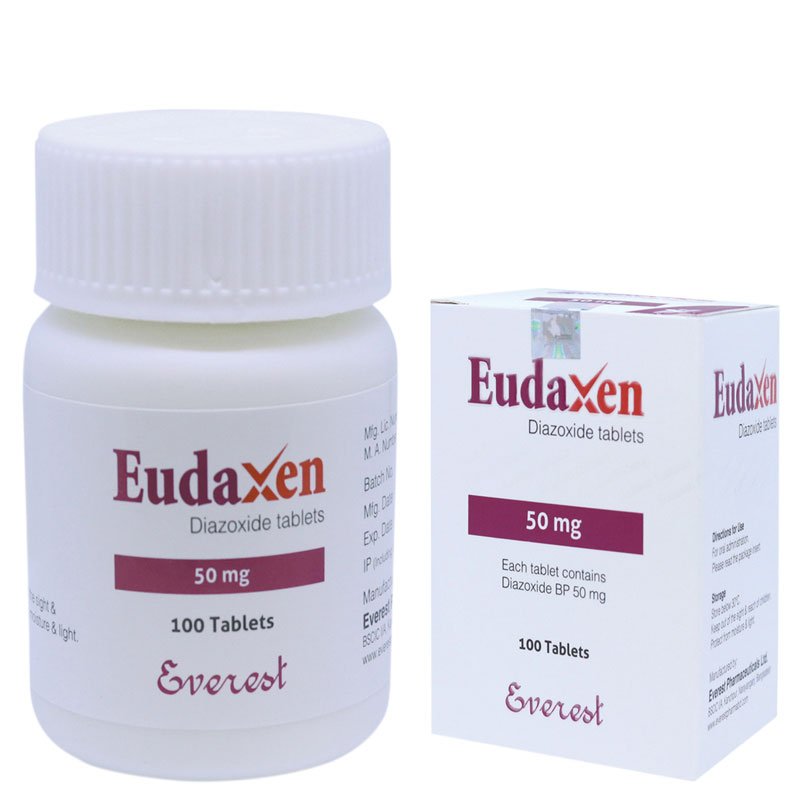
Approved for oral use in adults and children with intractable hypoglycemia caused by hyperinsulinism — including congenital hyperinsulinism (CHI), insulinoma (functional islet cell tumors), leucine-sensitive hypoglycemia, islet cell hyperplasia, and extra-pancreatic tumors causing excess insulin secretion.
1
2
3
4
MD
Medical Oncologist Review
Board-certified oncologist · 12+ years in thoracic malignancies
Content reviewed against FDA prescribing information, NCCN Guidelines v2.2024, and published Phase III trial data. Last updated June 2026.
These steps help you have an informed conversation. A confirmed EGFR mutation result is the starting point for any treatment decision.
Medical disclaimer: This page is for informational purposes only and does not constitute medical advice, diagnosis, or treatment. It is a prescription medication that must only be used under the supervision of a qualified oncologist. Clinical outcomes data is drawn from published Phase III trials; individual results vary. Always consult your healthcare provider and refer to the full prescribing information before making any treatment decisions. Emergency: call your local emergency services or poison control immediately if you experience serious adverse effects.
Here are key questions to bring to your endocrinologist — because diazoxide affects both blood sugar and fluid balance, and because it’s used in patients ranging from newborns to adults, the questions naturally span those two distinct risk areas.
Before confirming diazoxide as your treatment
About fluid retention — the most universal concern
For infants and neonates — the pulmonary hypertension warning
About blood glucose monitoring
About dosing
About blood count and other monitoring
About other medications and interactions
About the cosmetic side effect — hypertrichosis
About the longer road
A practical tip: Because diazoxide affects both blood sugar and blood pressure simultaneously, and because the monitoring requirements span endocrinology, cardiology (especially in infants), and sometimes nephrology, it’s worth asking your endocrinologist upfront which other specialists should be looped in — particularly if your child has any heart or lung history. Having a written emergency action plan for severe hypoglycemia is also worth requesting specifically, so that everyone caring for the patient (school, childcare, other family members) knows exactly what to do.
This comparison is one of the most clinically important decisions in congenital hyperinsulinism (CHI) management — and unlike many of our earlier comparisons, these two drugs are often used sequentially rather than interchangeably, with the choice between them driven largely by whether diazoxide works at all for a given patient’s genetic subtype.
The fundamental difference in how they work
| Diazoxide | Octreotide | |
|---|---|---|
| Drug class | K-ATP channel activator | Somatostatin analog |
| Mechanism | Opens K-ATP channels in pancreatic beta cells → hyperpolarizes the cell → suppresses insulin release | Binds somatostatin receptors on beta cells → broadly suppresses insulin secretion through a different pathway |
| Route | Oral tablet | Subcutaneous injection (or continuous IV/SC infusion in severe cases) |
| Approved for CHI | Yes — only FDA-approved oral drug for hyperinsulinemic hypoglycemia | Off-label for CHI (approved for acromegaly and carcinoid tumors, but widely used in CHI as second-line) |
This mechanism difference is critical: diazoxide works by activating the K-ATP channel — but in the most common severe forms of CHI (recessive ABCC8 or KCNJ11 mutations), the K-ATP channel itself is defective or absent. You cannot activate a channel that doesn’t function properly, which is why diazoxide typically fails in these genetic subtypes and octreotide becomes necessary.
Genetic subtype — the main factor determining which drug works
| Genetic subtype | Diazoxide response | Octreotide response |
|---|---|---|
| Dominant ABCC8/KCNJ11 mutations | Usually responsive | May not be needed |
| Recessive ABCC8/KCNJ11 mutations | Usually unresponsive | Often used as bridge to surgery |
| KATP-independent forms (GDH, GCK, HNF4A mutations) | Variable — often responsive | Variable |
| Focal CHI (any mutation) | Often unresponsive | Used as bridge to surgery |
| Diffuse CHI (recessive KATP mutations) | Usually unresponsive | Used to manage glucose while awaiting surgery |
The practical workflow in most CHI centers is: try diazoxide first (since it’s oral and easier to manage at home), assess response over 5–7 days, and if blood glucose targets aren’t achieved, move to octreotide — often while genetic testing results are still pending.
Administration — a major quality-of-life difference
| Diazoxide | Octreotide | |
|---|---|---|
| How given | Oral tablets or suspension, 2–3 times daily | Subcutaneous injection, typically 3–4 times daily — or continuous subcutaneous/IV infusion in hospital |
| At home | Yes — once stabilized | Injections can be taught to parents, but more burdensome than oral dosing |
| Long-acting version | No oral equivalent | Long-acting release (LAR) monthly injection available (Sandostatin LAR) — sometimes used for longer-term management in older children or adults |
The injection burden of octreotide — multiple times daily in a newborn or infant — is genuinely significant for families, which is one reason diazoxide is always tried first when there’s any reasonable chance of response.
Side effect comparison
| Diazoxide | Octreotide | |
|---|---|---|
| Most distinctive risk | Sodium/water retention, pulmonary hypertension (neonates) | Necrotizing enterocolitis risk (neonates) — a serious bowel complication |
| GI effects | Nausea (early), anorexia | Diarrhea, abdominal discomfort, fat malabsorption |
| Metabolic effects | Hyperuricemia | Reduced growth hormone (in children) — potential growth concerns with long-term use |
| Gallstones | Not associated | Associated — somatostatin analogs reduce bile flow |
| Blood counts | Neutropenia, thrombocytopenia | Less prominent |
| Hair growth | Hypertrichosis — very common | Not associated |
| Blood sugar overshoot | Hyperglycemia if dose too high | Hypoglycemia can paradoxically worsen if dosing is imprecise |
Octreotide’s necrotizing enterocolitis risk in neonates is a serious concern that has made some centers cautious about its use in very young infants, particularly those who are premature or feeding enterally. This is one reason octreotide is often given as a continuous infusion in hospital before transitioning families to home subcutaneous injections.
Efficacy — in context
For diazoxide-responsive CHI, response rates cluster around the 70% range pooled across cohort studies — meaning roughly 3 in 10 patients who are candidates for diazoxide still don’t achieve adequate glucose control with it.
For octreotide in diazoxide-unresponsive CHI, it’s typically understood as a temporizing measure rather than a definitive treatment — it can improve glucose control and reduce IV glucose requirements while families and surgical teams prepare for a more definitive intervention (pancreatectomy), rather than achieving lasting remission on its own in severe cases.
How the treatment pathway typically unfolds
For most newly diagnosed CHI patients, the pathway looks something like this:
First, diazoxide is trialed — this is the standard first-line approach given its oral route and established safety profile. Genetic testing is sent simultaneously (though results may take weeks). If blood glucose stabilizes on diazoxide, the patient can often be managed at home on oral medication.
If diazoxide fails — either no response within 5–7 days, or the genetic subtype is already known to be diazoxide-unresponsive — octreotide is started, often initially in hospital as a continuous infusion. This buys time for further workup including an [18F]-DOPA PET scan to distinguish focal from diffuse disease, since focal CHI can potentially be cured by limited surgical resection, while diffuse CHI typically requires near-total pancreatectomy.
Bottom line
Diazoxide and octreotide aren’t really alternatives in the way most of our comparisons have been — they’re sequential tools in a treatment algorithm driven by genetic subtype and diazoxide response. Diazoxide is always tried first for its oral convenience and established profile; octreotide steps in when diazoxide fails, typically as a bridge to surgery in the more severe, genetically-defined cases where the K-ATP channel itself is the problem. The surgical question — whether and what kind of pancreatectomy — runs in parallel with both drug decisions and ultimately determines long-term management for the diazoxide-unresponsive population.
Congenital hyperinsulinism (CHI) diagnosis combines clinical biochemistry, imaging, and genetic testing — and unlike the mutation testing we’ve discussed throughout this conversation (where a known mutation opens the door to a specific drug), genetic testing in CHI serves multiple purposes simultaneously: confirming diagnosis, predicting diazoxide response, and guiding surgical planning.
The clinical presentation that triggers investigation
CHI typically presents in the newborn period or early infancy with recurrent, severe hypoglycemia that is disproportionate to fasting duration — meaning blood sugar drops faster and lower than it should, even with normal or frequent feeds. The key biochemical signature at the time of a low blood sugar episode is:
This constellation — low glucose, detectable insulin, suppressed ketones and fatty acids — is called hyperinsulinemic hypoglycemia and is the biochemical definition of the condition.
The diagnostic “gold standard” — the glucagon stimulation test
During a documented hypoglycemic episode, an intravenous glucagon dose is given. A significant rise in blood glucose in response to glucagon confirms that glycogen stores are intact and insulin has been preventing their release — this is the hallmark response of hyperinsulinism. Without this test, some centers use a controlled fasting study under close monitoring to provoke and document a hypoglycemic episode with simultaneous critical blood and urine samples.
Biochemical tests used
At the time of hypoglycemia, a “critical sample” is drawn, typically including:
Genetic testing — which genes and what they mean
CHI is genetically heterogeneous — at least 12 genes have been implicated, but the most clinically important are:
ABCC8 and KCNJ11 — these encode the two subunits of the K-ATP channel (SUR1 and Kir6.2 respectively) and together account for the majority of severe, diazoxide-unresponsive CHI. The inheritance pattern matters enormously here:
GLUD1 — encodes glutamate dehydrogenase (GDH); mutations cause the hyperinsulinism-hyperammonemia (HI/HA) syndrome, which is characteristically diazoxide-responsive and associated with elevated ammonia levels on the critical sample
GCK — activating mutations cause hyperactivity of glucokinase, leading to excessive insulin secretion; generally diazoxide-responsive but variable
HNF4A and HNF1A — transcription factor mutations; often diazoxide-responsive, but HNF4A mutations can cause a transient form that may resolve in childhood
HADH, UCP2, MCM4, PMM2 and others — rarer subtypes, each with distinct metabolic features
How genetic testing is done
Most specialist centers now use next-generation sequencing (NGS) gene panels covering all known CHI genes simultaneously — this has largely replaced sequential single-gene testing and can return results in 2–4 weeks.
In cases where panel testing is negative but the clinical picture strongly suggests CHI, whole exome sequencing (WES) or whole genome sequencing (WGS) may identify novel mutations in previously unrecognized genes.
Parental testing is often performed alongside the proband (the affected child), because:
The focal vs diffuse distinction — why it’s critical for surgery
This is where CHI differs most from the mutation testing we’ve discussed in oncology:
Diffuse CHI — all beta cells throughout the pancreas are abnormal, typically caused by recessive biallelic ABCC8/KCNJ11 mutations. Surgical treatment requires near-total pancreatectomy (removing 95–98% of the pancreas), which carries a high long-term risk of diabetes.
Focal CHI — a small cluster of abnormal beta cells in one localized area of the pancreas, caused by a somatic loss of the maternal ABCC8/KCNJ11 allele in a small region, on top of a germline paternal mutation. Surgical removal of just the focal lesion can be curative with minimal pancreatic damage.
Genetically, focal disease is suspected when a child has a heterozygous paternal ABCC8 or KCNJ11 mutation — because somatic loss of the maternal copy in a focal region explains why only one parent’s mutation is identified on standard sequencing.
Imaging — the [18F]-DOPA PET scan
Once diazoxide failure is established and genetics suggest a possible focal lesion, a [18F]-DOPA PET scan (using a specialized radiotracer taken up by pancreatic beta cells) is done to try to localize a focal lesion before surgery. This scan is only available at a small number of specialist CHI centers worldwide, which is one reason CHI surgery should be performed at high-volume specialist centers rather than general pediatric surgical units.
Timeline of the diagnostic workup
| Step | Timing |
|---|---|
| Critical sample + glucagon test | At first documented hypoglycemic episode |
| Diazoxide trial | Started within days of diagnosis confirmation |
| Genetic panel (NGS) | Sent simultaneously, results in 2–4 weeks |
| Parental genetic testing | Once proband mutation identified |
| [18F]-DOPA PET scan | If diazoxide fails and focal disease suspected |
| Surgical decision | After PET scan localization (focal) or after confirming diffuse disease |
A practical nuance
Because genetic results typically take weeks and clinical management (diazoxide trial, octreotide if needed, glucose infusion requirements) can’t wait that long, most specialist centers make initial treatment decisions based on clinical response and interim biochemical markers (like ammonia level suggesting GDH mutation), with genetic results then refining or confirming the plan. The genetics don’t determine immediate treatment — they refine longer-term surgical planning and predict diazoxide response probability.
Conatact US