Address
Sector 14, Road no. 18, Uttara, 1230
Dhaka, Bangladesh
Address
Sector 14, Road no. 18, Uttara, 1230
Dhaka, Bangladesh

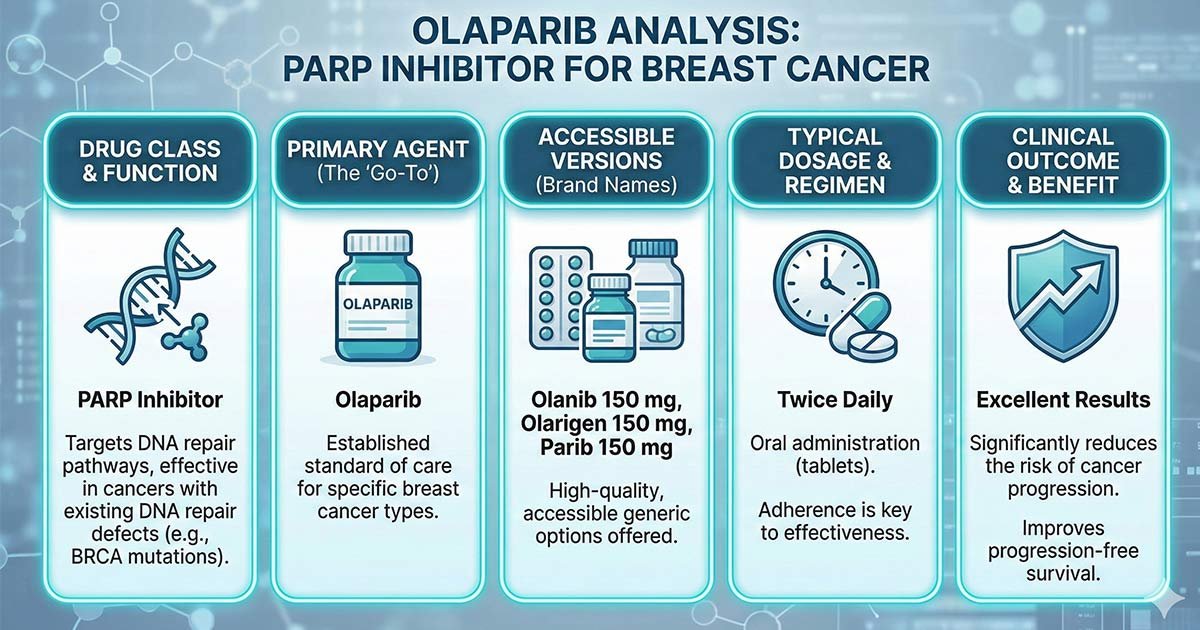
When it comes to treating metastatic breast cancer, the power of PARP and CDK4/6 inhibitors has dominated the conversation in recent years. While both are oral targeted therapies that offer an alternative to traditional intravenous chemotherapy, they work in very different ways and are used for different types of breast cancer.
Understanding the difference between these therapies is essential for patients and caregivers advocating for the best treatment path. In this article, we break down how these drugs work and highlight the specific options available for treatment.
For the majority of breast cancer cases—those that are Hormone Receptor-Positive (HR+) and HER2-Negative—CDK4/6 inhibitors are the heavy lifters.
How They Help: Cancer cells often hijack the cell cycle to divide rapidly. CDK4/6 inhibitors stop this process at a critical checkpoint (the G1 to S phase transition). When combined with hormone therapy, they can stop tumor growth for significant periods.
The Palbociclib Family: The most common drug in this class available on our platform is Palbociclib.
PARP inhibitors are more specialized. They are primarily used for patients who have inherited a harmful mutation in the BRCA1 or BRCA2 genes.
How They Help: Cells rely on the PARP enzyme to fix small breaks in DNA. If a cancer cell already has a BRCA mutation, it relies heavily on PARP to survive. By introducing a PARP inhibitor, you remove the cell’s last safety net, causing it to die.
The Olaparib & Niraparib Family:
The choice between a CDK4/6 inhibitor and a PARP inhibitor usually comes down to your genetic makeup and tumor type:
Sometimes, these therapies are used in sequence. For example, a patient might start on a CDK4/6 inhibitor and, if the cancer progresses and a mutation is found, switch to a PARP inhibitor.
Both drug classes are revolutionary, but they can be expensive. Generic alternatives are critical for maintaining continuous care. Switching to a generic version of Palbociclib or Olaparib does not compromise the treatment’s effectiveness but significantly reduces the financial burden.
View all affordable Breast Cancer Medications
A: Typically, these drugs are not taken together. They are usually used in different lines of therapy depending on how the cancer evolves. Always follow your oncologist’s protocol.
A: Niranib (Niraparib) is primarily approved for ovarian cancer, but clinical trials have investigated its use in breast cancer, specifically for those with BRCA mutations. It works similarly to Olaparib.
A: The most common side effect is a decrease in neutrophils (white blood cells). This is why we stock the 100 mg version of Palbonix—to provide an option for patients who need a dose reduction.
Whether your treatment plan calls for the cell-cycle-stopping power of Palbocent or the DNA-repair blocking precision of Olanib, understanding your medication is the first step toward empowerment. By utilizing these advanced therapies, patients are living longer, fuller lives with breast cancer.
