Address
Sector 14, Road no. 18, Uttara, 1230
Dhaka, Bangladesh

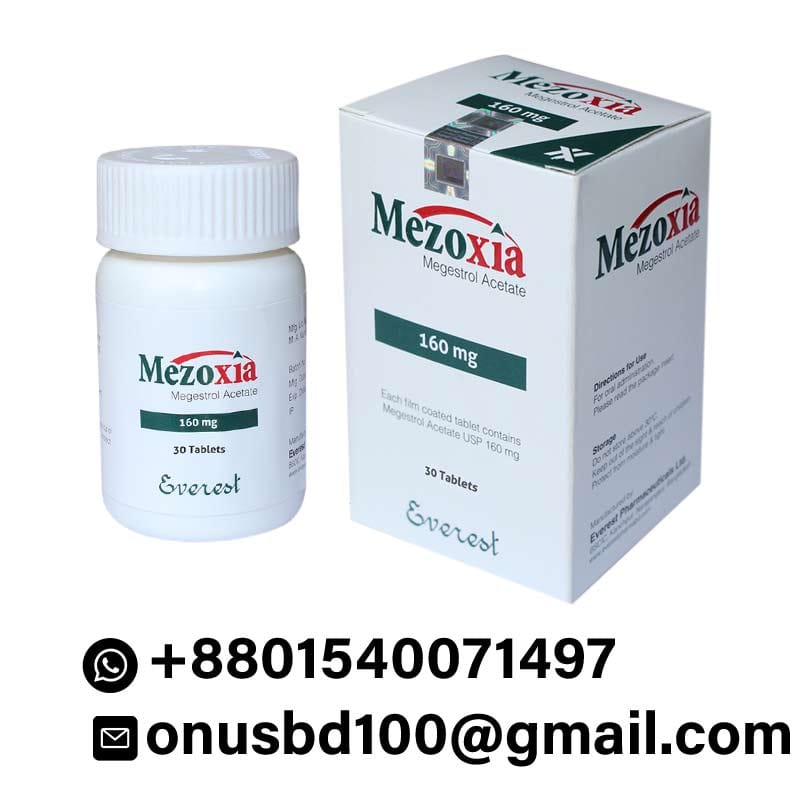
Rx Prescripttion Only-YMYL Medical Content
Indicated for the palliative treatment of advanced, recurrent, inoperable, or metastatic breast cancer or endometrial cancer — generally used after other hormone therapies have been tried, and does not replace standard treatments such as surgery, radiation, or chemotherapy.
1
2
3
4
MD
Medical Oncologist Review
Board-certified oncologist · 12+ years in thoracic malignancies
Content reviewed against FDA prescribing information, NCCN Guidelines v2.2024, and published Phase III trial data. Last updated June 2026.
These steps help you have an informed conversation. A confirmed EGFR mutation result is the starting point for any treatment decision.
Medical disclaimer: This page is for informational purposes only and does not constitute medical advice, diagnosis, or treatment. It is a prescription medication that must only be used under the supervision of a qualified oncologist. Clinical outcomes data is drawn from published Phase III trials; individual results vary. Always consult your healthcare provider and refer to the full prescribing information before making any treatment decisions. Emergency: call your local emergency services or poison control immediately if you experience serious adverse effects.
Here are key questions to bring to your oncologist — given that Mezoxia (megestrol acetate) is a palliative rather than curative treatment with modest response rates, getting clear, realistic expectations established upfront is especially important here, alongside understanding the thromboembolism and adrenal suppression risks.
Before confirming Mezoxia as your treatment
About the palliative nature of Mezoxia treatment — setting expectations honestly
About thromboembolism risk — a serious concern to discuss directly
About adrenal suppression — why I should never just stop this medication
About blood sugar monitoring
About the weight gain and appetite effects
About dosing and administration
About drug interactions
About monitoring
About the road ahead
A practical tip: Because megestrol’s effectiveness is modest and clearly tied to progesterone receptor status, it’s worth asking specifically whether your tumor’s PrR status has been tested and what that result was — if it hasn’t been tested, or if it came back negative, that’s directly relevant context for understanding how much benefit you’re likely to see from this particular medication, and may be worth discussing before committing to a treatment trial period.
This comparison is unusual in our series because it’s based on a genuine body of older, randomized head-to-head trials rather than indirect comparisons or matching-adjusted analyses — these two drugs were actually pitted against each other directly, multiple times, decades ago.
Different mechanisms, same hormone-dependent target
| Megestrol acetate (Mezoxia) | Tamoxifen | |
|---|---|---|
| Drug class | Synthetic progestin | Selective estrogen receptor modulator (SERM) |
| Mechanism | Suppresses pituitary gonadotrophin and estrogen secretion; direct cytotoxic effect on tumor cells | Blocks estrogen from binding to its receptor on cancer cells |
| FDA approval | 1988 | Earlier, established as standard hormonal therapy well before megestrol’s breast cancer indication |
| Typical role today | Used after other hormone therapies have failed (later-line) | Foundational adjuvant and first-line hormonal therapy |
Efficacy — multiple head-to-head trials found them roughly comparable
This is genuinely well-studied territory, with several independently conducted randomized trials:
| Trial | Megestrol Acetate (Mezoxia) response rate | Tamoxifen response rate | Finding |
|---|---|---|---|
| Piedmont Oncology Association (124 patients) | 29% | 31% | No significant difference; tamoxifen showed significant prolongation of time to progression and survival after adjustment for pretreatment characteristics |
| Piedmont 5-year analysis (138 patients) | 28% | 31% (initially reported as ~31%, see below) | Both unadjusted and adjusted analyses of time to progression and survival showed significant differences favoring tamoxifen |
| Receptor-correlation study (197 patients) | 35% | 42% | Response did not correlate significantly with combined estrogen and progesterone receptor levels |
| UK cross-over phase III (139 patients) | 25% | 33% | Not significantly different; no significant difference in survival between groups |
Looking across these trials, a consistent pattern emerges: tamoxifen’s response rate numerically edges out megestrol’s in most studies, but the difference is generally not statistically significant in formal testing — except notably in the Piedmont trial, where adjusted analysis showed a statistically significant advantage for tamoxifen in both time to progression and survival.
An important and consistent finding — visceral disease
Across multiple trials, a specific pattern shows up repeatedly: responses in patients with bone and soft tissue disease were similar for both regimens, but a meaningful proportion of patients with visceral disease (such as liver or lung involvement) responded to tamoxifen, while megestrol showed no responses at all in visceral disease in that same trial. A separate trial similarly found more patients with visceral disease responded to tamoxifen than to megestrol. This is a genuinely useful clinical distinction — if your disease involves organ (visceral) sites rather than just bone or skin/soft tissue, the historical trial data leans toward tamoxifen having an efficacy edge in that specific scenario.
Cross-over response — neither drug “burns the bridge” to the other
A consistent and clinically reassuring finding across these trials is that patients who failed one drug often still responded when switched to the other: 23% of patients responded to megestrol acetate after being crossed over from tamoxifen, while 22% responded to tamoxifen after crossing over from megestrol acetate in one trial. Similarly, cross-over response was seen in patients receiving either drug as second-line therapy in another. This means failing one doesn’t predict failure on the other — they’re not simply redundant options.
Toxicity profile — genuinely different side effects, similar overall tolerability
The toxicity profile of the two drugs was different, although significant toxicity was rare with either agent — megestrol’s profile leans toward weight gain, fluid retention, and thromboembolism risk, while tamoxifen carries its own distinct risks (including endometrial changes and a different thromboembolic risk profile through its estrogen-modulating mechanism). Megestrol acetate would appear to be one of the logical choices for patients who find the side-effects of tamoxifen unacceptable — meaning the choice between them is often driven by individual tolerability rather than a clear efficacy winner.
Combining them — not clearly better than either alone
Two trials specifically tested whether combining the drugs helps: a randomized comparison of tamoxifen, megestrol acetate, or both together found no significant differences between the three groups in response rates or other outcome measures. However, a separate trial testing cyclical sequential tamoxifen-plus-megestrol against tamoxifen alone found no significant difference in overall response rate, but longer median survival with the sequential combination, at the cost of breakthrough vaginal bleeding in about 15% of patients — a mixed, not clearly conclusive picture on combination strategies.
Where this fits today
It’s worth being direct about something: these trials are largely from the 1980s and 1990s, reflecting an era before aromatase inhibitors (like letrozole or anastrozole) became the dominant first-line hormonal therapy for postmenopausal HR-positive breast cancer. Given that most patients now receive tamoxifen as adjuvant treatment, the more clinically relevant comparison in 2026 often isn’t megestrol-versus-tamoxifen head-to-head as initial therapy, but rather where megestrol fits as a later-line option after a patient has already moved through tamoxifen and/or aromatase inhibitors. This is exactly the role megestrol plays on the product page we built — a later-line, palliative option for patients who’ve exhausted other hormone therapies, not a first-choice competitor to tamoxifen.
Bottom line
Historical head-to-head data shows megestrol and tamoxifen produce broadly similar response rates for hormone receptor-positive advanced breast cancer overall, with tamoxifen showing a consistent, sometimes statistically significant edge specifically in patients with visceral disease and in some trials’ survival analyses. Neither drug eliminates the other as a future option if the first one fails. In current practice, tamoxifen (or an aromatase inhibitor) is typically used first, with megestrol reserved as a later-line option — particularly for patients who don’t tolerate tamoxifen well or whose disease has progressed through multiple earlier hormonal therapies. This is a good question to put directly to your oncologist: ask specifically where you are in that treatment sequence and why megestrol is being considered at this point rather than earlier or instead of another hormonal option.
Megestrol’s weight gain effect is actually a fascinating case of a drug doing exactly what it’s designed to do, just in a way that happens to be clinically useful in two completely different patient populations for two different reasons — understanding the mechanism requires looking at how this synthetic progestin interacts with multiple hormonal systems simultaneously.
The basic biology — what Megestrol Acetate actually is
Megestrol acetate (Mezoxia) is a synthetic version of progesterone, the natural hormone that plays a central role in the menstrual cycle and pregnancy. Because it’s structurally similar to natural progesterone, it can bind to and activate progesterone receptors throughout the body — but its effects don’t stop there, since it also has activity at other hormone receptors, creating a broader, more complex hormonal footprint than a more selective drug would have.
The anticancer mechanism — suppressing the hormones that fuel certain cancers
The precise mechanism by which megestrol produces its antineoplastic effects against endometrial carcinoma is not fully understood, but it’s believed to involve inhibition of pituitary gonadotrophin production and the resulting decrease in estrogen secretion. In simpler terms: megestrol tells the pituitary gland (the body’s master hormone-control center) to reduce its signals to the ovaries, which in turn reduces the amount of estrogen being produced. Since certain breast and endometrial cancers depend on estrogen to grow, choking off this supply can slow or shrink hormone-sensitive tumors.
For breast cancer specifically, megestrol’s antineoplastic action works by modifying the action of other steroid hormones and by exerting a direct cytotoxic effect on tumor cells — meaning it’s not solely working through estrogen suppression in this context, but also has some direct cell-killing activity against the tumor itself.
The weight gain mechanism — a separate, well-characterized effect
This is where megestrol’s biology branches into something distinct from its anticancer action. The weight gain and appetite stimulation appear to work through different pathways:
Neuropeptide Y stimulation — research suggests megestrol increases the synthesis, transport, and release of Neuropeptide Y in the lateral hypothalamus, a brain region central to appetite regulation. Neuropeptide Y is one of the body’s most powerful natural appetite-stimulating signals — so Mezoxia (megestrol acetate) appears to be directly amplifying the brain’s own hunger-promoting circuitry.
Inflammatory cytokine suppression — Mezoxia (megestrol acetate) is also believed to inhibit tumor necrosis factor-alpha, interleukin-1, and interleukin-6, inflammatory signaling molecules that are known to suppress appetite and contribute to the muscle-wasting, energy-draining state called cachexia that’s common in advanced cancer and HIV/AIDS. By dialing down these inflammatory signals, megestrol removes some of the biological “brakes” that illness puts on appetite and normal metabolism.
Glucocorticoid receptor interaction — Mezoxia (megestrol acetate)’s anticancer activity might also involve interaction with glucocorticoid receptors, and glucocorticoid signaling is well known to influence fat storage, appetite, and metabolism — adding another layer to why this drug has such pronounced metabolic effects beyond its primary hormonal target.
Why the weight gain isn’t just “water weight”
Weight gain associated with Mezoxia (megestrol acetate) is linked to increased appetite, and this weight gain is associated with an increase in both fat mass and body cell mass — meaning it’s not simply fluid retention (though fluid retention can also occur separately), but a genuine increase in body tissue. This distinction matters clinically: in a cancer or AIDS patient experiencing dangerous cachexia and muscle wasting, gaining actual body cell mass (which includes lean tissue) is a meaningfully different and more beneficial outcome than just gaining fat or retaining water.
Why the same drug serves two opposite-seeming purposes
This explains something that might otherwise seem contradictory: megestrol is used both to fight hormone-sensitive cancers (an anticancer use) and to help severely underweight, wasting patients gain weight (a supportive-care use). These aren’t contradictory uses of the same mechanism — they’re two separate, somewhat independent biological effects bundled into one drug. This is exactly why megestrol’s effect on appetite, which forms the basis for its use in anorexia, cachexia, or weight loss, is essentially a side effect of its hormonal action that happens to be a desired primary effect in a completely different patient population.
Why this matters for a cancer patient specifically taking it for tumor control
If you’re taking megestrol for breast or endometrial cancer rather than for appetite stimulation, the weight gain is, in a sense, an unwanted side effect of a drug whose main job for you is hormone suppression and tumor control — even though that same effect would be the entire point if you were instead taking it for cancer-related appetite loss. This is worth discussing with your oncologist, particularly if weight gain raises concerns for you around diabetes risk, cardiovascular health, or simply your comfort and self-image during treatment, since it’s a well-documented and expected effect rather than something unusual happening specifically to you.
Why this also connects to the fluid retention and hypertension we discussed
Estrogens and progestogens, including megestrol when given in high dosages or for prolonged periods, may cause fluid retention — this is a separate mechanism from the appetite/weight-gain pathway above, related more directly to how progestin hormones affect sodium and water handling by the kidneys. This is part of why patients with pre-existing fluid retention problems need cautious dosing and monitoring, as noted in the warning section of the product page.
The bigger picture
Mezoxia (megestrol acetate)’s weight gain isn’t a random side effect disconnected from how the drug works — it’s a direct consequence of the same broad hormonal activity (acting on progesterone receptors, suppressing certain inflammatory signals, and influencing appetite-regulating brain circuits) that also gives the drug its anticancer effects in hormone-sensitive tumors. This dual nature is part of why megestrol has remained in clinical use for decades across genuinely different patient populations, even as more targeted, single-mechanism cancer drugs have been developed for many of the conditions it was originally used to treat.
Order Now