Address
Sector 14, Road no. 18, Uttara, 1230
Dhaka, Bangladesh

Rx Prescripttion Only-YMYL Medical Content
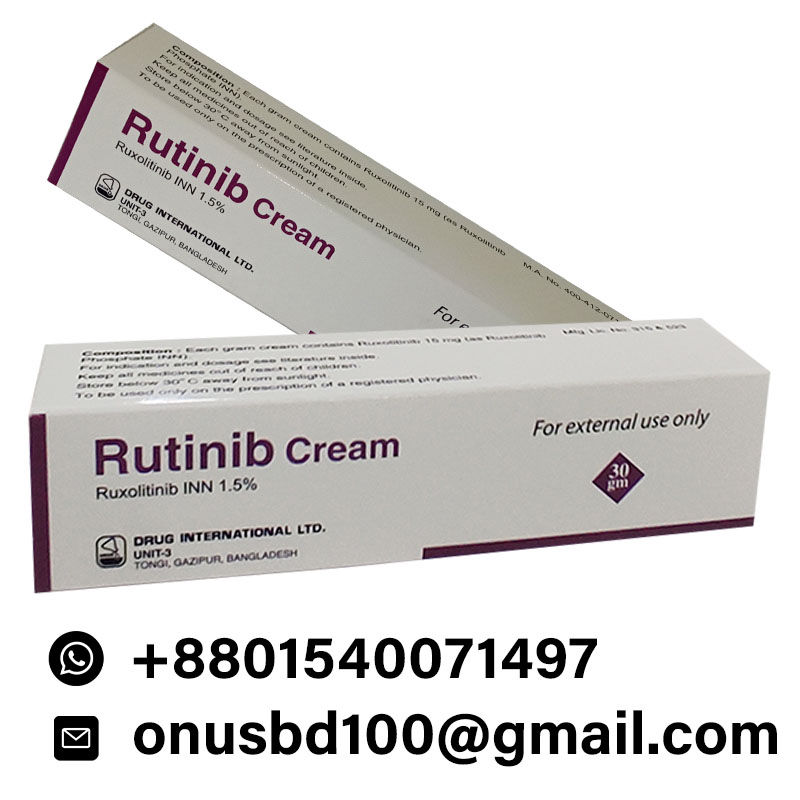
Indicated for short-term and non-continuous treatment of mild to moderate atopic dermatitis (eczema) in non-immunocompromised patients aged ≥2 years whose disease is not well controlled with topical therapies, or when those therapies are not recommended; and for nonsegmental vitiligo in adults and children aged ≥12 years. Not for use with biologics for atopic dermatitis, other JAK inhibitors, or strong immunosuppressants such as azathioprine or cyclosporine.
1
2
3
4
MD
Medical Oncologist Review
Board-certified oncologist · 12+ years in thoracic malignancies
Content reviewed against FDA prescribing information, NCCN Guidelines v2.2024, and published Phase III trial data. Last updated June 2026.
These steps help you have an informed conversation. A confirmed EGFR mutation result is the starting point for any treatment decision.
Medical disclaimer: This page is for informational purposes only and does not constitute medical advice, diagnosis, or treatment. It is a prescription medication that must only be used under the supervision of a qualified oncologist. Clinical outcomes data is drawn from published Phase III trials; individual results vary. Always consult your healthcare provider and refer to the full prescribing information before making any treatment decisions. Emergency: call your local emergency services or poison control immediately if you experience serious adverse effects.
Here are key questions to bring to your dermatologist — given that ruxolitinib cream carries class-level JAK inhibitor safety considerations that scale with how much skin is being treated, and that the two indications have different body surface area limits and different treatment goals, confirming your specific indication, your immunocompetence status, and the area of skin being treated are the most important starting points.
Before confirming ruxolitinib cream as your treatment
About immunocompetence — the most important eligibility question
About body surface area — a safety-critical practical question
About application technique
About the dosing schedule
About infection and viral reactivation risk
About the CYP3A4 drug interaction
About monitoring response
About when to contact you between appointments
About pregnancy and breastfeeding
About the longer road
A practical tip: The body surface area limit is the most commonly underestimated practical constraint with ruxolitinib cream — patients with extensive disease sometimes apply it more broadly than the 20% limit for atopic dermatitis or 10% limit for vitiligo, not realising that systemic JAK inhibitor exposure increases meaningfully with treated skin area. Before your first application, ask your dermatologist to help you estimate the percentage of your body surface area currently affected, and to mark out concretely where you should and shouldn’t be applying the cream on a given day — making this a written instruction rather than a general guideline significantly reduces the risk of inadvertent overtreatment.
Atopic dermatitis has a rich and well-developed treatment landscape — ruxolitinib cream sits within a specific niche that becomes clear when you map where it fits relative to topical corticosteroids, topical calcineurin inhibitors, dupilumab, and oral JAK inhibitors, each of which occupies a distinct position in severity, age, and prior treatment history.
The treatment landscape — severity-based positioning
| Topical corticosteroids | Topical calcineurin inhibitors | Ruxolitinib cream | Dupilumab | Oral JAK inhibitors | |
|---|---|---|---|---|---|
| Route | Topical | Topical | Topical | Subcutaneous injection | Oral |
| Mechanism | Broad anti-inflammatory | Calcineurin inhibition | Topical JAK1/JAK2 | IL-4Rα blockade | Systemic JAK inhibition |
| Severity | Mild to moderate | Mild to moderate | Mild to moderate | Moderate to severe | Moderate to severe |
| Age approval | All ages (varies) | ≥2 years | ≥2 years | ≥6 months | ≥12–18 years (varies) |
| Steroid-free | No | Yes | Yes | Yes | Yes |
Topical corticosteroids — the long-established first-line standard
Topical corticosteroids (TCS) remain the most widely used first-line treatment for atopic dermatitis worldwide, available in multiple potency classes and extensively familiar to prescribers and patients. They are highly effective for acute flares, inexpensive, and generally well tolerated for short-term use.
Their limitations are equally well established: skin atrophy, striae, and telangiectasia with prolonged use; hypothalamic-pituitary-adrenal axis suppression with extensive application; relative contraindication on the face, neck, flexures, and genitalia for higher-potency formulations; and the concern — sometimes called steroid phobia — that patients and parents are reluctant to use them consistently enough to achieve disease control.
Ruxolitinib cream occupies an important niche relative to TCS precisely because it provides meaningful efficacy without steroid-related side effects — offering a steroid-sparing option for sensitive skin areas and for patients who need a non-corticosteroid alternative.
Topical calcineurin inhibitors (tacrolimus, pimecrolimus) — the established steroid-free alternative
Tacrolimus ointment and pimecrolimus cream have been used as steroid-free topical alternatives for over two decades, particularly on the face and skin folds where TCS risks are highest. They work by inhibiting calcineurin and downstream T-cell activation, reducing the cytokine-driven inflammation characteristic of atopic dermatitis.
Compared to ruxolitinib cream, topical calcineurin inhibitors (TCIs) have a longer track record but a few practical limitations: a burning or stinging sensation on application that can reduce adherence — particularly in children — and a historically debated black box warning regarding theoretical malignancy risk that, while not confirmed by subsequent long-term studies, persists on the label and affects prescribing confidence for some clinicians.
Ruxolitinib cream showed superior IGA treatment success compared to tacrolimus in comparative analyses, and the rapid itch reduction within 1-2 days differentiates it from tacrolimus where anti-itch effects can take longer to establish. The application site reactions with ruxolitinib cream are generally mild and transient.
Head-to-head data — ruxolitinib cream vs tacrolimus
In TRuE-AD1 and TRuE-AD2, significantly more patients treated with ruxolitinib cream 1.5% BID achieved IGA treatment success (53.8% and 51.3%) versus vehicle (15.1% and 7.6%). Direct comparison with tacrolimus 0.1% ointment in a head-to-head cohort within the TRuE-AD trials showed ruxolitinib cream 1.5% BID achieving higher IGA treatment success and EASI-75 rates than tacrolimus — making ruxolitinib cream more efficacious in direct comparison at the topical level.
Dupilumab — the most important comparator for moderate to severe disease
Dupilumab (Dupixent) is a biologic — a subcutaneous injection given every 2 weeks — that blocks the IL-4Rα receptor shared by IL-4 and IL-13 signalling, the cytokine pathways most central to atopic dermatitis pathophysiology. It is approved for moderate to severe atopic dermatitis from 6 months of age and has transformed outcomes for patients with inadequately controlled disease.
The key positioning distinction is severity: dupilumab is indicated and most appropriate for moderate to severe disease, while ruxolitinib cream is indicated for mild to moderate disease. They are not straightforward alternatives competing for the same patient — they occupy different positions in the severity spectrum.
For patients at the moderate end who could theoretically qualify for either, the practical considerations differ substantially: dupilumab is an injection given every 2 weeks versus a twice-daily cream applied at home; dupilumab is not limited by body surface area treated; dupilumab has a different safety profile centred on conjunctivitis rather than infection risk; and dupilumab can be used in immunocompromised patients whereas ruxolitinib cream cannot. Dupilumab’s cost and injection requirement are barriers for some patients where a topical cream is preferable.
Oral JAK inhibitors — upadacitinib, abrocitinib, baricitinib
As we covered extensively in the baricitinib pages earlier in this conversation, oral JAK inhibitors provide systemic JAK inhibition for moderate to severe atopic dermatitis. Upadacitinib and abrocitinib are approved specifically for AD; baricitinib has approval in some regions.
The critical distinction from ruxolitinib cream is systemic versus topical delivery: oral JAK inhibitors produce full systemic JAK inhibition with the complete JAK inhibitor class safety profile — cardiovascular risk, malignancy considerations, venous thromboembolism, serious infections — and carry the class-wide Boxed Warning requirements we covered on the baricitinib pages. Ruxolitinib cream achieves JAK inhibition locally at the skin with substantially lower systemic exposure at approved body surface area limits, making it a qualitatively different risk proposition even though the mechanism is the same.
Oral JAK inhibitors are indicated for moderate to severe disease where topical therapies are insufficient — they are not positioned as topical cream alternatives but as systemic escalation options for inadequately controlled disease.
Importantly, ruxolitinib cream should not be used concurrently with oral JAK inhibitors — combining them adds systemic JAK inhibitor exposure on top of the topical cream’s contribution without established safety data for the combination.
Where ruxolitinib cream specifically fits in current clinical practice
Ruxolitinib cream has a well-defined niche:
It is most useful as a steroid-sparing alternative for mild to moderate disease — particularly for sensitive areas like the face, neck, and flexures where TCS risks are greatest; for patients with TCS intolerance or steroid phobia limiting adequate disease control; and for patients who have had insufficient response to or intolerance of topical calcineurin inhibitors.
It is also useful as a non-steroidal option for maintenance between flares, given the “short-term and non-continuous” labelling that limits extended continuous corticosteroid use.
It is not a replacement for dupilumab or oral JAK inhibitors in patients with genuinely moderate to severe, widely distributed disease requiring systemic control — the body surface area limits (20% for AD) and immunocompromised patient exclusion mean it cannot be used in the way systemic agents are.
The practical summary
Ruxolitinib cream sits in the well-defined gap between traditional topical therapies — where it outperforms TCI in head-to-head comparison and avoids steroid-related adverse effects — and systemic therapies, which are appropriate for more severe or refractory disease but carry greater systemic risk. Its rapid itch relief within 1-2 days, steroid-free mechanism, and meaningful IGA and EASI-75 response rates make it a clinically valuable addition to the mild-to-moderate atopic dermatitis toolkit, particularly for steroid-sensitive areas and patients who need a non-corticosteroid option with better efficacy evidence than traditional TCIs.
This comparison gets at a genuinely important pharmacological distinction — ruxolitinib cream and oral JAK inhibitors like baricitinib share the same fundamental molecular target, but the route of delivery creates a qualitatively different benefit-risk profile that makes topical JAK inhibition a meaningfully distinct therapeutic approach rather than simply a different packaging of the same drug.
What JAK inhibition does — the shared molecular mechanism
As we covered in detail on the baricitinib and tofacitinib pages earlier in this conversation, JAK (Janus kinase) inhibitors work by blocking the JAK-STAT signalling pathway — a critical intracellular relay system that transmits signals from cell surface cytokine receptors to gene expression machinery inside the nucleus.
In atopic dermatitis specifically, the JAK-STAT pathway is the downstream signalling route for the cytokines most responsible for the inflammatory cascade — particularly IL-4, IL-13, IL-31, IL-33, and TSLP. IL-4 and IL-13 drive the Th2-skewed immune polarisation characteristic of atopic dermatitis, promoting IgE production and barrier dysfunction. IL-31 is the primary mediator of itch — arguably the most functionally disabling symptom of atopic dermatitis. IL-33 and TSLP amplify the inflammatory response from keratinocytes and barrier cells.
All of these cytokines signal primarily through receptor complexes that activate JAK1, JAK2, or both simultaneously. Ruxolitinib specifically inhibits JAK1 and JAK2 with high potency — blocking the initial step of the signalling cascade after cytokine-receptor binding, preventing STAT proteins from being phosphorylated and translocating to the nucleus to drive inflammatory gene expression.
The result is suppression of multiple pro-inflammatory cytokine signals simultaneously through a single molecular target — cutting off the inflammatory and itch-driving signals at a shared intracellular node rather than blocking individual cytokines one by one as biologics do.
Why itch reduction begins within 1-2 days — the IL-31 connection
The rapid itch reduction observed within 1-2 days of starting ruxolitinib cream is mechanistically explained by JAK1’s role in IL-31 signalling. IL-31 is sometimes called the “itch cytokine” — it binds to receptors on sensory nerve endings in the skin and signals directly through JAK1 to trigger the neurological itch response. Because this pathway runs through JAK1 specifically, ruxolitinib’s potent JAK1 inhibition rapidly suppresses IL-31-driven itch signalling almost immediately upon achieving tissue concentrations — much faster than the days to weeks required for downstream inflammatory changes like skin appearance and barrier function to improve. This neurological itch suppression precedes and is distinct from the anti-inflammatory effects that take longer to manifest as visible skin improvement.
How topical delivery changes the pharmacological equation
This is the critical distinction from oral JAK inhibitors. When ruxolitinib is applied as a cream to the skin, it needs to achieve adequate drug concentrations in the dermis and epidermis — the tissue compartments where the relevant JAK-STAT signalling is occurring in keratinocytes, T cells, and dermal immune cells — without necessarily achieving the same systemic blood concentrations that oral JAK inhibitors produce by design.
Oral ruxolitinib (Jakafi/Jakavi), used for myelofibrosis and polycythemia vera, achieves high systemic plasma concentrations to inhibit JAK1/JAK2 throughout the body — in haematopoietic cells, vascular endothelium, immune cells circulating systemically, and every other cell type that depends on JAK-STAT signalling. This systemic coverage is what provides the therapeutic benefit in bone marrow disorders, but it is also what drives the systemic safety profile — anaemia, thrombocytopenia, and immunosuppression from broad JAK inhibition throughout haematopoietic tissue.
Ruxolitinib cream achieves therapeutically relevant concentrations in skin tissue while producing substantially lower systemic plasma concentrations — minimising exposure in tissues outside the skin where systemic JAK inhibitor effects would be unwanted.
Why the body surface area limits exist — the dose-exposure relationship
This connects directly to understanding why the 20% BSA limit for atopic dermatitis and 10% BSA limit for vitiligo are clinically meaningful rather than arbitrary.
Skin absorption is proportional to treated surface area. Applying ruxolitinib cream to a small patch represents a modest total dose absorbed systemically; applying it to 30% or 40% of body surface area produces proportionally higher systemic drug exposure. As treated BSA increases, the pharmacokinetic profile begins shifting toward the systemic concentrations associated with oral JAK inhibitor therapy — and with it, the potential for systemic JAK inhibitor class effects.
Below the approved BSA limits, systemic exposure remains low enough that the class-level risks — cardiovascular events, venous thromboembolism, malignancy, serious infections — observed with oral JAK inhibitors are not documented as clinically meaningful concerns in the topical cream’s trial data. Above these limits, the safety profile is less well characterised, which is why the limits exist as patient-protection boundaries rather than simply as dosing guidelines.
The immunocompromised patient exclusion — explained mechanistically
The contraindication in immunocompromised patients for the atopic dermatitis indication connects to the same BSA-dependent exposure logic. In an immunocompromised patient — someone on chemotherapy, systemic immunosuppressants, or with an underlying immunodeficiency — even the relatively modest systemic JAK inhibitor exposure from topical application adds to an already suppressed immune baseline. The risk of serious infections, opportunistic infections, and viral reactivation that accompanies full systemic JAK inhibition is already elevated in these patients from their underlying condition, and adding any degree of additional JAK inhibitor immunosuppression — even from skin application — is considered clinically inappropriate without established safety data.
Why ruxolitinib cream cannot simply be replaced by a low dose of oral ruxolitinib
This is a pharmacologically important point. Achieving therapeutic skin tissue concentrations through topical application is not equivalent to taking a low oral dose and hoping some drug reaches the skin. Topical application deposits drug directly at the target tissue — achieving the highest concentrations exactly where they’re needed — while oral dosing distributes drug throughout the entire body, requiring substantially higher total doses to achieve skin tissue concentrations comparable to what topical application provides locally. This means topical delivery is not simply oral delivery with a smaller pill: it achieves better local tissue targeting at substantially lower total drug exposure, which is precisely the pharmacological argument for topical over oral delivery in a predominantly skin-limited disease.
How this compares to the oral JAK inhibitors covered earlier in this conversation
Baricitinib and tofacitinib — covered on the Baricinix, Tocit XR, and Tofacinix pages — both inhibit JAK pathways and are approved for atopic dermatitis systemically, but their oral delivery means full systemic JAK inhibition with the complete class safety profile including the ORAL Surveillance cardiovascular and malignancy signals we discussed extensively on those pages.
Ruxolitinib cream sits in a completely different risk tier: the same JAK inhibition at the tissue level in skin, achieved with a fraction of the systemic exposure that drives the class-level safety concerns. This is why ruxolitinib cream is appropriate in mild to moderate disease as a first escalation beyond topical corticosteroids, while oral JAK inhibitors are reserved for moderate to severe disease where the benefit-risk calculation justifies full systemic exposure.
The bigger picture
Ruxolitinib cream works by blocking JAK1 and JAK2 in skin tissue, simultaneously suppressing the multiple cytokine signals — particularly IL-4, IL-13, and IL-31 — that drive atopic dermatitis inflammation and itch. Its rapid itch relief reflects JAK1’s specific role in IL-31 neurological signalling, while its longer-term efficacy reflects the broader suppression of the Th2 inflammatory cascade through the same pathway. The topical delivery route makes it pharmacologically distinct from oral JAK inhibitors not just in convenience but in fundamental risk profile — achieving therapeutic tissue concentrations at the disease site while maintaining substantially lower systemic exposure than oral formulations, provided the body surface area limits are respected. Understanding this dose-area-exposure relationship is the key to understanding both why ruxolitinib cream is clinically appropriate where oral JAK inhibitors would be excessive, and why the body surface area limits are a safety boundary rather than simply a dosing recommendation.
Conatact US